Canada and Germany sign hydrogen deal to cut Russian energy reliance
Canada and Germany deepened a clean-energy pact built around hydrogen, while LNG talks exposed a broader bid to redraw energy ties away from Russia and the U.S.

Canada and Germany used a hydrogen agreement in Stephenville, Newfoundland and Labrador, to push a broader energy reset: Berlin is trying to harden its supply lines after Russia’s invasion of Ukraine, while Ottawa is looking for new export markets beyond the United States. The deal, signed on Aug. 23, 2022, by Natural Resources Minister Jonathan Wilkinson and German Economy and Climate Minister Robert Habeck, came with Chancellor Olaf Scholz and Prime Minister Justin Trudeau standing nearby as both governments linked energy security to the clean-energy transition.
The Canada-Germany Hydrogen Alliance grew out of a formal energy partnership the two countries signed in 2021. In official language, the alliance was designed to support a transatlantic hydrogen trade corridor and to prepare for first deliveries by 2025, reflecting Germany’s effort to secure significant volumes of renewable hydrogen as it reshaped its energy system. For Canada, the agreement opened a path to long-term demand in Europe at a moment when policymakers were seeking ways to reduce dependence on the U.S. market.
The timing mattered. Russia’s war against Ukraine had triggered Europe’s 2022 energy crisis, and the International Energy Agency said security of supply had become a top priority across the continent. European governments moved quickly to increase LNG procurement and diversify supply, with the agency saying the European Union could reduce Russian natural gas imports by more than one-third within a year. Germany, in particular, had been cutting its reliance on Russian gas and searching for replacement sources at speed.
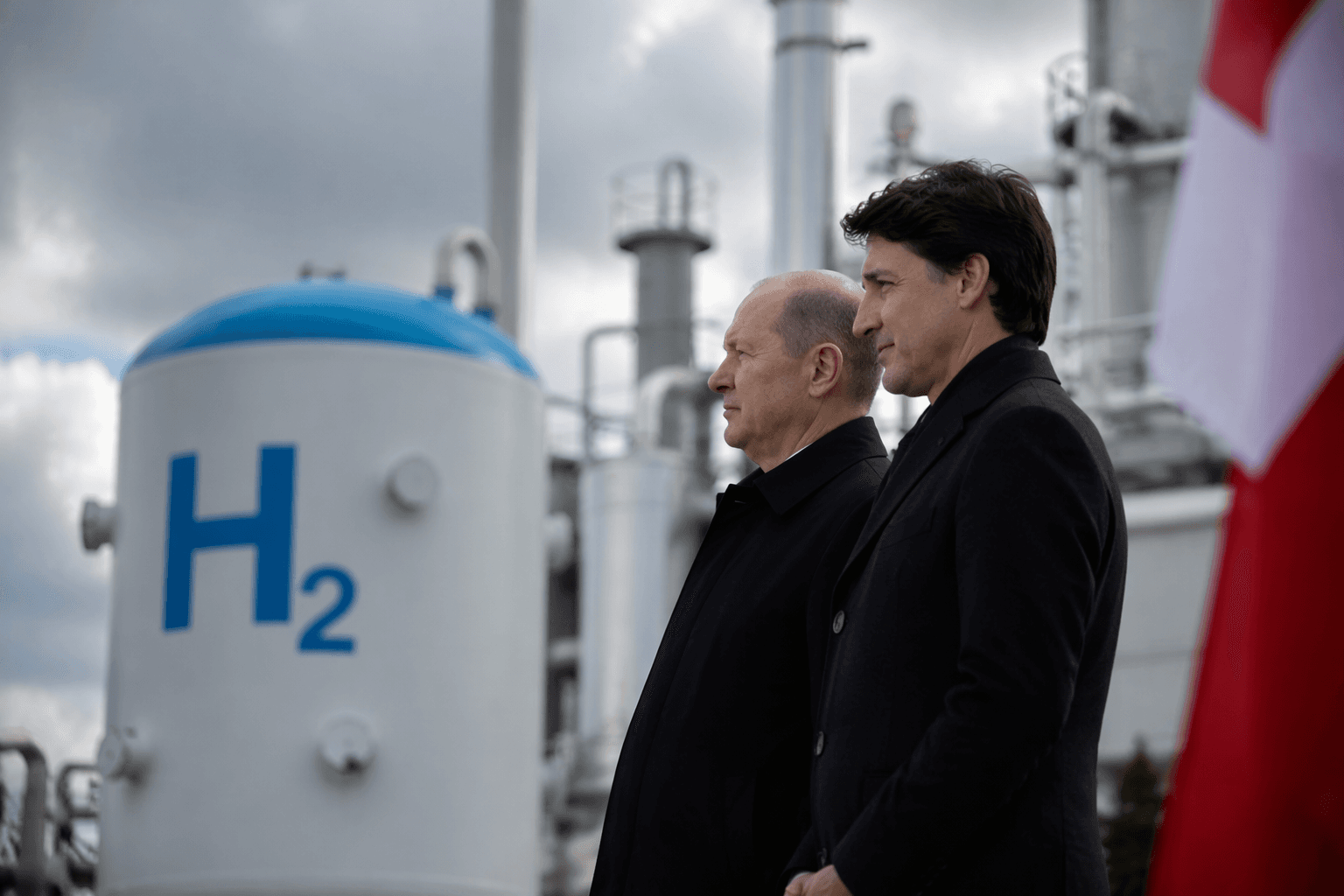
That urgency also shaped parallel conversations about liquefied natural gas. Canadian officials said in 2022 that New Brunswick’s Repsol facility was the most feasible Atlantic Canada LNG option under discussion with Germany. Trudeau made clear that any new LNG export project would need a real business case before Canada would move ahead, signaling that Ottawa was not promising immediate terminals even as Berlin pressed for secure alternatives. Scholz, by contrast, said Canadian LNG could play a major role in Germany’s transition away from Russian gas.
The relationship has since widened beyond the 2022 hydrogen pact. In 2024, Canada and Germany reached an arrangement to secure early market access for Canadian hydrogen, and in July 2024 Ottawa announced up to $300 million to support clean hydrogen trade with Germany. Taken together, the moves point to more than a commodity deal. They show Canada and Germany building a transatlantic energy corridor that could shift leverage in the global market, while Europe keeps rewiring its security strategy and Canada searches for a stronger position in the world’s clean-energy trade.
This article was produced by Prism’s automated news system from verified source data, official records, and press releases, then run through automated quality and moderation checks before publishing. The system is built and supervised by the people who set the standards it runs under. Read our full AI policy.
Know something we missed? Have a correction or additional information?
Submit a Tip