Canada wildfire smoke threatens unhealthy air across much of US
Smoke from more than 830 Canadian wildfires was already over the Great Lakes, with air-quality alerts in several states and haze poised to reach the Northeast.

More than 830 wildfires were burning in Canada on Wednesday morning, and the smoke plume was already spreading across the Great Lakes and into the Upper Midwest, where officials from Minnesota to New Hampshire warned residents about unhealthy air. The densest smoke was over Duluth, Minnesota, Marquette, Michigan, and northern Wisconsin early in the day, with the haze expected to push into New York State and New England by afternoon.
Minnesota’s Pollution Control Agency issued an air-quality alert from Tuesday through Friday for parts of the state, including the Twin Cities metro area, Alexandria, and Two Harbors. Michigan placed the entire state under an air-quality alert on Wednesday because of particulate pollution from the smoke, while New Hampshire’s Department of Environmental Services issued a smoke advisory for Tuesday and Wednesday and warned that fine particle pollution could reach unhealthy levels for people with respiratory conditions. In northern Minnesota, more than a dozen wildfires were also burning near the border with little or no containment, and some communities faced mandatory evacuations.
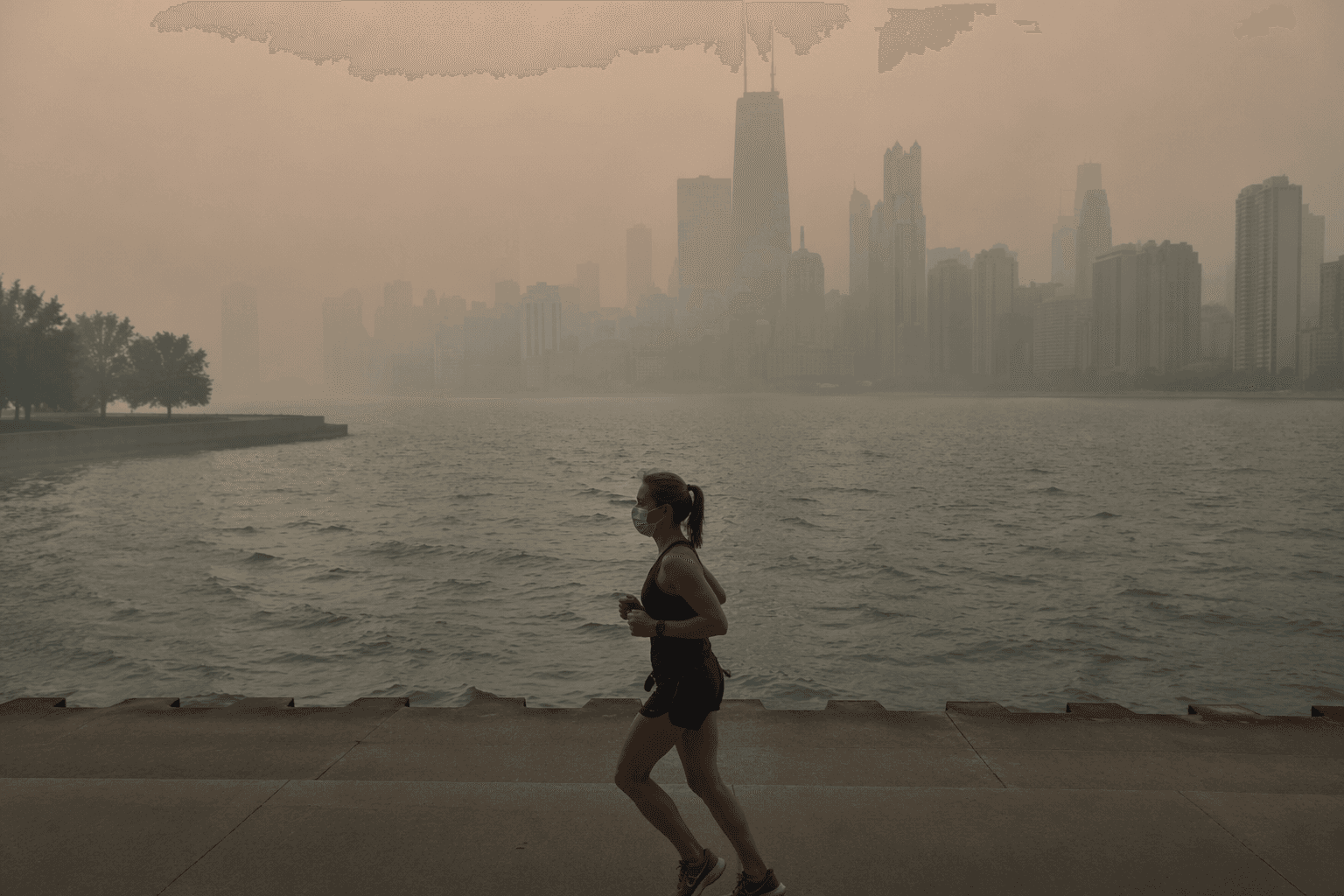
Very heavy smoke could reach Buffalo, New York City, and Philadelphia by sunset Wednesday, with lighter but still noticeable haze spreading as far south as Cleveland, Columbus, Baltimore, and Washington, D.C. The National Weather Service office in Gray, Maine, expected hazy skies before a cold front moved through. Rain forecast for the Upper Midwest on Friday and the Northeast on Saturday should help clear the air, but parts of northern Minnesota, northern Wisconsin, Michigan’s Upper Peninsula, and northern Lower Michigan could still see very unhealthy or hazardous conditions before then.
The public-health risk comes from fine particulate pollution, which can penetrate deep into the lungs and bloodstream and raise the danger for respiratory and cardiovascular problems. Children, older adults, pregnant people, and people with asthma or heart and lung disease face the highest risk when smoke lingers near the ground. Even where conditions fall short of the worst levels, the smoke can disrupt outdoor work, travel, and daily routines across a broad swath of the country.
Canada burned more than 16 million hectares in 2023 and more than five million hectares last year, and warming temperatures and drought are stretching smoke season longer. The June 2023 smoke event sent New York City’s air to an AQI of 342 and briefly made it the worst in the world, while NASA called it the most significant smoke episode near the Northeast since at least July 2002. New York City should not see conditions as severe as that episode this week, but some areas could still face air quality that is dangerous for everyone, not only people with underlying health problems.
This article was produced by Prism’s automated news system from verified source data, official records, and press releases, then run through automated quality and moderation checks before publishing. The system is built and supervised by the people who set the standards it runs under. Read our full AI policy.
Did this article answer your question?