Carlo Petrini, founder of Slow Food, dies at 76
Carlo Petrini turned a protest against a McDonald’s near Rome’s Spanish Steps into a global movement reaching more than 160 countries.

Carlo Petrini, who turned food into a critique of modern life’s rush, disposability and sameness, died on May 21, 2026, at age 76 in his hometown of Bra in Italy’s Piedmont region. Slow Food said Petrini had recently disclosed that he had prostate cancer. In the movement he built, a meal was never just a meal. It was a political act, a defense of local identity, and a rebuke to a culture that treats convenience as progress.
Petrini’s revolt began in March 1986, when the opening of Italy’s first McDonald’s near Rome’s Spanish Steps sparked protests and helped inspire the creation of Slow Food. Three years later, the movement became international with the signing of the Slow Food Manifesto in Paris. What started among a small circle of friends grew into a network active in more than 160 countries, with Petrini helping found Terra Madre and the University of Gastronomic Sciences in Pollenzo.

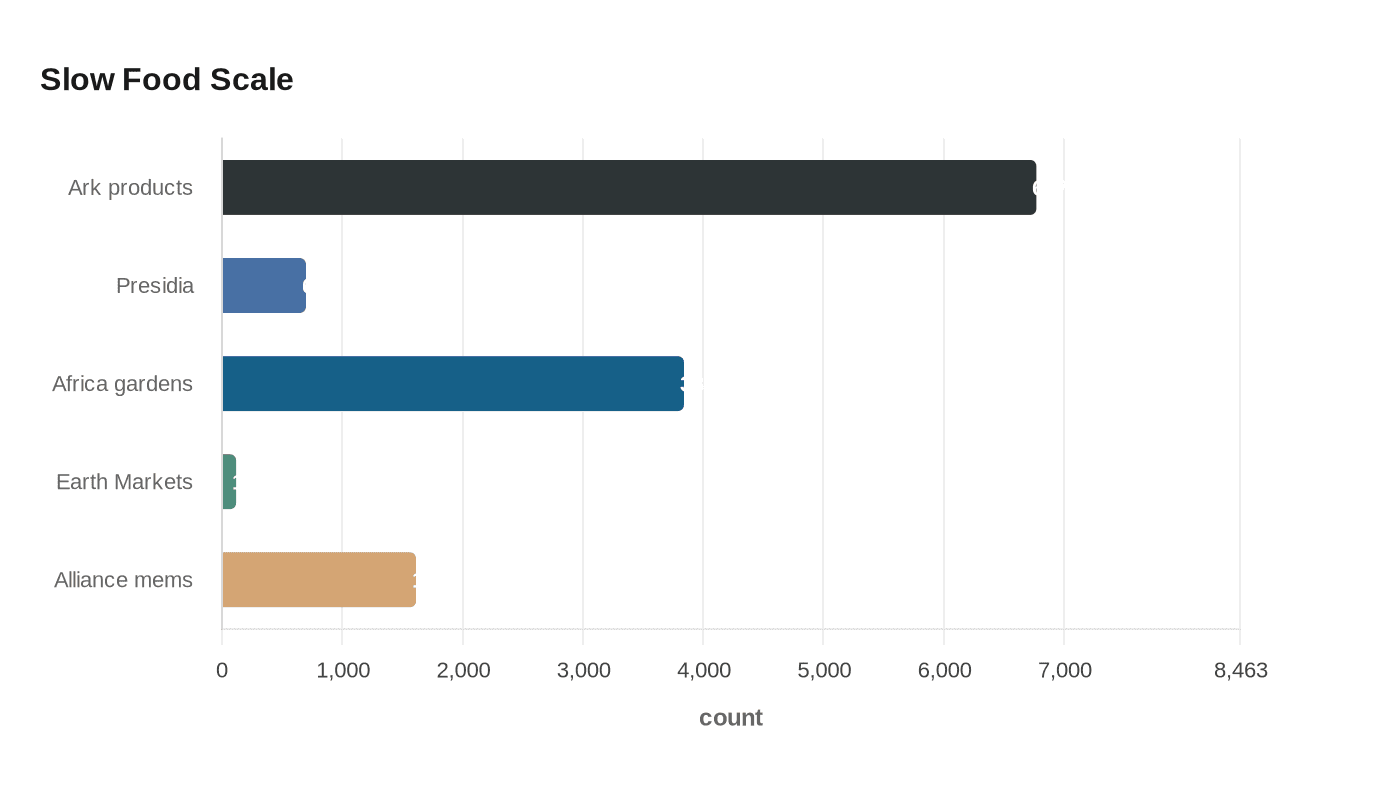
His central argument now looks sharper, not older. Slow Food says its work centers on good, clean and fair food, biodiversity and food sovereignty, principles that stand in direct tension with industrial food systems and the app-driven habits that have made eating faster, more standardized and more detached from place. The movement’s Ark of Taste, described as a living catalog of foods at risk of extinction, reflects that larger fight against cultural flattening. Its Foundation for Biodiversity says it now lists 6,770 Ark of Taste products, 698 Presidia, 3,840 gardens in Africa, 117 Earth Markets and 1,613 Slow Food Cooks’ Alliance members.
Terra Madre became the movement’s global stage. The first gathering, in Turin in 2004, brought together more than 5,000 farmers, fishers and producers from 130 countries. Terra Madre Salone del Gusto in 2024 drew 3,000 delegates from 120 countries, evidence that Petrini’s ideas had moved far beyond a European protest movement and into a worldwide network of growers, cooks and advocates trying to protect food cultures under pressure.
In tributes after his death, Slow Food called Petrini a visionary leader. Reuters noted that he was a personal friend of King Charles, long a champion of organic farming. Petrini’s lasting significance is that he insisted the fight over food was really a fight over what kind of civilization modern life would become, one defined by speed and uniformity, or one still willing to value slowness, biodiversity and human scale.
This article was produced by Prism’s automated news system from verified source data, official records, and press releases, then run through automated quality and moderation checks before publishing. The system is built and supervised by the people who set the standards it runs under. Read our full AI policy.
Did this article answer your question?