Carney thanks Guilbeault as Liberal caucus shrinks to one-seat majority
Guilbeault’s exit would strip Carney’s Liberals to a one-seat majority, exposing a widening split between climate voices and the party’s economic-first center.

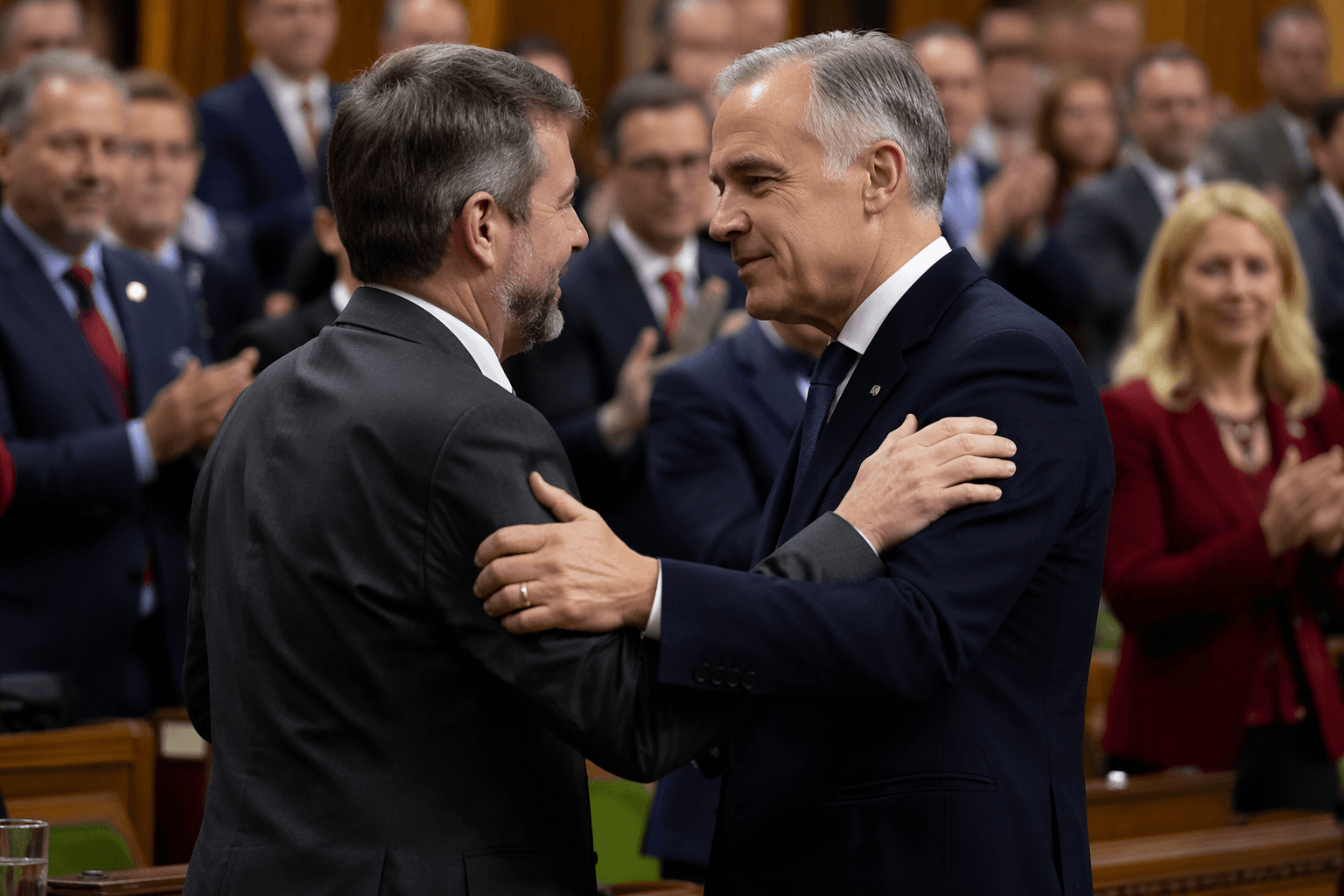
Mark Carney moved to calm growing tension inside his governing ranks on Wednesday as Steven Guilbeault prepared to leave the Liberal Party caucus, a step that would leave the government with only a one-seat majority in the 343-seat House of Commons.
Carney publicly thanked Guilbeault and said the former cabinet minister had contributed a great deal to Canada, while making clear the choice was Guilbeault’s to make. Guilbeault, a former Greenpeace activist and one of the country’s most visible environmental figures, said he would resign his House of Commons seat later this summer and remain in the Liberal caucus until then. His departure follows his exit from Carney’s cabinet in November 2025, after the federal government struck an energy agreement with Alberta that set out a path toward a new bitumen pipeline to the British Columbia coast.
The political significance extends far beyond one resignation. The Liberals won 169 seats in the April 28, 2025 federal election, short of the 172 needed for a majority, and their control of Parliament has remained narrow and politically fragile as validation and recount processes adjusted the final seat count. Guilbeault’s planned departure would reduce Carney’s room to maneuver and raise the risk that additional departures could threaten the government’s working majority.
That fragility matters because Carney has presented himself as a leader focused on the economy, particularly as Canada faces pressure from a U.S.-driven trade war. Guilbeault has come to symbolize the opposite wing of the Liberal coalition, one that prioritizes climate policy and environmental protection. The split became public when Guilbeault quit cabinet over the November 2025 Canada-Alberta memorandum of understanding, which many saw as a break from Trudeau-era climate policy and a concession to energy development.
The broader message is that the Liberals’ internal balance is shifting toward pro-development centrists at the expense of climate policy voices. Reporting around the later Alberta-Ottawa implementation deal said the agreement was designed to reduce regulatory uncertainty and move the pipeline project forward, reinforcing the sense that economic and energy priorities are now setting the tone. A political science professor said the resignation reflects a mismatch between parts of the Liberal caucus and Carney’s economic-first emphasis.
For Carney, the challenge is no longer just managing one high-profile departure. It is holding together a party whose center of gravity is still being contested, even as the government’s parliamentary margin grows thinner and the cost of division rises.
This article was produced by Prism’s automated news system from verified source data, official records, and press releases, then run through automated quality and moderation checks before publishing. The system is built and supervised by the people who set the standards it runs under. Read our full AI policy.
Did this article answer your question?

