Carney’s trade push runs into Canada’s dependence on U.S. market
Canada can court Japan and Asia, but 76% of its merchandise exports still went to the United States in 2024, leaving diversification with narrow room to move.

Mark Carney has spent his early months in office trying to widen Canada’s trade map, but the numbers keep pulling Ottawa back toward Washington. Since winning the April 28, 2025 federal election, Carney’s team has launched four trade missions, including two to Asia, and a larger fifth mission to Japan will run from June 23 to 26.
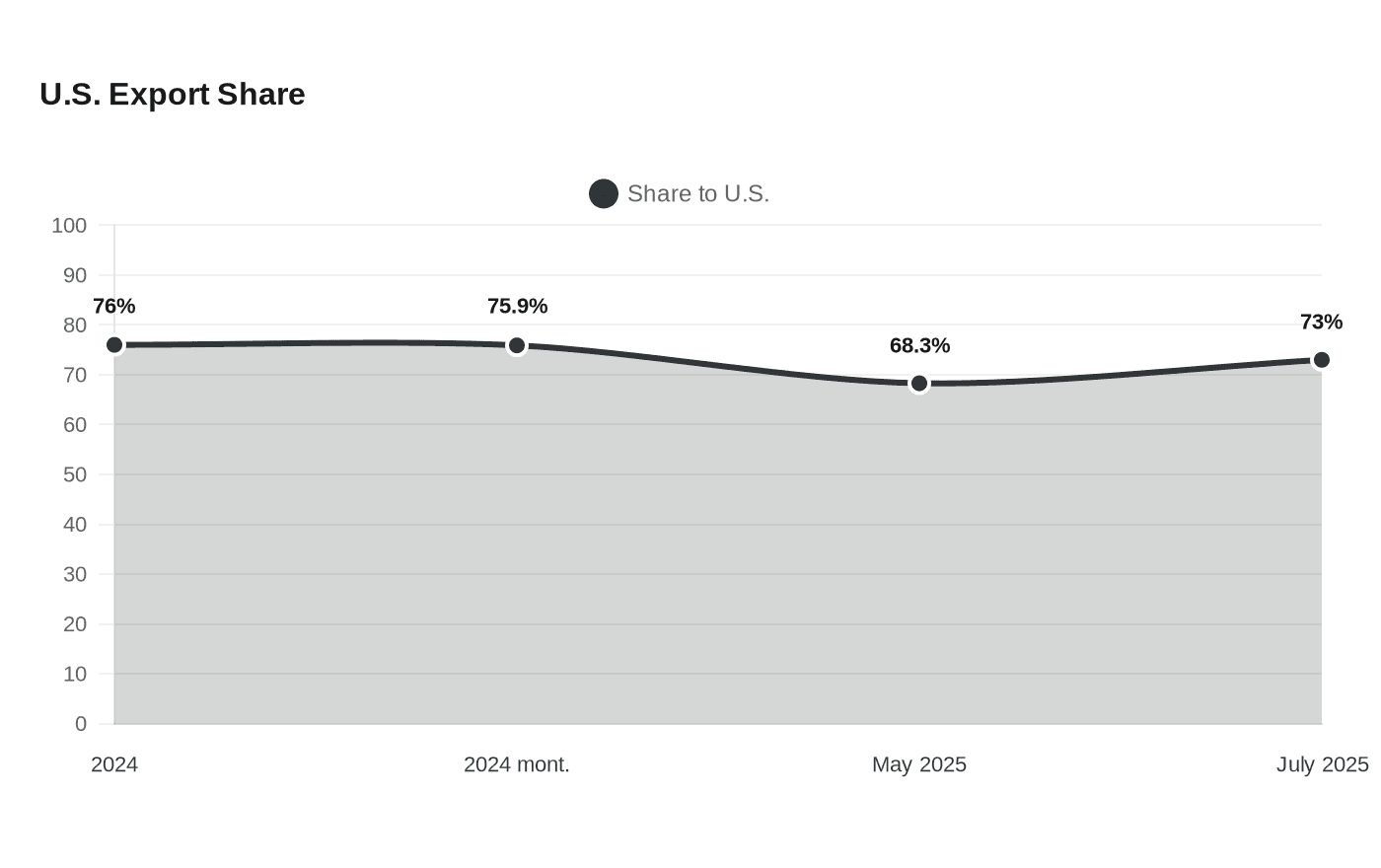
The obstacle is not political will. It is structure. Statistics Canada says 76.0% of Canada’s merchandise exports went to the United States in 2024, equal to $591.5 billion, while imports from the United States totaled $488.6 billion, or 62.2% of Canada’s imports. Even after firms rushed to adjust to tariff changes, Global Affairs Canada said the U.S. share of Canadian goods exports only slipped below 70% in April and May 2025 before rebounding to 73% by July.
Carney’s outreach has centered on Asia and on countries that want more room to maneuver in a more protectionist global economy. His first official Asia trip as prime minister ran from February 26 to March 7, 2026, with stops in India, Australia and Japan. In Tokyo, Canada and Japan signed a Comprehensive Strategic Partnership and a Comprehensive Strategic Roadmap on March 6, expanding cooperation on defence, economic security, energy, technology and trade.
The upcoming Japan mission is being positioned as a direct follow-up. The Trade Commissioner Service says it will be led by Maninder Sidhu, the minister of international trade, and is meant to give Canadian businesses direct access to strategic markets and high-impact networking opportunities. Ottawa is also tying the trip to long-term investment in mining, engineering and infrastructure, the sectors most likely to benefit if Canada can persuade foreign firms to build here rather than simply sell here.
That is where the limits of diversification become clear. Budget 2025 says the United States’ average tariffs across all countries rose from around 2% at the end of 2024 to 17% in 2025, giving Carney a political case for spreading risk. But many of the companies and governments Canada wants to attract still care most about the U.S. consumer market, which makes Canada less a substitute for America than a platform adjacent to it.
Global Affairs Canada’s trade data shows how quickly exporters respond when the rules shift. In May 2025, Canadian goods exports to the United States fell to 68.3% of total exports, down from the 2024 monthly average of 75.9%. In the first quarter of 2025, exports to the United States rose 7.9% and exports to China rose 11.0% as firms tried to get ahead of tariffs.
For Carney, that is the central economic reality. Canada can widen its options in Japan, India and Australia, and it can seek more investment from mid-sized economies that want stability. What it cannot do quickly is replace the U.S. market, or build a fully separate commercial system around it.
This article was produced by Prism’s automated news system from verified source data, official records, and press releases, then run through automated quality and moderation checks before publishing. The system is built and supervised by the people who set the standards it runs under. Read our full AI policy.
Know something we missed? Have a correction or additional information?
Submit a Tip