Caspian Pipeline Consortium Halts Black Sea Loadings, Kazakhstan Exports Squeezed
The Caspian Pipeline Consortium suspended oil loadings at its Novorossiysk Black Sea terminal on December 30, 2025 after severe winter weather made ship operations unsafe and storage at the facility reached capacity. The interruption tightens Kazakhstan export options, creating immediate fiscal and logistical pressures and exposing gaps in regional export resilience.
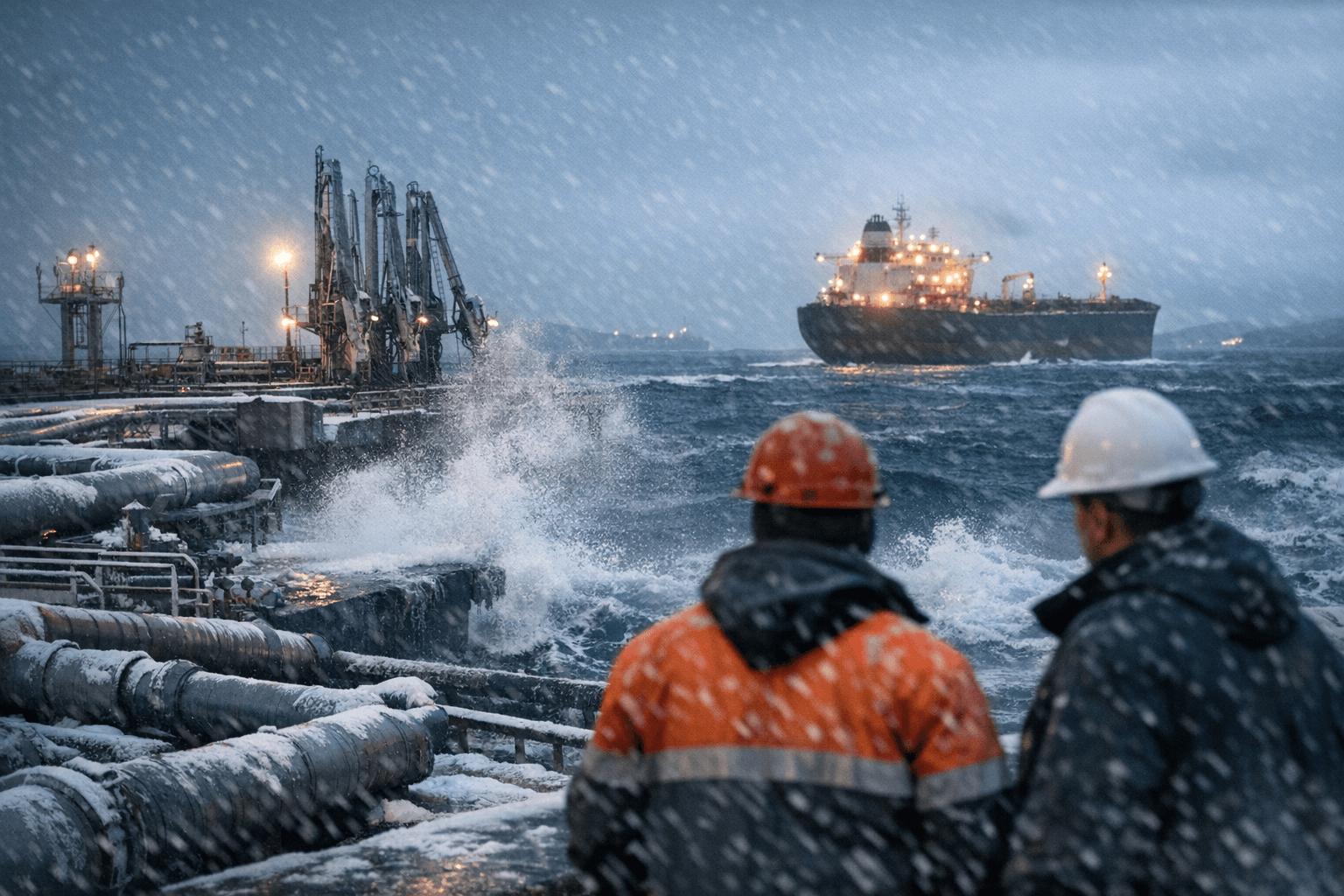
The Caspian Pipeline Consortium suspended oil export loadings at its Black Sea terminal near Novorossiysk on December 30, 2025, citing severe winter weather that made ship operations unsafe and storage tanks that had reached capacity. The stoppage immediately reduced the ability of Kazakh producers to send crude to global markets through one of their principal maritime gateways.
The consortium said the decision followed a combination of adverse conditions at sea and limits at the onshore terminal. With ship movements curtailed, the terminal’s storage was unable to clear at the pace required to continue scheduled loadings, prompting a temporary halt to operations. The suspension underscored how weather, port logistics and on site storage interact to constrain exports even when pipeline infrastructure is intact.
For Kazakhstan, the interruption carries tangible consequences. Oil export receipts are a major component of the national budget and foreign exchange inflows. A sustained bottleneck at Novorossiysk would force producers and state bodies to adjust sales plans, delay shipments, and potentially reduce export volumes in the near term. Those adjustments can complicate fiscal planning and liquidity management for the Kazakh government and state linked enterprises that rely on steady export flows.
The pause also highlights institutional and governance considerations for transnational energy corridors. The Caspian Pipeline Consortium operates at the nexus of private operators and public stakeholders, and its performance directly affects multiple national economies. When a terminal or its marine access becomes the limiting factor, responsibility falls to consortium decision makers to provide timely information to shippers and governments, to coordinate contingency measures, and to finance necessary upgrades that would reduce vulnerability to weather related disruptions.
Market consequences may be concentrated and localized rather than sweeping, but they are nonetheless material for companies and buyers dependent on Kazakhstan crude grades routed through the Black Sea. Short term adjustments could include reallocating tonnage, delaying cargoes, or shifting loads to alternative outlets where contractual and logistical conditions allow. Those maneuvers raise further questions about spare capacity, insurance costs for winter navigation, and the readiness of alternative pipelines or loading points to absorb diverted volumes.
The episode also raises a policy question about infrastructure resilience in a region where extreme weather events are increasing in frequency and intensity. Investments in terminal storage capacity, improved berth ice management and clearer operating protocols for severe weather could reduce the likelihood of wholesale stoppages. Equally, transparent reporting from the consortium on storage levels, expected restart timelines and the prioritization of volumes would help markets and the public gauge the economic impact and hold operators accountable.
At the operational level, resumption of loadings will depend on a combination of improved weather conditions and available storage capacity at the terminal. Until those conditions are met, Kazakhstan’s exporters will face constrained options, and governments and market participants will need to monitor the situation closely for further developments.
This article was produced by Prism’s automated news system from verified source data, official records, and press releases, then run through automated quality and moderation checks before publishing. The system is built and supervised by the people who set the standards it runs under. Read our full AI policy.
Did this article answer your question?