CBO Projects US National Debt Will Reach $64 Trillion Within a Decade
The nonpartisan CBO projects federal debt will hit $64 trillion by 2036, driven by surging deficits and recent tax legislation that analysts warn threatens fiscal sustainability.

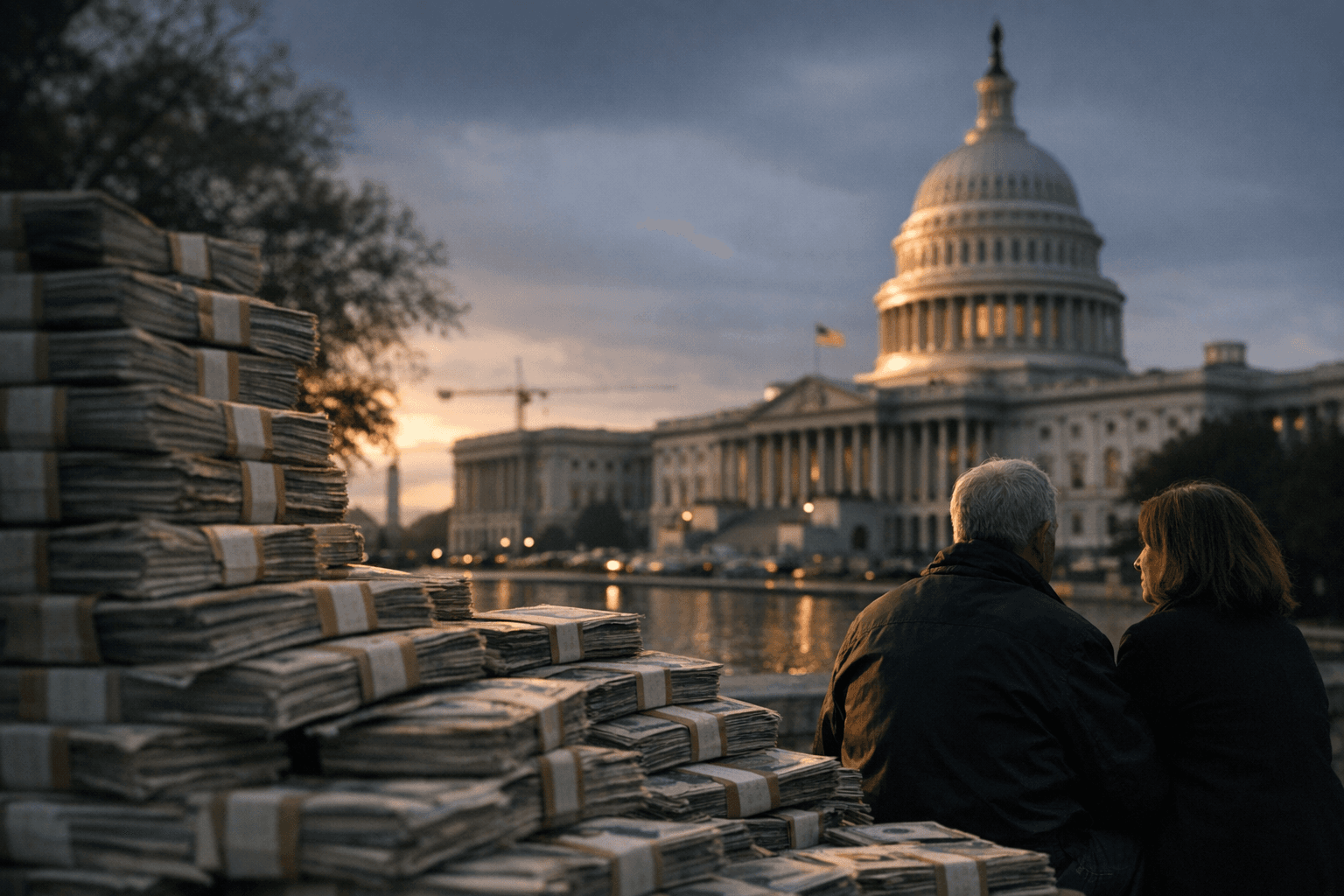
The United States is on course to accumulate $64 trillion in national debt over the next decade, the Congressional Budget Office projects, as annual deficits balloon and the cost of servicing existing debt surges toward levels that would eclipse every other major spending category.
The CBO's Budget and Economic Outlook for 2026 to 2036, released February 11, projects the federal deficit will rise from $1.9 trillion in fiscal year 2026 to $3.1 trillion in 2036, producing cumulative deficits of $24 trillion over the period. Debt held by the public is expected to climb from 101% of GDP in 2026 to 120% by 2036, well above the previous record of 106% set in 1946 at the close of World War II. The CBO projects that record will fall even sooner, by 2030.
The fiscal trajectory has worsened considerably since the agency's last major assessment. The CBO's cumulative deficit projection from 2026 to 2035 is $1.4 trillion higher than its January 2025 estimate, a shift driven largely by recent tax and spending legislation.
The largest single policy factor, according to the Cato Institute's analysis of the CBO data, is the One Big Beautiful Bill Act, which the CBO estimates will increase deficits by $4.7 trillion over 10 years on a dynamic basis, accounting for interest costs and macroeconomic effects. The Committee for a Responsible Federal Budget puts the law's impact at $4.2 trillion added to the national debt through 2034 and $4.7 trillion through 2035. The Bipartisan Policy Center, analyzing the measure under its legislative designation of H.R.1, signed by President Trump on July 4, places the CBO's estimate at $3.4 trillion added over 10 years. The bill also raised the federal debt ceiling by $5 trillion.
Revenue losses from the tax legislation more than offset the roughly $3 trillion the CBO had projected tariffs would generate, according to CBO findings. A separate legal complication compounds that picture: a Supreme Court ruling that tariffs imposed under the International Emergency Economic Powers Act are illegal would reduce revenue by an additional $1.6 trillion through 2036, the CBO estimated.
The debt-service bill is growing in lockstep. Net interest costs will double from $970 billion in 2025 to $2.1 trillion in 2036, rising from 3.2% to 4.6% of GDP. By 2036, interest payments will nearly equal all discretionary spending combined. By 2056, under CBO long-term projections, net interest would exceed 6.9% of GDP, outpacing every other major spending category, while debt held by the public could reach 175% of GDP.
Maya MacGuineas, president of the Committee for a Responsible Federal Budget, offered a stark assessment: "There are no surprises here or bright spots of encouraging news: our nation's deficits, debt, interest payments and trust funds are all in terrible shape."
The projections arrive after Moody's lowered the U.S. credit rating one notch from Aaa to Aa1 last May, following earlier downgrades by S&P in 2011 and Fitch in 2023. Economists warn that as the federal government issues larger volumes of Treasury bonds to finance widening deficits, investors may demand higher yields, pushing borrowing costs still higher.
President Trump has called for a different solution. "The United States of America should be paying MUCH LESS on its Borrowings (BONDS!)," he posted on social media, renewing his pressure on the Federal Reserve to cut interest rates as a way to reduce debt-service costs.
The U.S. has already accumulated more than $37 trillion in debt, federal data shows. The country has not posted a budget surplus since 2001, and on current trajectories, that streak shows no sign of ending.
This article was produced by Prism’s automated news system from verified source data, official records, and press releases, then run through automated quality and moderation checks before publishing. The system is built and supervised by the people who set the standards it runs under. Read our full AI policy.
Did this article answer your question?