CBS ends Stephen Colbert’s Late Show, sparking late-night debate
Colbert turned satire into trust, then carried that bond from Comedy Central to CBS, where his finale drew 6.74 million viewers.

Stephen Colbert’s exit from CBS closed more than a franchise run. It ended a rare late-night relationship that was built on a mix of satire, political fluency and a direct, almost conspiratorial intimacy with viewers who followed him from cable to network television.
That bond did not begin at CBS. Colbert spent eight years as a correspondent and writer on The Daily Show, then created a sharply defined persona on The Colbert Report from 2005 to 2014, where he played a parody conservative pundit and coined “truthiness.” The character gave audiences a way to decode the news through comedy, but it also taught them how Colbert worked: he was in on the joke, and he expected viewers to be in on it too. That shared understanding became the basis for the loyalty often described as Colbert Nation.
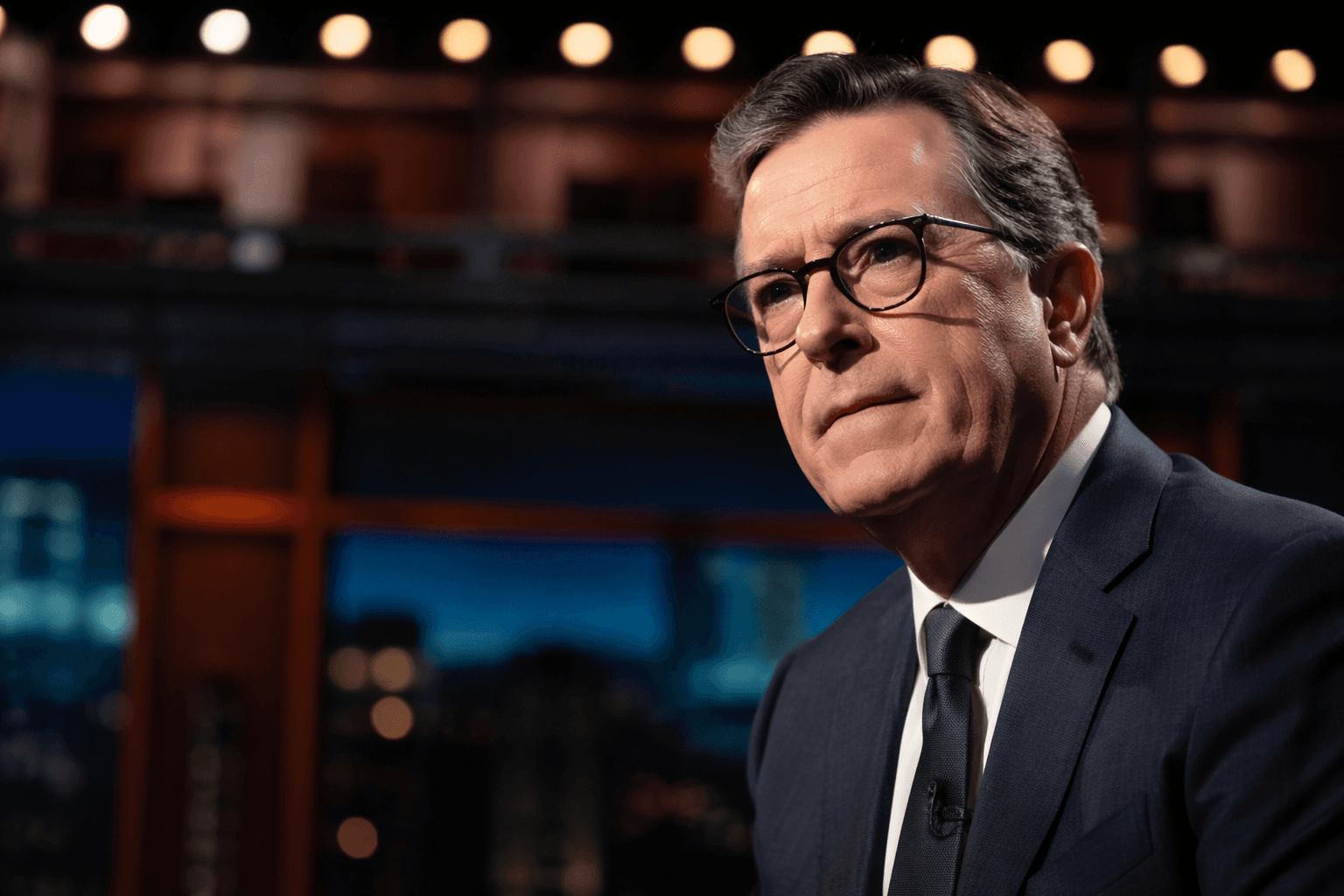
When Colbert took over The Late Show after David Letterman retired, CBS immediately saw the scale of that trust. His Sept. 8, 2015 debut averaged 6.6 million viewers, more than doubling the audience from a year earlier. The move also brought a different tone to a legacy network show that had started in 1993, when CBS lured Letterman from NBC. Colbert did not simply inherit the desk in the Ed Sullivan Theater. He brought a built-in audience that had already learned to trust his timing, his outrage and his ability to turn politics into something both sharper and more personal.
CBS announced in July 2025 that it would end The Late Show with Stephen Colbert in May 2026 and retire the franchise, calling it a “financial decision” and saying it was not related to performance or content. The decision landed as late-night was already under pressure from rising production costs and shrinking linear-TV audiences, even as more viewers watched clips online. Colbert’s show had also leaned more heavily into political humor, raising broader questions about whether late-night had become more polarizing or whether hosts like Colbert were simply the ones still willing to speak plainly to viewers who wanted that kind of company.
The final episode, which aired May 21, 2026, turned that audience relationship into a farewell. Jimmy Kimmel, Jimmy Fallon, Seth Meyers and John Oliver appeared, and Paul McCartney was the last guest. CBS said the episode drew 6.74 million viewers, making it the show’s most-watched weeknight episode ever. Colbert told viewers there was “so much history” in the Ed Sullivan Theater and said the show had brought him and the staff joy over 11 years and more than 1,800 episodes. In an era when late-night hosts can feel interchangeable, Colbert’s appeal endured because viewers never just watched the joke. They trusted the person telling it.
Know something we missed? Have a correction or additional information?
Submit a Tip