CBS News launches California governor race guide with full candidate responses
CBS News California Investigates is putting full candidate answers on one screen, stripping away spin in a governor's race shaped by redistricting, immigration, and housing.
A side-by-side guide built around candidate answers
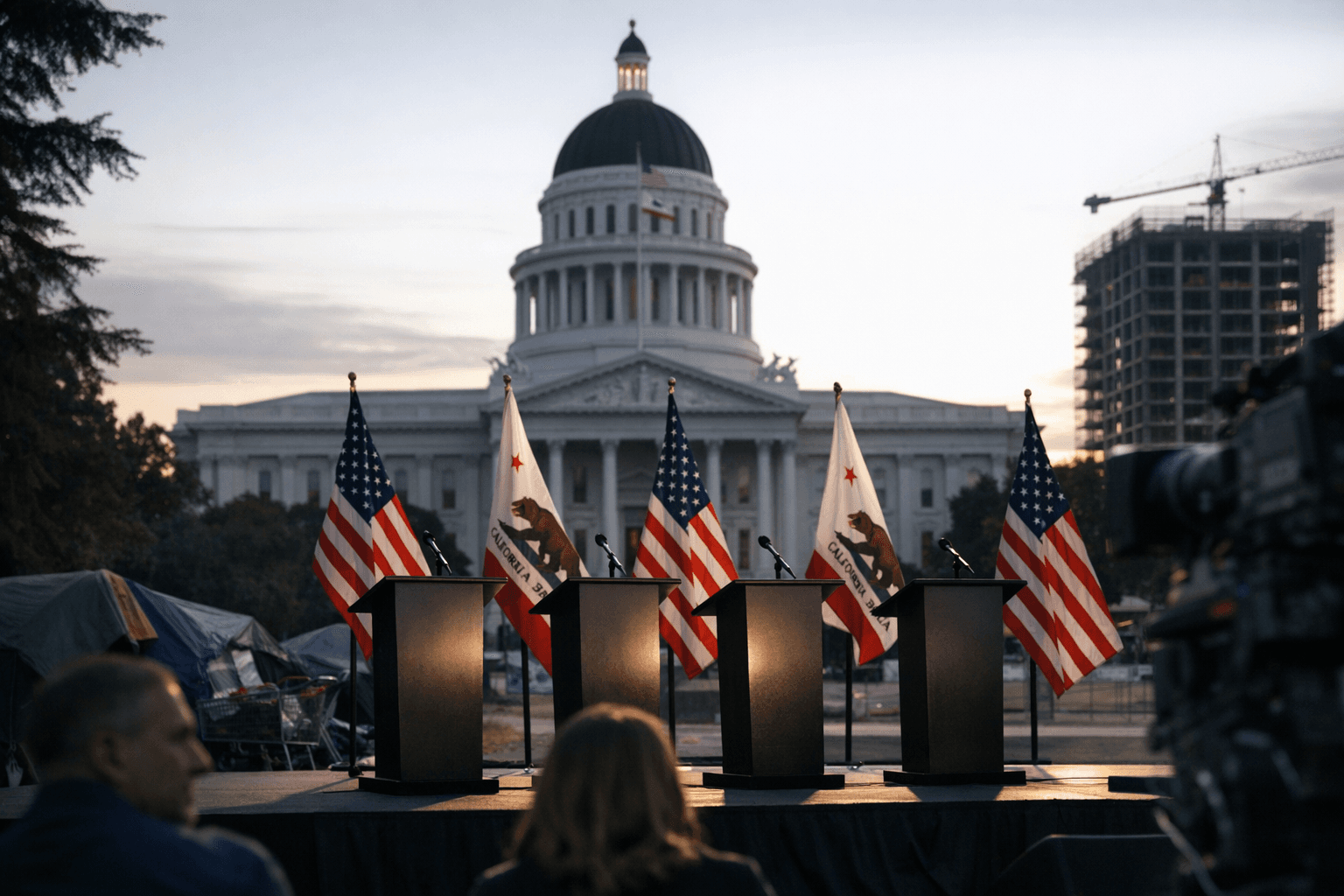
CBS News California Investigates has turned its California governor coverage into a comparison tool, giving voters full, uninterrupted candidate responses on the same screen. The guide is built from in-depth interviews with the top-polling candidates and is designed so viewers can compare them side by side on issue-specific segments, rather than sorting through clips, slogans, or edited soundbites.
That format matters in a race where the stakes are unusually high and the political field is still taking shape. Gov. Gavin Newsom is term-limited and cannot seek reelection in 2026, opening the door to a contest that will help define California’s direction on housing, immigration, public safety, education, energy, and the state budget. CBS News California Investigates says the project was built for exactly that kind of race, one it describes as among the most consequential in the state.
Why the 2026 race carries so much weight
California’s statewide primary is set for June 2, 2026, and the top two vote-getters will advance to the November 3, 2026 general election regardless of party. That election structure raises the value of direct candidate comparison, because voters may face a crowded field in June and then a two-candidate general election in November that does not follow traditional partisan lines.
The race also arrives after a long Newsom era, which makes the transition especially important for state institutions and for voters trying to judge continuity versus change. The guide gives that decision a practical frame: instead of asking readers to infer where candidates stand from campaign messaging, it places their answers on the record in a format that makes differences easier to spot.
How the guide is built
CBS News California Investigates says the project comes from in-depth interviews with the top-polling candidates for California governor. CBS News correspondent Julie Watts has been central to the interviews, asking contenders to move beyond talking points and answer on the issues that are already dominating the campaign.
The presentation is meant to be interactive in spirit, even when consumed as straight reporting. Viewers can move through issue-specific segments and compare responses directly, which gives the guide an accountability function as well as an informational one. In a race where candidates can sound similar in stump speeches, the structure forces sharper distinctions on policy, priorities, and governing style.
The work is also collaborative. CBS News California Investigates says it draws on reporting across CBS stations in Los Angeles, Sacramento, and the San Francisco Bay Area, along with CBS News Confirmed and CBS News Data. That statewide setup gives the project the reach needed for a race that will affect local governments, state agencies, and communities from the coast to the Central Valley.
The issues already driving the contest
CBS has already used the project to examine a set of questions that are likely to shape the 2026 campaign. Redistricting and Proposition 50 have been central to the conversation, alongside immigration and sanctuary-state policy. The guide has also pressed candidates on transgender student sports, gas prices, housing, insurance, and high-speed rail.
That issue mix reflects how broad the governor’s role is in California politics. The office touches immediate household costs, but it also carries authority over the state’s response to federal conflict, the administration of massive public works, and the policies that affect schools and identity-based disputes. By organizing candidate answers around those topics, the guide gives voters a way to test whether the contenders are offering substantive plans or simply repeating familiar lines.
Housing and insurance are especially important because they sit at the intersection of affordability and public frustration. Gas prices remain a political flashpoint in a state with enormous transportation costs and strict climate policy. High-speed rail, meanwhile, has long symbolized the gap between California’s ambitions and the state’s ability to deliver major infrastructure on time and at scale.
Why this format can improve public understanding
The main promise of the guide is transparency. Full responses reduce the degree to which campaigns can control the message through selective excerpts, and side-by-side presentation makes it harder to blur distinctions on policy. In a high-stakes governor’s race, that can help voters compare candidates on the same questions instead of relying on media summaries or partisan framing.
It also gives the public a clearer view of what candidates are willing to say when they are pressed directly. A candidate who sounds sharp in a rally or ad may sound less certain when asked about implementation, trade-offs, or consequences. That is where a guide like this can matter most: it exposes the difference between a slogan and a governing position.
The format also fits the practical reality of modern elections. Voters are asked to absorb a large amount of information across a short campaign window, and a race that spans redistricting, immigration, school policy, and affordability can overwhelm even engaged readers. A structured comparison tool lowers that barrier by letting people focus on the topics they care about most.
What it says about local news in elections
CBS News California Investigates says it launched in March 2024 as a government accountability franchise, and this governor’s race guide shows how that mission can translate into election coverage. Rather than treating political reporting as a sequence of quotes and headlines, the project tries to function as a public record of candidate positions.
That role is becoming more important as local and regional outlets search for ways to add value in a crowded information environment. A guide built around direct answers is not just a campaign feature. It is a model for how local journalism can help voters evaluate power, especially in races where the winner will shape policy far beyond one election cycle.
The central test is whether the public uses that information to make more grounded choices. On that measure, the guide offers one of the clearest services election coverage can provide: it keeps the candidates’ words in full view, on the issues that will matter once the campaign ends and the governing begins.
The key dates voters need to know
The political calendar gives this guide immediate relevance. California’s primary election is June 2, 2026, the last day to register to vote is May 18, 2026, and all active registered voters will receive a ballot for the primary. The top two finishers then move on to the November 3, 2026 general election, regardless of party.
Those dates frame the stakes of the CBS project. With Newsom leaving office because of term limits and the field moving toward a top-two primary, the race will turn on whether candidates can persuade voters with specifics. This guide is built to help them do exactly that, by setting campaign claims against full candidate responses and letting Californians judge the differences for themselves.
This article was produced by Prism’s automated news system from verified source data, official records, and press releases, then run through automated quality and moderation checks before publishing. The system is built and supervised by the people who set the standards it runs under. Read our full AI policy.
Did this article answer your question?

