CBS Sunday Morning spotlights voting rights, Mother's Day, and healing losses
Voting rights, grief, and Mother’s Day rituals give Jane Pauley’s Sunday lineup a clear mission: keep broadcast TV relevant by offering shared stories that still feel civic and personal.
A Sunday lineup built for a fractured audience
CBS News Sunday Morning is leaning into the kind of storytelling that still gathers people around the screen: civic conflict, family ritual, institutional memory, and personal loss. The May 10 edition, hosted by Jane Pauley, is scheduled for 9:00 to 10:30 a.m. ET on CBS and begins streaming on the CBS News app at 11:00 a.m. ET, a reminder that the program still lives in broadcast time while also meeting viewers where they now are.
That mix matters. The episode does not try to chase the news cycle with speed alone. Instead, it uses features about voting rights, Mother’s Day, media history, and national grief to show what traditional Sunday television still believes people want at the end of the week: a sense of context, a human scale, and stories that connect private life to public change.
Voting rights returns as a live national question
The cover story, reported by Robert Costa, looks at the turmoil surrounding voting in America as the country gears up for the midterm elections. That choice places one of the nation’s oldest democratic struggles at the center of a weekend broadcast built for reflection rather than breaking news. It also signals that election administration remains a live public issue, not a settled chapter in civic life.
The segment lands with historical weight because the Voting Rights Act was signed into law on August 6, 1965, by President Lyndon B. Johnson. In other words, the broadcast is linking current fights over ballot access and election rules to one of the most consequential civil rights laws in U.S. history. For viewers, the message is clear: voting is not just a political process, but a continuing test of access, equity, and trust in American democracy.
Mother’s Day stories that hold joy and loss together
Mother’s Day gives the episode its emotional center, but the show does not settle for a single mood. Martha Stewart offers culinary ideas for a Mother’s Day breakfast, tied to her latest book, *The Martha Way: Essential Principles of Mastering Home and Living - Your Guide to Cooking, Entertaining, and Stylish Home Organizing*. That segment turns the holiday into a practical ritual, the kind of domestic expertise Sunday Morning has long treated as worthy television.
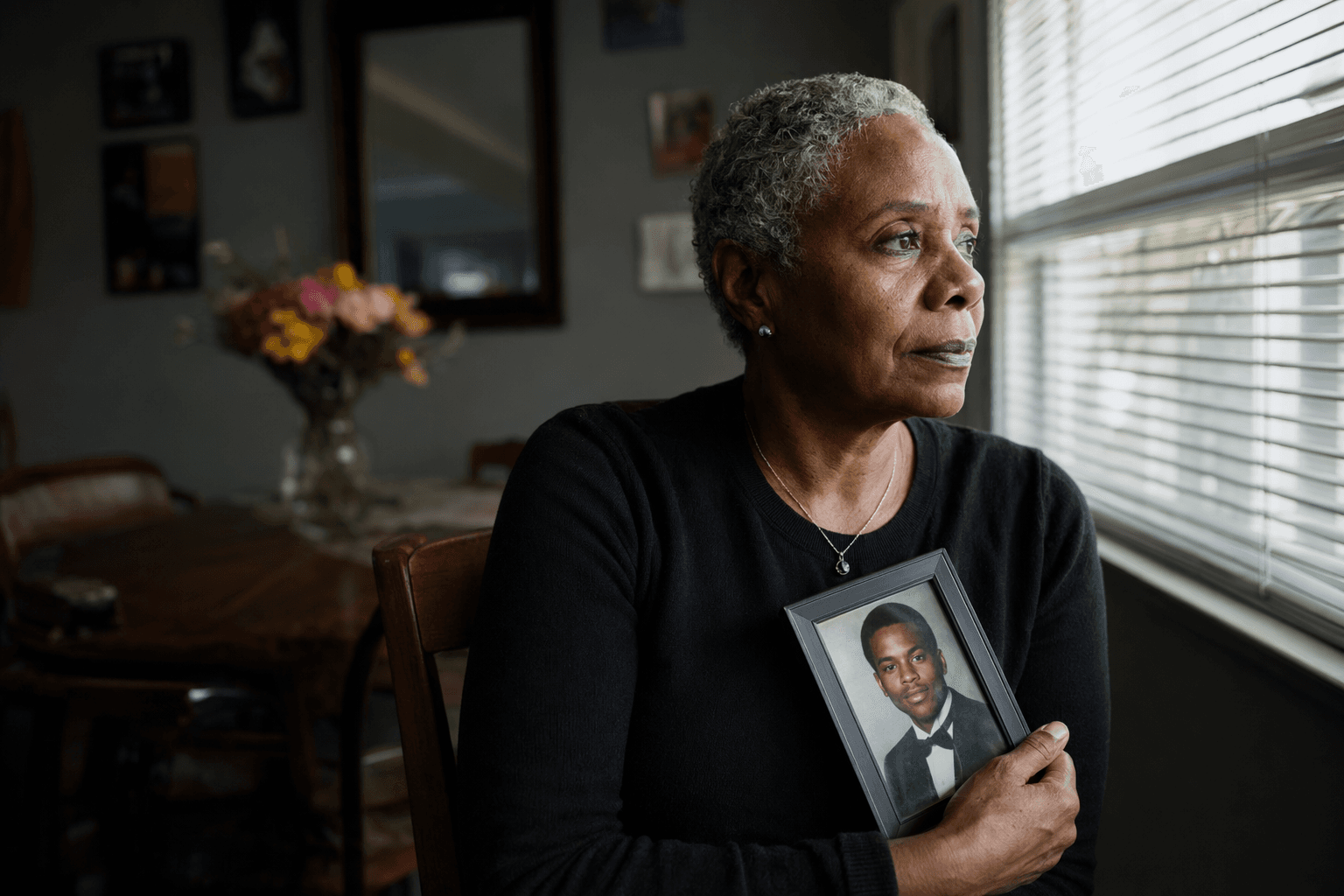
At the same time, Faith Salie’s “Missing Mom” feature pushes into deeper terrain. She meets a group of women, most of whom were 20 or younger when their mothers died, who now gather to heal and share their stories. The segment grows out of Hope Edelman’s long-running support network for motherless daughters, which she founded 20 years ago. That framing gives the holiday a social dimension, showing that Mother’s Day can be celebratory for some and painful for others, sometimes both at once.
Josh Seftel’s segment with his mother, Pat, adds another register. Their reconnecting for Mother’s Day continues a tradition of intimate, intergenerational storytelling that has long helped the program translate a holiday into something more personal than a retail occasion. Together, the Mother’s Day pieces widen the lens from breakfast tables to grief support, from celebration to remembrance.
A program that keeps looking backward to explain the present
The “Almanac” segment for May 10 folds history into the broadcast’s rhythm by looking back at events on that date. It is a small feature, but it reinforces one of the reasons Sunday Morning still endures: it treats the calendar as a cultural archive, not just a sequence of deadlines.
That same instinct drives Mo Rocca’s “Signing Off” segment, which looks at the history of CBS Radio as the service prepares to go off the air on May 22, 2026, after 99 years. The segment will revisit a legacy that included Edward R. Murrow, Robert Trout, and Charles Osgood. CBS says the shutdown reflects changing economic realities and shifts in radio programming, a blunt reminder that even institutions with deep public recognition have to adapt or disappear.
This is more than nostalgia. It is a portrait of a media landscape being remade by economics, audience habits, and platform fragmentation. By placing that story on a Sunday morning broadcast, CBS is quietly arguing that legacy media still has a role in interpreting the end of one era while trying to protect another.
Grief, legacy, and cultural memory
The episode also turns outward through two memorial-minded features. Jonathan Vigliotti offers commentary tied to the devastating 2025 Los Angeles fires, which he documented in his book *Torched*. That segment promises to connect environmental disaster with the lived experience of loss, a particularly urgent subject in California and beyond as climate-driven crises reshape how communities think about safety and recovery.
Lee Cowan’s memorial segment on Ted Turner widens the focus again. Turner died on May 6, 2026, at age 87. The story will reflect on his founding of CNN, his role in reshaping cable television, his time racing in the America’s Cup, and his support for conservation and philanthropy. CBS News has also noted Turner’s broader media empire, including CNN, TBS, and TNT, along with his ownership of the Atlanta Braves for 20 years. His death gives the broadcast another opportunity to revisit the generation of media builders whose decisions still shape the public sphere.
Tracey Smith’s visit with actor and comedian Martin Short, who is the subject of a new documentary, adds a lighter cultural note without breaking the episode’s pattern. Even that segment fits the week’s overall logic: a familiar performer, reframed through a documentary lens, becomes part of the show’s larger interest in memory, legacy, and the stories that last.
What this lineup says about Sunday morning television
Taken together, the May 10 edition reads like a statement of purpose. CBS News Sunday Morning is not just previewing a broadcast schedule; it is showing how a legacy Sunday newsmagazine still tries to hold national attention in a fragmented media environment. It does that by choosing stories that speak to shared civic anxiety, family ritual, and the cultural figures people already know.
The result is a lineup that trusts viewers to sit with both policy and feeling, both history and loss. In a media world built for speed, the program is betting that there is still an audience for stories that ask people to think, remember, and feel at the same time.
This article was produced by Prism’s automated news system from verified source data, official records, and press releases, then run through automated quality and moderation checks before publishing. The system is built and supervised by the people who set the standards it runs under. Read our full AI policy.
Did this article answer your question?