CBS’s 48 Hours keeps true-crime empire alive with new cases
CBS’s long-running true-crime staple still wins by mixing new investigations, a deep archive, and easy streaming access across platforms.
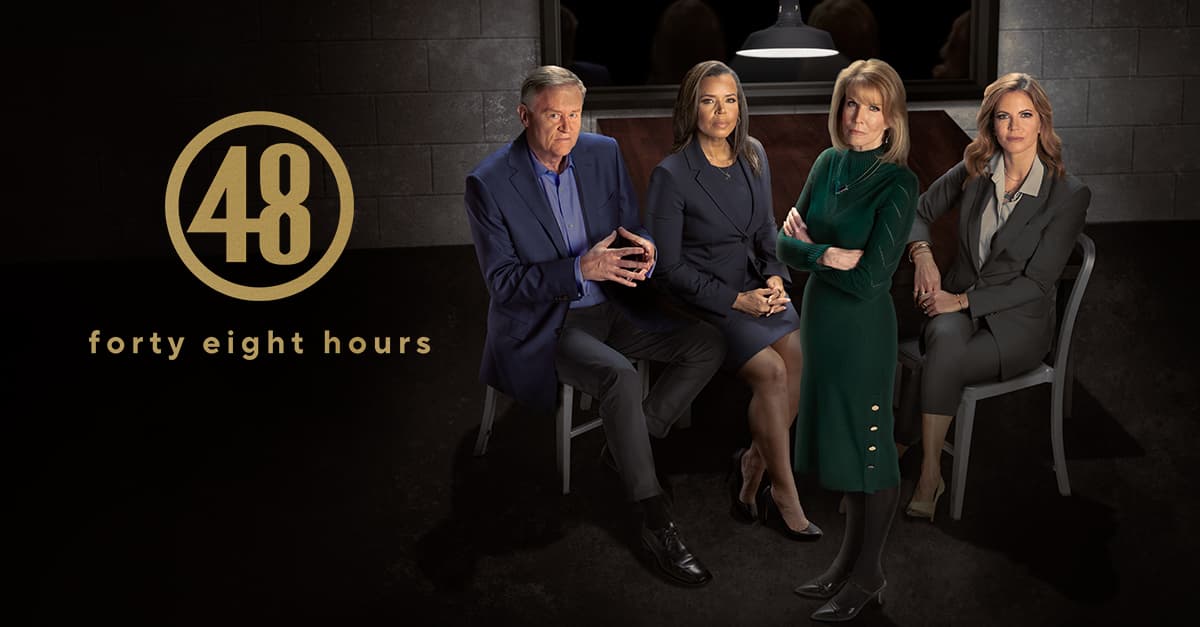
True-crime television is crowded, but CBS’s 48 Hours keeps its edge by doing what many competitors struggle to sustain: pairing a familiar broadcast ritual with a constant supply of new cases. CBS describes the program as television’s most popular true-crime series, and that claim rests on more than brand recognition. The show sits at the center of a broader viewing ecosystem that reaches linear TV, live streaming, on-demand playback, and an archive built for viewers who want to follow a case at their own pace.
Why 48 Hours still commands attention
The show’s staying power comes from consistency. 48 Hours airs Saturdays at 10/9c on CBS, a slot that gives the series a weekly appointment feel even as audience habits have shifted toward fragmented viewing. In a market full of crime content, that regular cadence matters because it turns a single broadcast into a habit, and habit is what keeps a franchise visible across decades.
The format also remains durable because it treats true crime as reporting, not just spectacle. CBS News positions the series as a journalistic brand with long-form investigations, not a disposable one-off. That approach gives the show a built-in authority that streaming platforms often lack, especially when viewers want a case presented with detail, pacing, and follow-through rather than rushed dramatization.
How the franchise is built for modern viewing
48 Hours is not confined to the Saturday broadcast. CBS News says the series is available live and on demand, and it can also be found through Paramount+, Pluto TV, YouTube, Netflix, and a free FAST channel. That spread matters because it gives the franchise multiple entry points for different viewing habits, from viewers who still sit down for network television to those who discover episodes through library-style streaming.
CBS News also maintains an online archive of full episodes, articles, and photo galleries, which gives the brand a second life beyond the original airing. The archive turns each investigation into a searchable record, and that matters in true crime, where audiences often return to older cases, revisit names, and compare developments over time. In practice, 48 Hours behaves less like a weekly show and more like a persistent case file.
The current team behind the series
The on-air identity of 48 Hours is tied to a stable roster of correspondents: Erin Moriarty, Peter Van Sant, Natalie Morales, Anne-Marie Green, and Tracy Smith. Judy Tygard is listed as executive producer, giving the series a recognizable editorial center. That continuity helps the program feel dependable in a category that can sometimes over-rely on gimmicks or sensational framing.
The correspondent lineup also signals how CBS wants the show perceived. These are established journalists, not interchangeable hosts, and that distinction supports the program’s credibility. In a saturated true-crime market, recognizable reporting talent helps CBS preserve trust while still delivering the tension and pacing the genre demands.
What the recent episode slate shows about the show’s priorities
The recent episode archive makes clear that 48 Hours is not leaning on nostalgia alone. Recent 2026 episodes include “The Plot to Eliminate Alyssa Burkett” and “Could Angela Prichard Have Been Saved?”, evidence that the series is still centered on active investigations and unresolved questions. Those episodes reinforce the show’s core promise: it does not just retell old crimes, it keeps moving through new ones.
CBS News also publishes a weekly episode schedule page, which underscores that the series is still operating as a live, ongoing broadcast property. That schedule has recently shown a practical wrinkle that many sports-heavy networks face: some June 2026 broadcasts started late because of WNBA games on CBS. Rather than weakening the franchise, those disruptions show how 48 Hours now exists inside a larger network flow, one where sports, news, and long-form documentary programming compete for attention on the same night.
How CBS uses the archive to widen the audience
The company is not only producing new installments; it is also repackaging earlier investigations as encore presentations for viewers who missed the original broadcast. That strategy is especially smart in true crime, where late discovery is common and viewers often arrive after an episode first airs. An encore run can function like a second premiere, especially when it lands alongside on-demand access and the online archive.
This is where broadcast and streaming complement each other instead of fighting each other. The Saturday airing creates urgency, the archive rewards deeper interest, and the encore schedule catches the people who were busy, away, or simply not tuned in when the original broadcast started. For a franchise with the scale of 48 Hours, that layered distribution is not a bonus. It is the business model.
The podcast expansion extends the brand beyond television
48 Hours has also moved further into audio, expanding into podcasts such as “48 Hours,” “Case by Case,” “My Life of Crime,” and “Post Mortem.” That matters because true-crime audiences often follow stories across formats, and podcasting lets CBS reach listeners during commutes, workouts, and other moments when video is not practical. It also deepens the franchise’s storytelling footprint without asking the audience to commit to a full hour of television.
The audio expansion strengthens the larger brand identity by making 48 Hours feel less like a single show and more like a crime-reporting platform. Each additional format extends the life of the reporting, keeps the title visible between Saturday broadcasts, and gives longtime viewers another way to stay engaged with investigations. In a crowded field, that kind of multiformat continuity is a competitive advantage.
Why the formula still works
The reason 48 Hours still draws an audience is not mystery alone. It combines a recognizable CBS news presence, a recurring Saturday broadcast, a deep digital archive, and broad streaming availability with fresh reporting on active cases. That mix lets the series meet viewers where they are while preserving the authority that has kept it relevant.
True-crime tastes have changed, and the market is more crowded than ever, but 48 Hours has not tried to reinvent itself into something unrecognizable. Instead, it has turned longevity into structure, and structure into reach. That is how a long-running network program still feels present in a streaming-era culture that rarely leaves much room for anything to last.
This article was produced by Prism’s automated news system from verified source data, official records, and press releases, then run through automated quality and moderation checks before publishing. The system is built and supervised by the people who set the standards it runs under. Read our full AI policy.
Did this article answer your question?