CCIA shared services hub fuels CNG fleets and lowers municipal costs
CCIA's shared services hub runs a CNG fueling station and landfill-energy projects, cutting municipal fleet costs and supporting local sustainability.
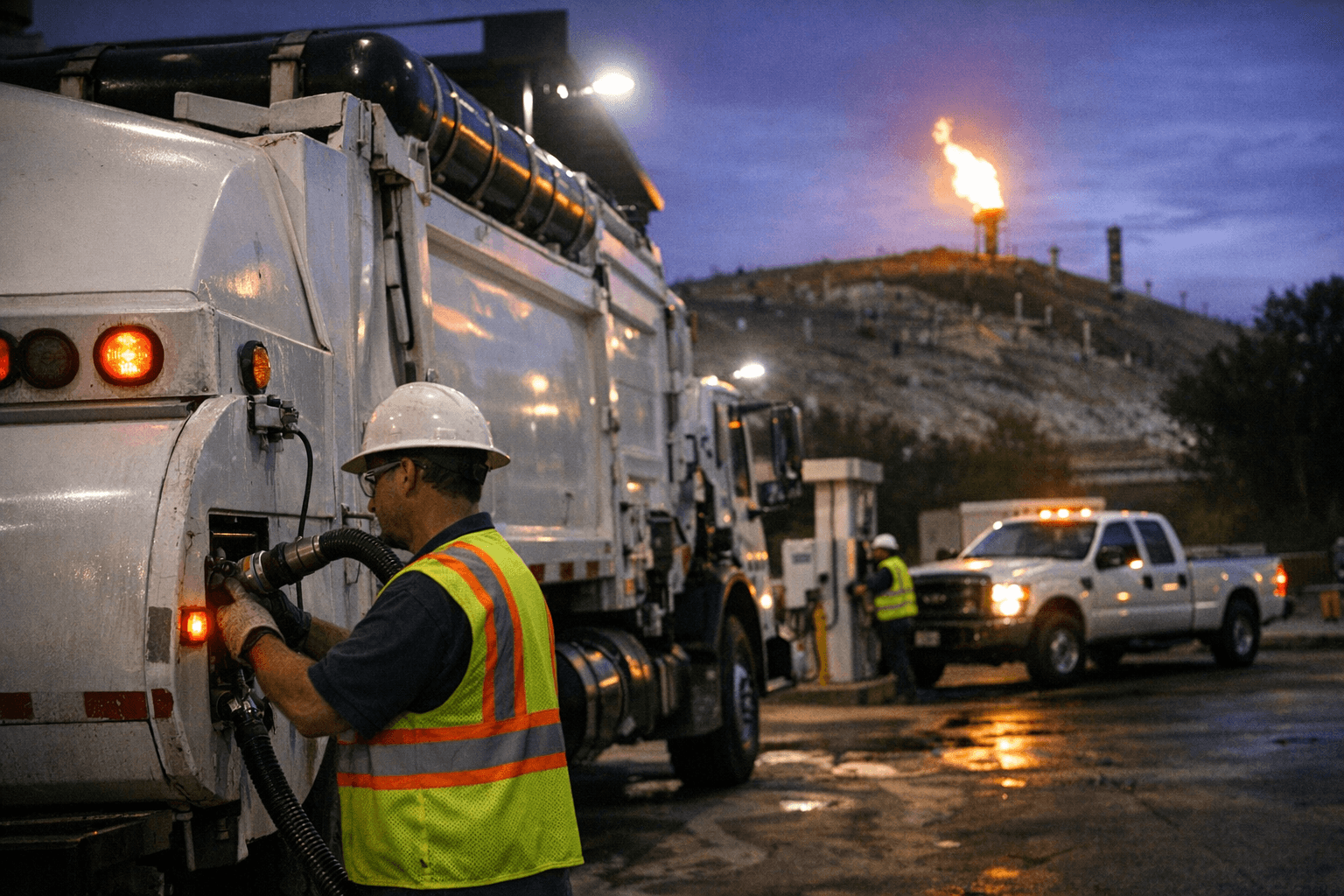
The Cumberland County Improvement Authority (CCIA) has positioned the county Solid Waste Complex as an operational hub that cuts municipal costs while enabling cleaner-fuel fleets. The facility houses a compressed natural gas (CNG) fueling station, landfill-energy infrastructure, and shared fleet services including maintenance, repair, truck-wash operations and stationing for refuse trucks. Those capabilities allow municipal and agency partners to base CNG vehicles locally rather than build their own fueling or maintenance infrastructure.
CCIA developed shared-services capabilities after upgrading the Solid Waste Complex and held a facility ribbon-cutting that announced the CNG fueling station and landfill energy hub. City of Vineland and other area agencies have used CCIA’s shared-services model to host partner fleets, share maintenance bays and refuel CNG vehicles on site. Regional utilities and waste agencies have cited the authority as a partner location when deploying CNG refuse trucks and expanding waste and recycling services, using CCIA as a staging and service point.
The local policy implications are concrete. Municipal governments that lack capital for on-site fueling or heavy-equipment maintenance can defer expensive garage investments and reduce operating costs by contracting with CCIA. That lowers short-term budget pressure and can shift procurement debates at city councils and county committees toward lifecycle cost analysis rather than upfront price. CCIA’s landfill-energy projects also create an alternative revenue and fuel source tied directly to county waste operations, aligning operational savings with sustainability goals in a way that municipal budgets and environmental plans can track.
Institutionally, CCIA’s model centralizes specialized services that are costly to replicate across multiple jurisdictions. Centralized maintenance and fueling reduce duplicative staffing, spare-parts inventories and capital outlays. City of Vineland and neighboring municipalities avoid siting disputes and permitting delays associated with new fueling stations by using the CCIA hub. For municipal fleet managers, shared services provide predictable access to refueling and repair, which can improve uptime for refuse collection and public works schedules.
For residents, the most immediate effects show up in local government budgets and service continuity. Lower operating costs for refuse fleets make it less likely that municipalities will need to raise fees or reallocate tax dollars to cover fleet expenses. A local CNG fueling option also supports cleaner-burning vehicle fleets that reduce diesel exhaust in neighborhoods near collection routes and landfill operations.
Looking ahead, municipality leaders and county officials will face choices about expanding partner agreements, negotiating service rates and aligning fleet procurement with CCIA capabilities. CCIA’s shared-services hub creates a practical pathway for Cumberland County governments to save money, improve fleet reliability and meet sustainability commitments without each town buying standalone fueling or maintenance facilities.
Sources:
Know something we missed? Have a correction or additional information?
Submit a Tip
%2Fcloudfront-us-east-1.images.arcpublishing.com%2Fadvancelocal%2FJC5LVXBYGZFJJLZRMFKJZKWJ74.jpg&w=1920&q=75)