CDC expands Ebola screening to Atlanta as Africa risk rises to 10 countries
Atlanta joined the CDC’s Ebola screening network as Africa’s risk area widened to 10 countries. Houston and Dulles also handled arrivals from Congo, Uganda and South Sudan.
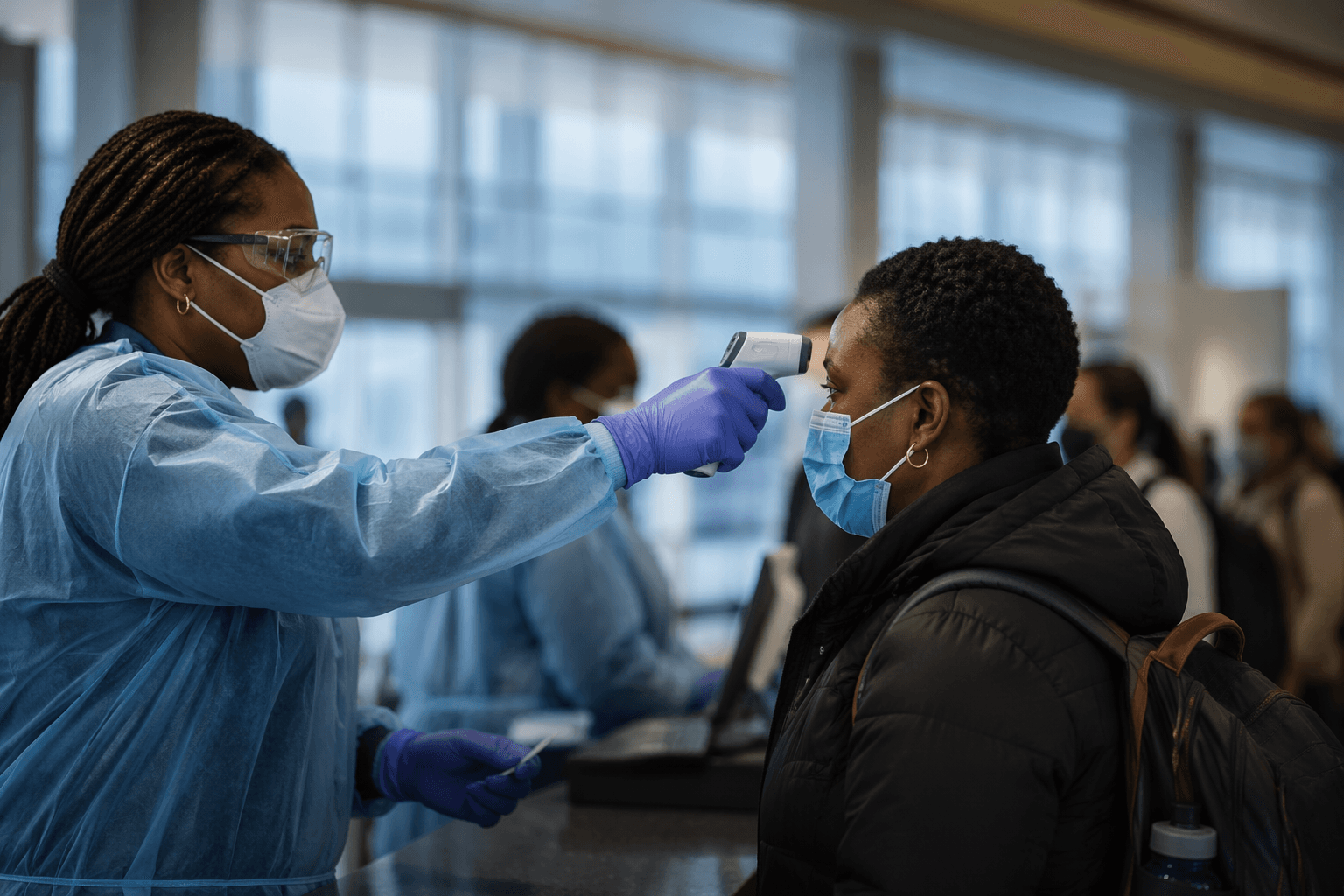
The Centers for Disease Control and Prevention expanded enhanced Ebola screening to Hartsfield-Jackson Atlanta International Airport, adding a second U.S. entry point for Americans returning from the Democratic Republic of the Congo, Uganda or South Sudan. Washington Dulles International Airport had already been designated, and Houston’s George Bush Intercontinental Airport was also being used as an entry point as federal officials widened their response to the outbreak in Central and East Africa.
The move came as the World Health Organization declared a public health emergency and U.S. officials raised the number of African countries at risk from three to 10. The strain driving the outbreak was the Bundibugyo virus, and the CDC said there was currently no vaccine. The agency described the airport checks as only one layer in a broader system that also included overseas exit screening, airline illness reporting and post-arrival public health monitoring.
For travelers, the new screening meant extra questions, possible referral for medical evaluation and closer follow-up if there had been exposure risk. The federal government also barred lawful permanent residents and non-U.S. citizens who had traveled to Congo, South Sudan or Uganda in the previous 21 days from entering the country. The goal, officials said, was to stop Ebola from entering the United States and to reduce the risk from exposed travelers who did arrive.
That risk was real, but it was also bounded. Ebola does not spread through the air like influenza or COVID-19, and airport screening cannot detect every exposure. What it can do is create a controlled checkpoint for travelers with possible contact, link them to monitoring faster and give local public health departments and hospitals time to prepare. The expanded screening was designed less as a wall than as a net, one meant to catch warning signs before they became a domestic emergency.
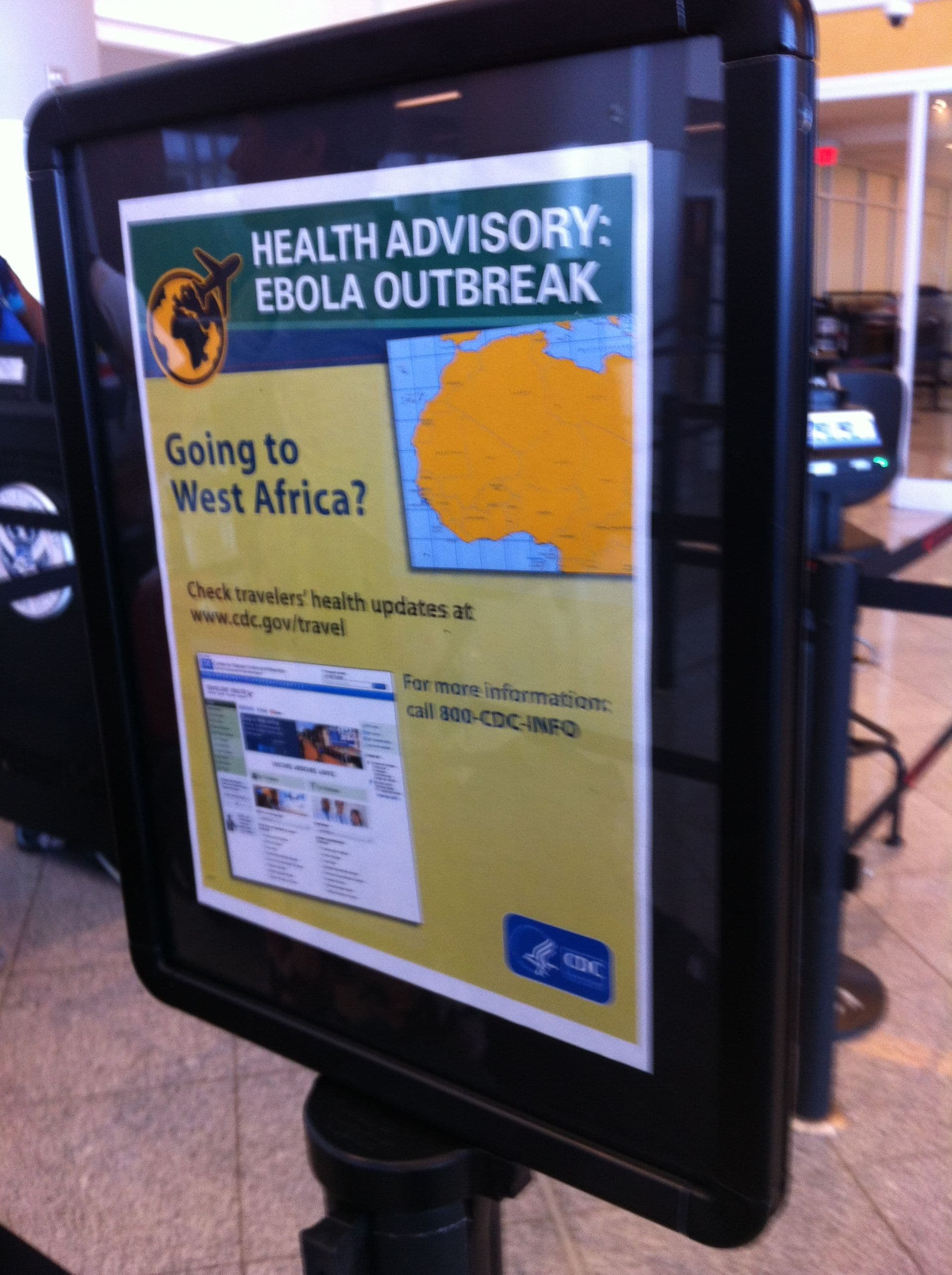
Federal officials pointed to the 2014 West Africa outbreak as the model. Then, the U.S. screened travelers from Guinea, Liberia and Sierra Leone at five airports: JFK, Newark, Washington Dulles, Chicago O’Hare and Atlanta. CDC data showed 1,993 travelers were screened from Oct. 11 to Nov. 10, 2014, 86 were referred for additional evaluation and seven were symptomatic and sent for medical evaluation. Those five airports handled more than 94% of travelers arriving from the affected countries, and CDC said no international air traveler from Guinea, Liberia or Sierra Leone was reported symptomatic during travel after exit-screening procedures were put in place.
The timing also carried practical significance for Atlanta and Houston, both host cities for FIFA World Cup matches beginning June 11. With international travel set to surge, the federal strategy relied on screening at the airport, monitoring after arrival and hospital readiness at the local level, rather than on any claim that Ebola could be eliminated by border checks alone.
This article was produced by Prism’s automated news system from verified source data, official records, and press releases, then run through automated quality and moderation checks before publishing. The system is built and supervised by the people who set the standards it runs under. Read our full AI policy.
Did this article answer your question?


