CDC prepares for disease threats as World Cup draws 6.5 million fans
Millions will pour into 16 host cities, forcing health officials to track Ebola, measles and heat while testing how much of the Covid playbook still works.

The World Cup is about to become a public-health stress test on a global scale. With 6.5 million fans expected across 16 host cities in the United States, Canada and Mexico, the tournament will bring 48 teams and 104 matches into airports, stadiums and crowded transit corridors from June 11 to July 19, forcing disease surveillance and emergency coordination to operate under intense pressure.
The Centers for Disease Control and Prevention has launched a fan-safety page and is working with government partners to support a healthy tournament for visitors and host communities. The agency has also held weekly calls with public-health offices in the 11 U.S. host cities and sent staff in person to help local departments prepare. In Los Angeles County, deputy health director Anish Mahajan said officials are introducing wastewater surveillance at a large sporting event for the first time. “We’re going to have people from all over the world coming into the city, into the county, for these games, and that’s great,” Mahajan said. “But that’s a massive risk for various infections.”
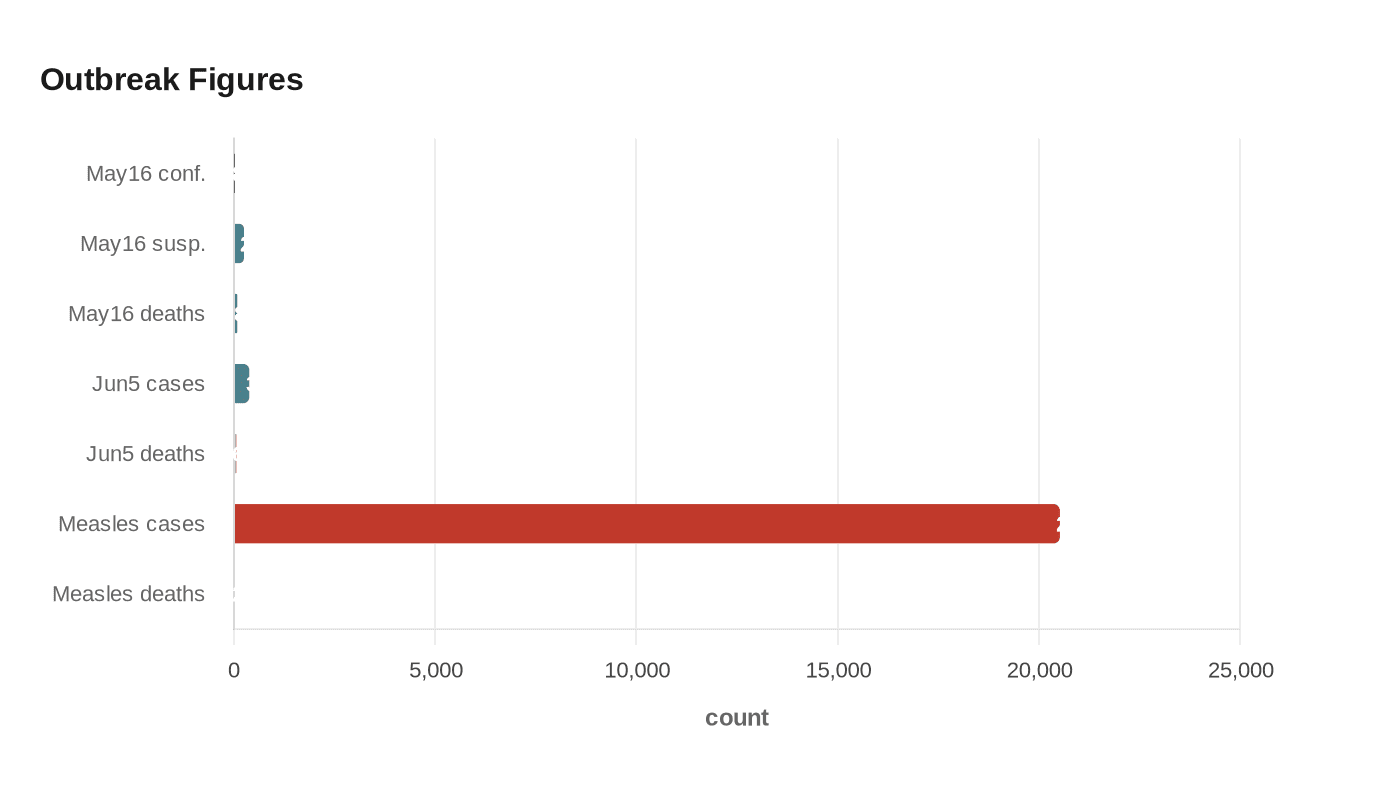
Ebola has drawn the most attention because of the outbreak ravaging parts of the Democratic Republic of Congo and Uganda, but public-health officials say the immediate risk to the World Cup remains low. Still, the outbreak is serious enough to trigger policy action. The World Health Organization declared it a Public Health Emergency of International Concern on May 17, citing the Bundibugyo virus and concerns about cross-border spread. As of May 16, WHO said there were eight laboratory-confirmed cases, 246 suspected cases and 80 suspected deaths in Ituri Province; by June 5, the European Centre for Disease Prevention and Control said the outbreak had grown to 381 confirmed cases and 64 confirmed related deaths in the Democratic Republic of Congo alone, with ongoing spread in Uganda.
On May 28, the United States, Mexico and Canada issued a joint statement saying they would align public-health travel measures for people coming from African regions at greatest risk for Ebola while trying to keep travel and commerce moving. The CDC has temporarily barred lawful permanent residents and noncitizens who traveled to Congo, South Sudan or Uganda in the previous 21 days from entering the United States, and it is conducting enhanced Ebola screening at Hartsfield-Jackson Atlanta International Airport, Washington Dulles International Airport and Houston’s George Bush Intercontinental Airport.
Even so, doctors and epidemiologists say Ebola is not the main threat inside packed stadiums. Measles and respiratory viruses are higher on the list, especially after the Pan American Health Organization warned that rising measles transmission and international travel could accelerate spread during the tournament. PAHO reported 20,521 measles cases and 25 deaths in the Americas by mid-May, four times the total at the same point in 2025. CDC data show 2,065 confirmed U.S. measles cases in 2025, the highest national total since 1992, and 2026 has already topped 2,000 again.
The Defense Health Agency is also tracking dengue, malaria, influenza, SARS-CoV-2, salmonella and norovirus. The bigger question is whether health systems can keep pace without the pandemic-era funding that helped build the tools now being reused for one of the largest international gatherings since Covid.
This article was produced by Prism’s automated news system from verified source data, official records, and press releases, then run through automated quality and moderation checks before publishing. The system is built and supervised by the people who set the standards it runs under. Read our full AI policy.
Know something we missed? Have a correction or additional information?
Submit a Tip