CDPH Warns Humboldt: Avoid Sick or Dead Marine Mammals, Birds After H5N1
CDPH warned Californians on March 6, 2026 to avoid sick or dead marine mammals and wild birds after H5N1 was confirmed; nearby San Mateo County elephant seals have tested positive and tours were canceled.
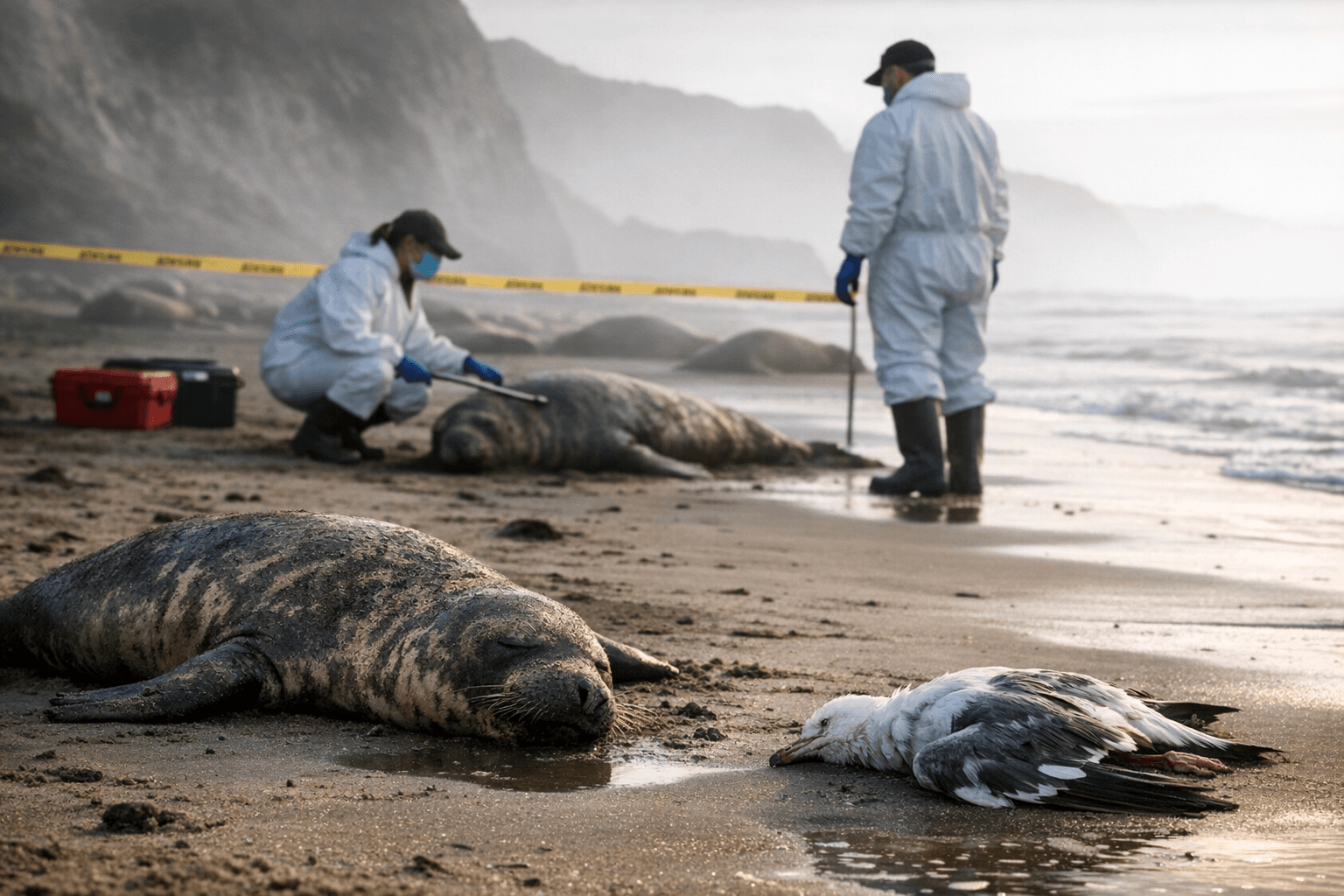
The California Department of Public Health issued a statewide public notice on March 6, 2026 urging people along the California coast, including Humboldt residents, to avoid contact with sick or dead marine mammals and wild birds after highly pathogenic avian influenza, H5N1, was confirmed. The advisory singles out beachgoers and pet owners as groups who should steer clear of wildlife on shorelines.
Local reporting in the Bay Area has already documented operational impacts: elephant seals at a San Mateo County beach tested positive for bird flu and, as a result, tours were canceled. Dr. John Swartzberg, clinical professor emeritus at UC Berkeley School of Public Health, said, “Well, for the first time we've seen in Ano Nuevo Beach, some of the seals, seals pups developing bird flu,” tying the regional detections to the state advisory.
State and rescue organizations are pushing the same message. The Marine Mammal Center reminds people and their pets that they should keep their distance and shouldn't approach live or dead animals, and ABC7 noted, “People and their canine companions are urged to be extra careful now because of a new warning from the California Department of Public Health about bird flu.”
Bay Area pet owners interviewed in the reporting described behavior changes that Humboldt pet owners can replicate. Tuti, a Chihuahua mix who “is six this year,” and her owner Emma Deleon of San Jose, who visits Crissy Field once or twice a week, said, “She loves it,' said Deleon.” Deleon added, “We don't go near the animals. we just watch them from afar.” Pet owner Lucy Mckenna said, “I'm careful. He stays close to me. He's a little lap dog,” and, “I always make sure he doesn't approach any dead animal. We do have them here, mostly birds and an occasional seal.”
Health experts emphasize that apparently healthy animals can still carry the virus. “We know that "bird flu" is really an influenza virus that can attack lots of mammals,” Dr. Swartzberg said, and he urged caution: “You should be careful when you're approaching other mammals, particularly if you're going to be, for example, on the beach and you see a seal, particularly if the seal looks sick, but a well animal could certainly be infected and spread the viruses as well as well,” said Dr. Swartzberg.
State officials and wildlife responders are urging vigilance on Humboldt beaches as warmer weather draws more people to the coast. With tours already canceled at San Mateo County sites and the March 6, 2026 CDPH notice in effect, officials and The Marine Mammal Center say keep pets leashed and avoid any contact with sick or dead seabirds and marine mammals.
Sources:
Know something we missed? Have a correction or additional information?
Submit a Tip