CENTCOM chief briefed Trump on Iran military options, raising risks
Navy Adm. Brad Cooper briefed President Donald Trump on Feb. 26 on military options in Iran, intensifying regional security and short-term market uncertainty.
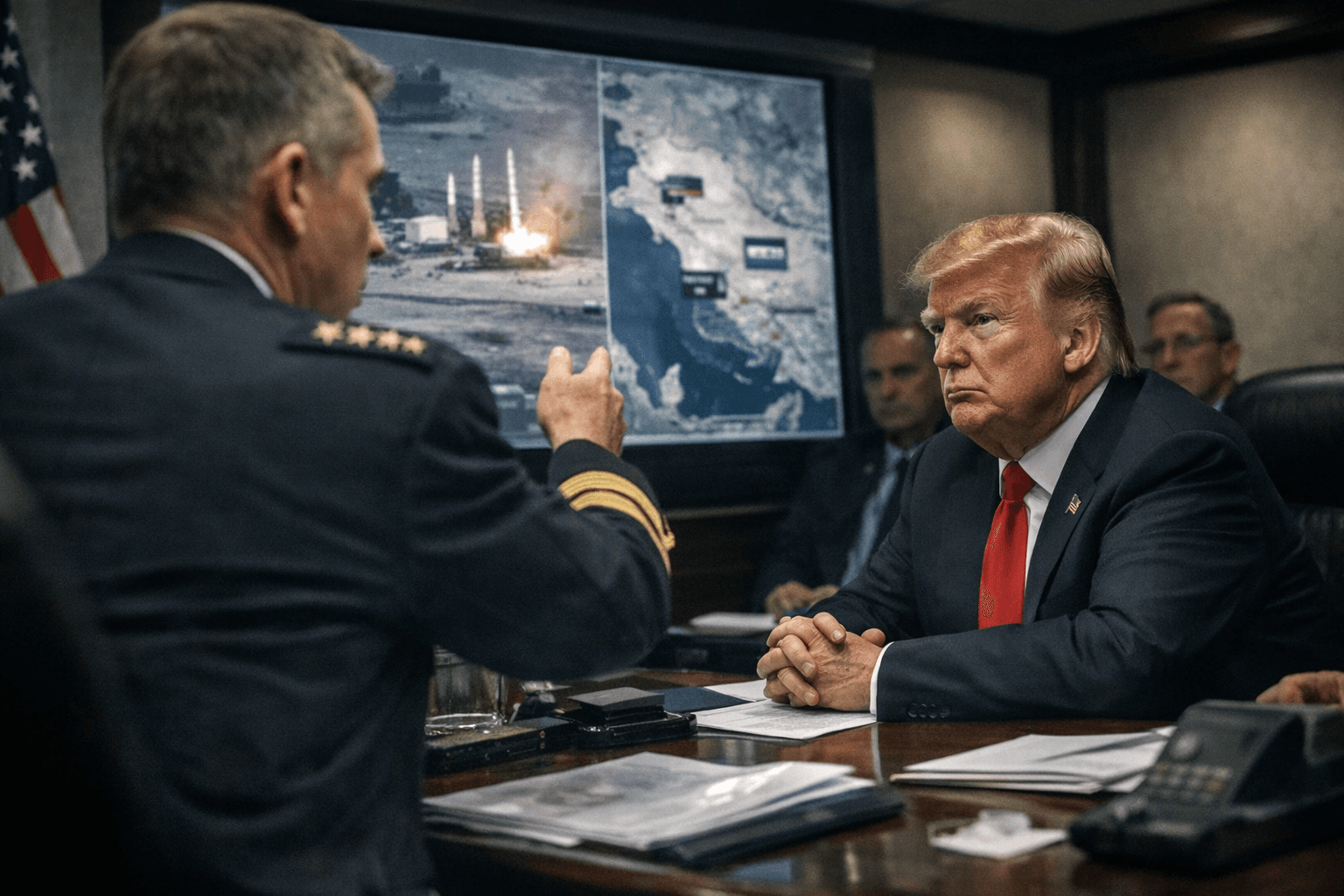
Navy Adm. Brad Cooper, head of U.S. Central Command, briefed President Donald Trump on Thursday on potential military options in Iran, a U.S. official said, a development that sharply raises near-term regional security and market concerns. The classified meeting, held at the White House on Feb. 26, 2026, followed months of heightened tensions between Washington and Tehran and comes as markets and policymakers reassess the probability of military action.
CENTCOM, based in Tampa, is the regional combatant command responsible for U.S. forces across the Middle East and parts of Central and South Asia. The briefing by its top officer is a routine part of the advisory process, but it takes on outsized significance when senior military leaders present options directly to the president amid a contentious U.S.-Iran standoff. Those options typically range from limited strikes and disruptions to maritime interdiction, expanded air operations, cyber actions, and larger kinetic campaigns; the official who confirmed the briefing did not specify which options were discussed.
The immediate economic implications are clear. Even the prospect of conflict in the Gulf region can lift energy prices, increase shipping insurance and premiums for tankers, and trigger flight and routing disruptions that ripple through global supply chains. Investors and risk managers watch the Strait of Hormuz and nearby shipping lanes closely because disruptions there can transmit quickly into higher fuel costs and broader market volatility. Financial markets often react within hours to escalatory signals from Washington or Tehran, amplifying effects on oil, currencies and risk-sensitive equities.
Policy choices now confront a familiar tradeoff for U.S. decision makers: limited military action can achieve narrow tactical objectives but risks unpredictable retaliation from Iranian proxies or asymmetric attacks on shipping and regional bases. Escalation would require the administration to weigh military effectiveness against geopolitical fallout, potential civilian casualties, and the economic cost of sustained operations. If strikes expand or Tehran responds in ways that threaten commercial traffic, lawmakers in Congress would likely face renewed pressure to demand briefings, approvals or constraints, reopening long-running debates over war powers and oversight.
For regional partners, an elevated U.S. military posture changes diplomatic calculations. Gulf states, Israel and NATO allies monitor such briefings for indications of burden sharing and rules of engagement, and energy-exporting countries would be forced to balance commercial interests against the security calculus. For businesses and commodity traders, the near-term priority is hedging against price spikes and logistics bottlenecks that could affect manufacturing and consumer costs.
Longer-term, repeated cycles of high-stakes briefing and brinkmanship contribute to strategic uncertainty that can raise the cost of capital for firms operating in the region and sustain a premium on defense spending. That pattern has macroeconomic consequences: persistent geopolitical risk tends to reduce investment and can slow growth in an already fragile global recovery. With the United States having received a detailed military assessment, markets and policymakers will now scrutinize signals from the White House, Pentagon and Tehran for the next clues about whether advisory options move toward action.
This article was produced by Prism’s automated news system from verified source data, official records, and press releases, then run through automated quality and moderation checks before publishing. The system is built and supervised by the people who set the standards it runs under. Read our full AI policy.
Did this article answer your question?