Central Bank Gold Purchases Slow in January as Demand Base Broadens
Global central banks bought just 5 tonnes of gold in January 2026, down from a 12‑month average of 27 tonnes as new sovereign buyers including Uzbekistan and Malaysia re-entered the market.
Global central bank net gold purchases slowed sharply in January 2026 to 5 tonnes, compared with a 12‑month average of 27 tonnes, signaling a pause in momentum that WGC research attributes to price volatility and seasonal factors. Marissa Salim of the World Gold Council wrote, "Compared to the average of 27 tons over the past 12 months, the momentum for central bank gold purchases at the beginning of the year has slowed somewhat, with net purchases in January amounting to only 5 tons. Price volatility and holiday factors may have caused some central banks to pause their purchases, but with no signs of easing geopolitical tensions, gold reserve accumulation is expected [...]"
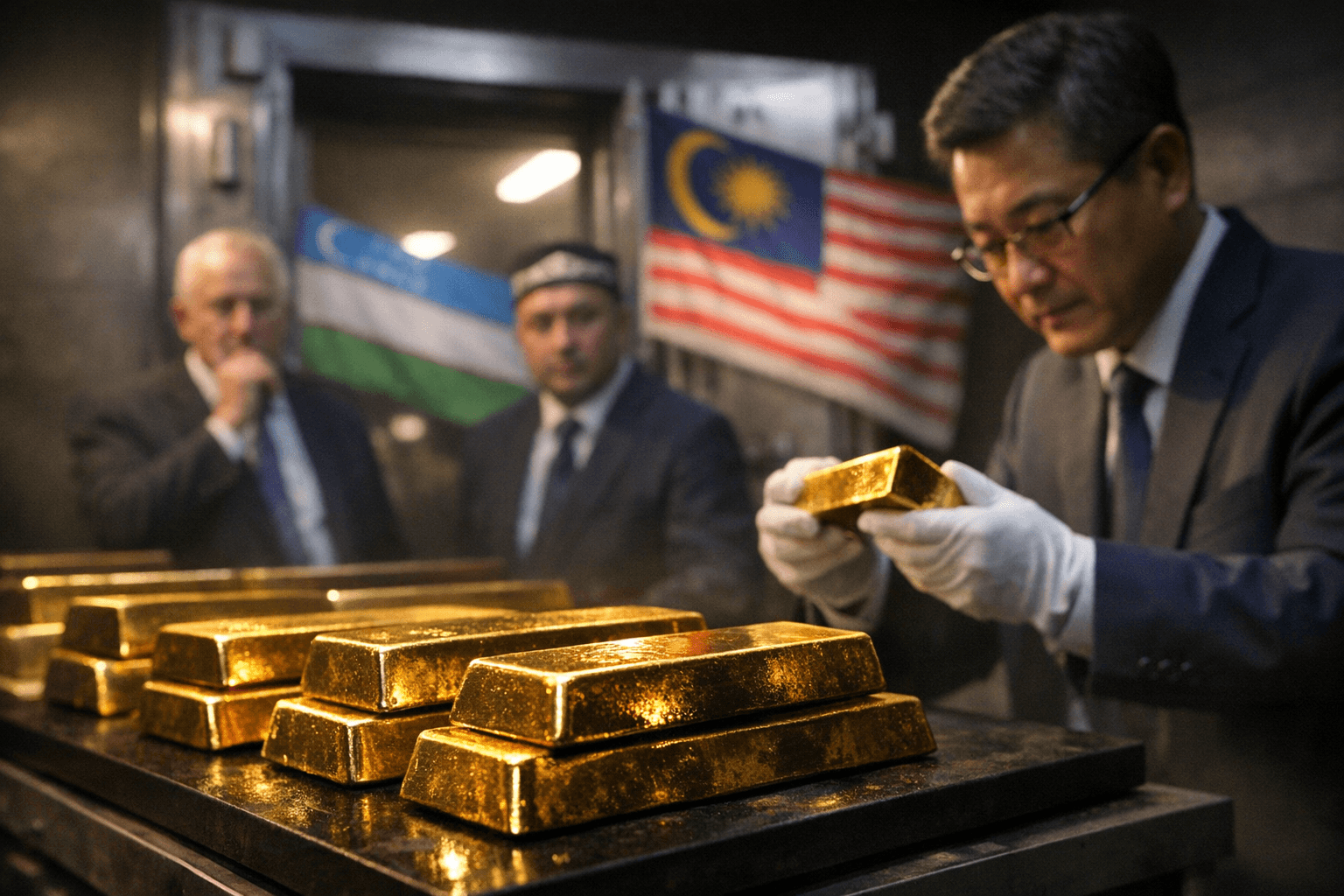
The month nonetheless showed a broadening of buyers. Uzbekistan accounted for the largest reported purchase with 9 tonnes in January, taking its official reserves to 399 tonnes and raising gold's share of total reserves from 57% in 2020 to 86% in January 2026. Bank Negara Malaysia returned to the market with a 3‑tonne purchase - its first since 2018 - bringing Malaysia's post‑January gold reserves to 42 tonnes, or about 5% of total reserves. The Czech Republic and Indonesia each added 2 tonnes, an unnamed major Asian country bought 1 tonne, and Serbia bought 1 tonne. South Korea's central bank returned to gold buying after more than a decade and currently holds 104 tonnes of physical gold, roughly 4% of its total reserves and ranked 41st globally; the Bank of Korea announced plans to include overseas‑listed physical gold ETFs in its foreign exchange reserves from Q1 2026.
That intended use of ETFs stands in contrast with the WGC's 2025 Central Bank Gold Reserves Survey. "Our 2025 Central Bank Gold Reserves Survey shows that allocating gold via ETFs is rare among central banks; all surveyed central banks did not adopt this method," WGC reporting noted, underscoring that South Korea's move would be an outlier among peers if implemented.
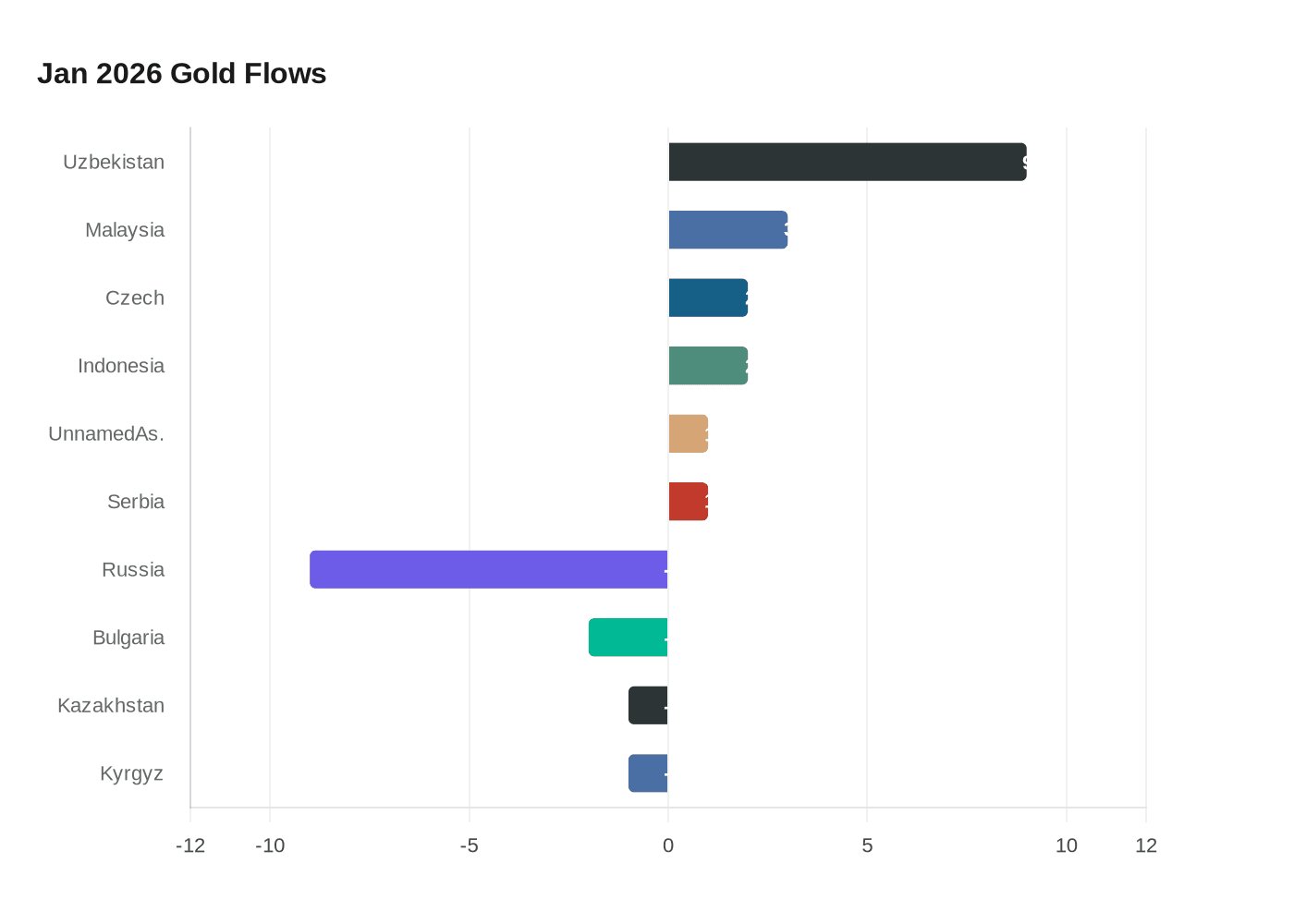
Sales in January were led by Russia, which the reporting shows reduced holdings by 9 tonnes and was described in syndicated commentary as "reportedly liquidating some of its gold reserves to stabilize the economy as ongoing sanctions continue to wreak havoc." Bulgaria sold 2 tonnes as part of a reserves transfer tied to its adoption of the euro on 1 January 2026, while Kazakhstan and the Kyrgyz Republic each reduced holdings by 1 tonne. Mike Maharrey's syndicated summary placed the January slowdown in the context of a still‑elevated multi‑year accumulation, noting full‑year 2025 net purchases of 863.3 tonnes (down 21% year‑on‑year) against a 2010–2021 average of 473 tonnes and the 2022 peak of 1,136 tonnes.
The World Gold Council's charts and data — compiled to 30 January 2026 using IMF and central bank inputs and benchmarked to the LBMA Gold Price PM on 30 January 2026 — highlight a market that paused at the turn of the year even as new buyers emerged. As Salim concluded, "The broadening of demand from central bankers might be an emerging key theme in 2026. As we have seen in January, both Malaysian and Korean central banks have resumed interest in increasing gold exposure after prolonged absences. The next 10-15 days could prove crucial in shaping the geopolitical backdrop this year, as US‑Iran tensions continue to escalate with little indication of diplomatic resolution in sight. The strong pace of gold accumulation by central bankers since 2022 has been intertwined with how nations position themselves in a shifting world order." Expect central bank behaviour and instrument choices - including whether more countries adopt ETF structures like South Korea proposes - to remain a key driver of gold market dynamics through 2026.
Know something we missed? Have a correction or additional information?
Submit a Tip