Chicago Bulls Fire GM Marc Eversley, Executive Karnisovas in Major Shakeup
The Bulls ended the six-year Karnisovas-Eversley era after a 224-254 run, one playoff appearance, and a 29-49 season that finally exhausted ownership's patience.
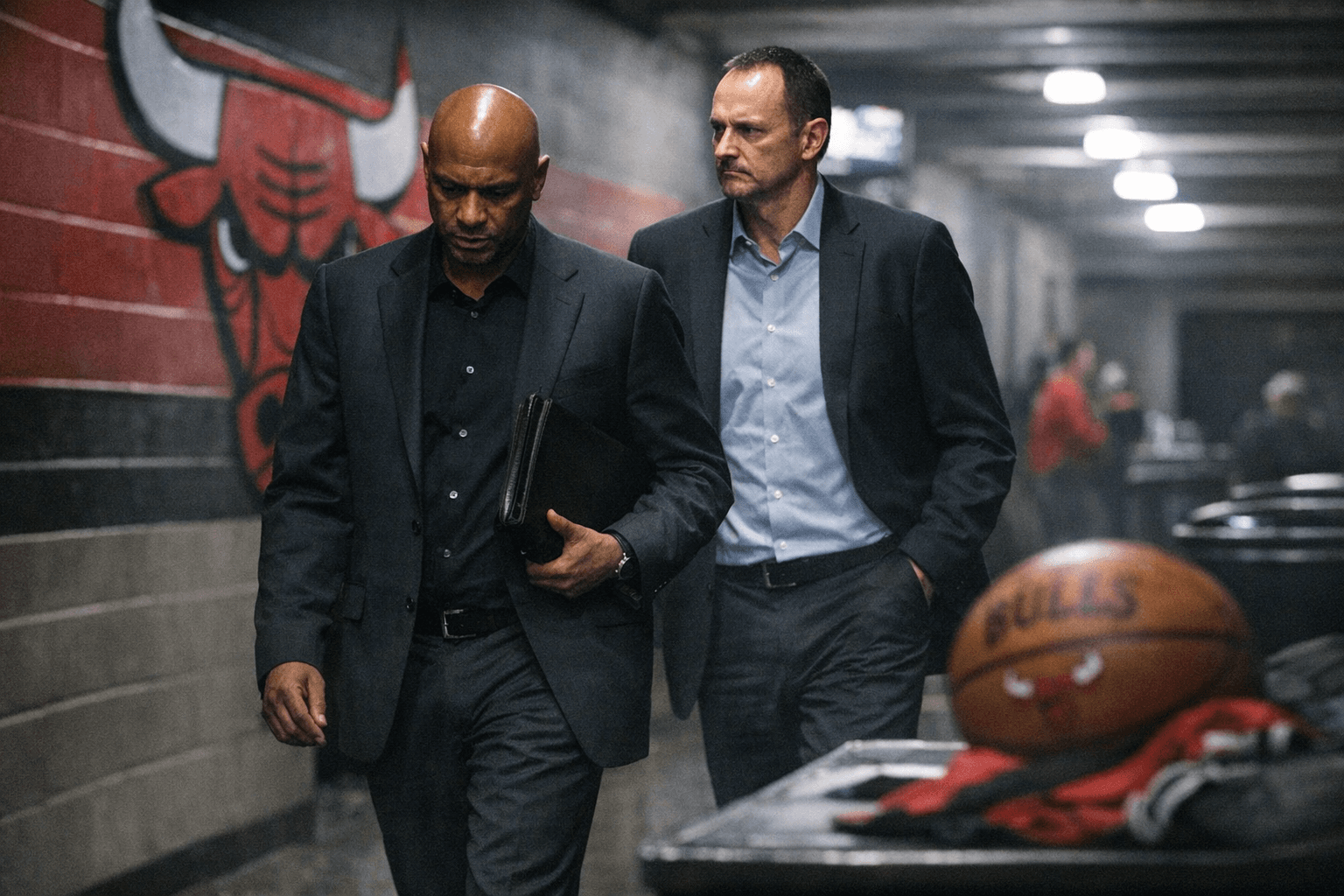
The Chicago Bulls ended six years of frustration Monday by firing executive vice president of basketball operations Artūras Karnišovas and general manager Marc Eversley, capping a tenure defined by roster churn, a single playoff appearance, and a losing record that ultimately wore out owner Michael Reinsdorf's patience.
The two executives were hired together in 2020 and presided over a 224-254 record across six seasons. Their one postseason run ended in a first-round exit in 2022, a result that now stands as the lone highlight of what analysts called the "AKME era." The 2025-26 season finished at 29-49, Chicago's latest year watching the playoffs from home.
Reinsdorf issued a statement acknowledging both the contributions and the shortfall. "I want our fans to know that I hear you and understand your frustration," he wrote. "I feel it as well. I know this will take time, and I am fully committed to getting this right. At the Chicago Bulls, our focus remains on building a team that can compete at the highest level and ultimately contend for championships."
The decision, while abrupt in its Monday afternoon announcement, had been building for months. League sources indicated that both Karnišovas and Eversley were on thin ice well before the February trade deadline, with ownership growing increasingly concerned about the organization's direction. The Jaden Ivey incident, which drew league-wide attention and embarrassment for the franchise, is reported to have been a decisive turning point that left the Reinsdorfs with little room to justify continuity.
The core failure was one of sustained construction. Repeated roster moves at successive trade deadlines produced instability rather than improvement, and the Bulls never developed a coherent identity around either young talent or veteran leadership. Karnišovas's drafting and acquisition decisions, including the heavy investment in a DeMar DeRozan-led core that briefly made the playoffs but aged quickly out of contention, drew the sharpest criticism from analysts examining the front office's legacy.
Chicago now faces a compressed offseason with no permanent basketball operations leadership in place. The organization must appoint interim management before launching a league-wide search for replacements, a process that will run parallel to free agency preparation and evaluation of the 2026 draft class. Coach Billy Donovan's own status has come under renewed scrutiny following the firings, with no public commitment from ownership about whether he returns for a seventh season.
The debate inside the league and among Chicago media has already split between camps: those who believe the Bulls should accelerate toward a full rebuild around younger assets, and those expecting Reinsdorf to seek an executive who can engineer a faster competitive turnaround through trades and targeted free agency additions. What the firings make clear is that the franchise's tolerance for gradual, inconclusive progress has expired. The next front office will inherit a roster with limited star power, a drafting history that needs reexamining, and a fanbase that has not seen a second-round playoff series since the Derrick Rose era.
This article was produced by Prism’s automated news system from verified source data, official records, and press releases, then run through automated quality and moderation checks before publishing. The system is built and supervised by the people who set the standards it runs under. Read our full AI policy.
Did this article answer your question?