China pushes to lead brain-computer interface market by 2030
Beijing has set 17 milestones targeting BCI breakthroughs by 2027 and a fully competitive industry by 2030; clinical implants and rapid market growth are accelerating investment and policy choices.
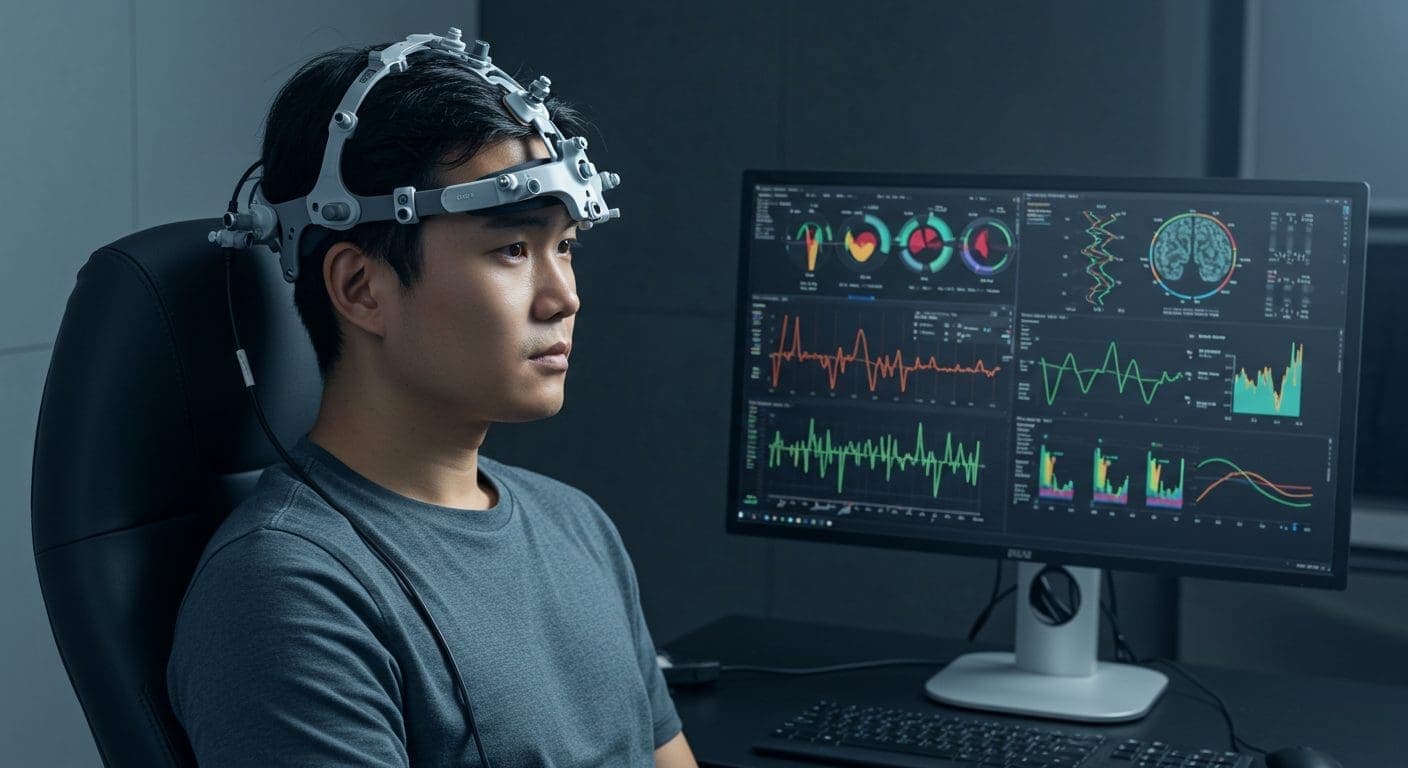
China’s brain-computer interface sector has moved from the lab toward clinical trials and commercial scale with market growth, government roadmaps and patient cases converging to reshape investment and regulation.
The industry reached RMB 3.2 billion (US$446 million) in 2024 and grew 18.8 percent year-on-year, with projections pointing to RMB 5.58 billion (US$777.7 million) by 2027 and roughly 20 percent annual growth through that period. Policymakers have issued a national roadmap authored by seven departments that lists 17 milestones, seeks key technological breakthroughs by 2027 and aims for a “fully competitive” BCI industry by 2030, including the development of two or three world-class companies.
Clinical advances are already being cited as evidence the plan can work. A Shanghai surgical team implanted an invasive BCI device in March 2025 in a man who lost all four limbs in a high-voltage accident 13 years earlier; the patient reportedly can now play chess and racing games using only his mind, and the device has “operated stably in the patient’s brain, with no infection or electrode failure reported to date.” Separately, a Shanghai startup, NeuroXess, reported that a paralysed patient was able to control a computer cursor within five days of implantation. Companies such as NeuroXess, NeuCyber NeuroTech and other domestic firms are now being positioned alongside Western competitors including Neuralink and Synchron as Beijing seeks homegrown alternatives.
The industrial map shows a concentrated ecosystem. Guangdong hosted 80 key BCI companies in 2024, followed by Jiangsu with 37, Zhejiang with 28 and Beijing with 26. Patent activity is clustered differently: Beijing filed 484 BCI patent applications in 2024, Guangdong 360 and Tianjin 294, suggesting prolific research teams in the north even as manufacturing and startups concentrate in the south.
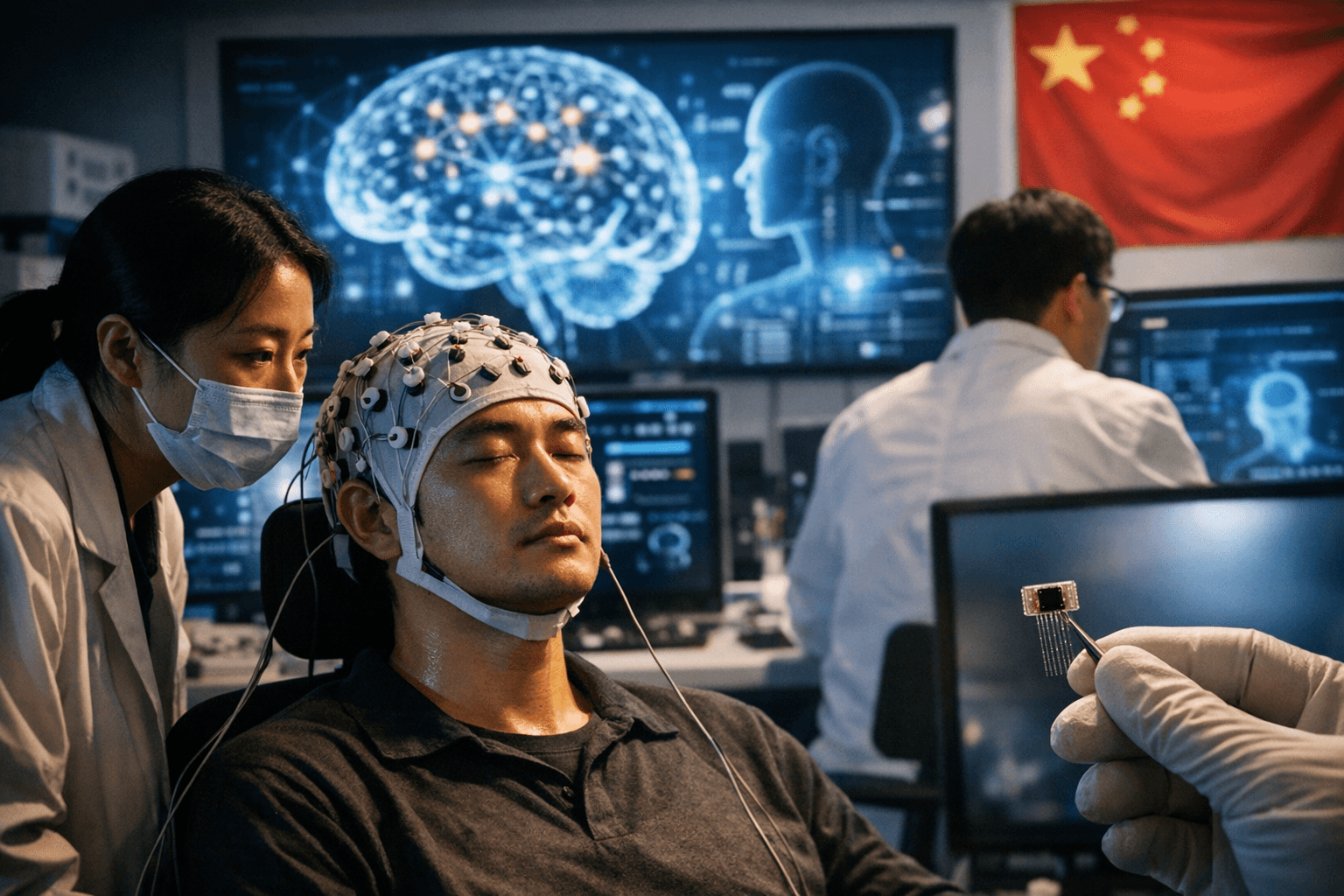
For investors and workers the implications are clear. The government’s target to cultivate world-class firms by 2030 and the CCID-style growth projections signal capital flows, startup hiring and expanded clinical infrastructure over the next five years. For patients with paralysis or severe motor disabilities the technology offers life-changing assistive possibilities that clinics and companies will push to commercialize.
Those advances also sharpen public and regulatory questions. A prominent ethicist warned that “One of the most important tasks with regard to ethical regulation of neurotechnology is to ensure that the fundamental capacity of human creativity, which profoundly interrelates with the practical understanding and future of countless social fields, remains human and wherever possible humanist.” A widely circulated policy commentary captured the stakes bluntly: “Not your phone. Your brain. The technology is impressive. But impressive and ready are different things. Just because someone can move a cursor doesn’t mean we understand what happens in 5, 10, 20 years., Who controls the device?, Who owns your neural data?, What happens if it’s hacked?, What if it malfunctions?, What if your brain tissue changes over time? … We’re not building gadgets.”
Regulators now face a compression of timelines. Local action plans in Shanghai and Guangdong already identify clinical application and R&D goals, and hospitals, device makers and patent offices will need to reconcile safety, data ownership and cybersecurity rules while investors bet on rapid commercialization. The next two years, with milestones aimed at 2027 and industry goals for 2030, will determine whether China converts early clinical success into durable companies and whether international frameworks emerge to govern technology that reads and reshapes the human mind.
This article was produced by Prism’s automated news system from verified source data, official records, and press releases, then run through automated quality and moderation checks before publishing. The system is built and supervised by the people who set the standards it runs under. Read our full AI policy.
Did this article answer your question?