China retail sales fall for first time in more than three years
China’s retail sales slipped 0.6% in May, the first annual decline since December 2022, even as industrial output rose 4.5%.
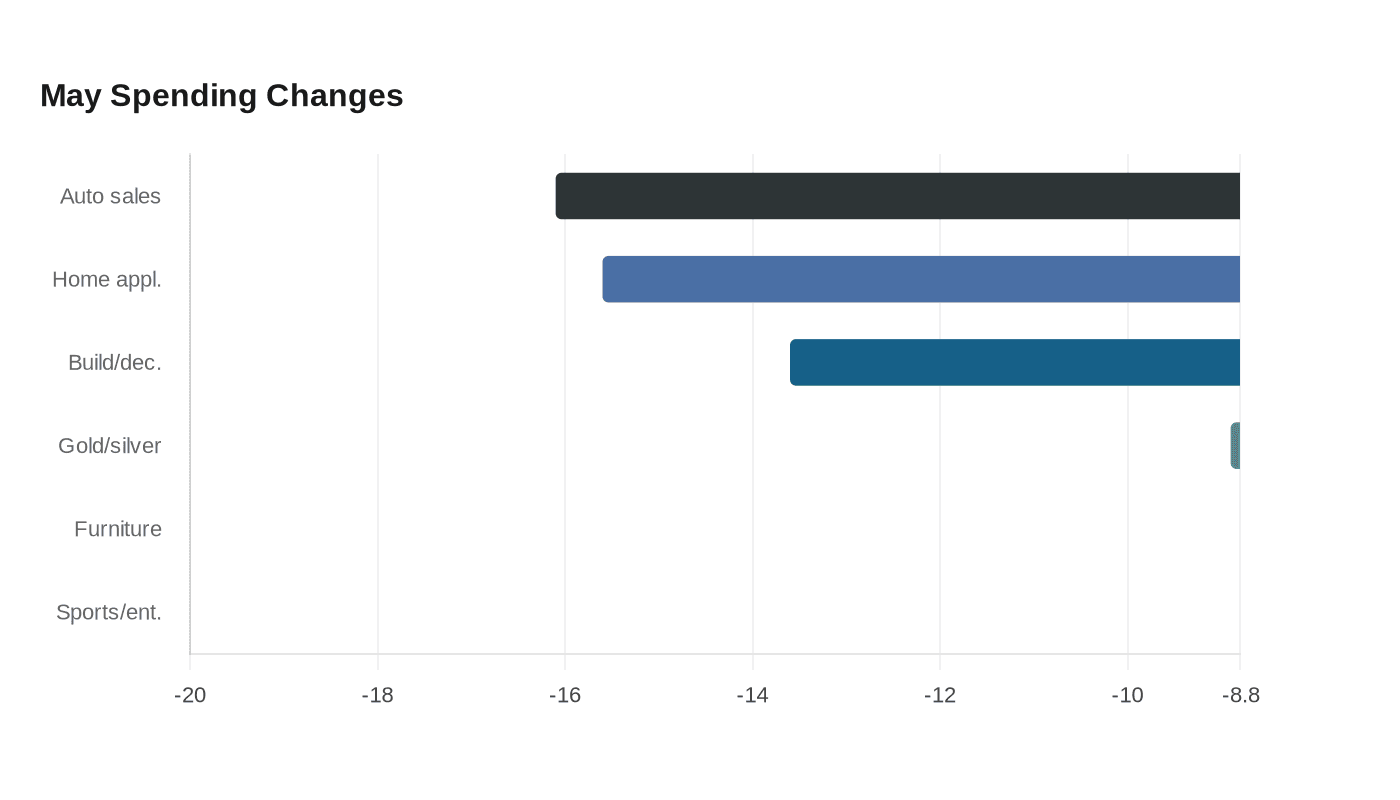
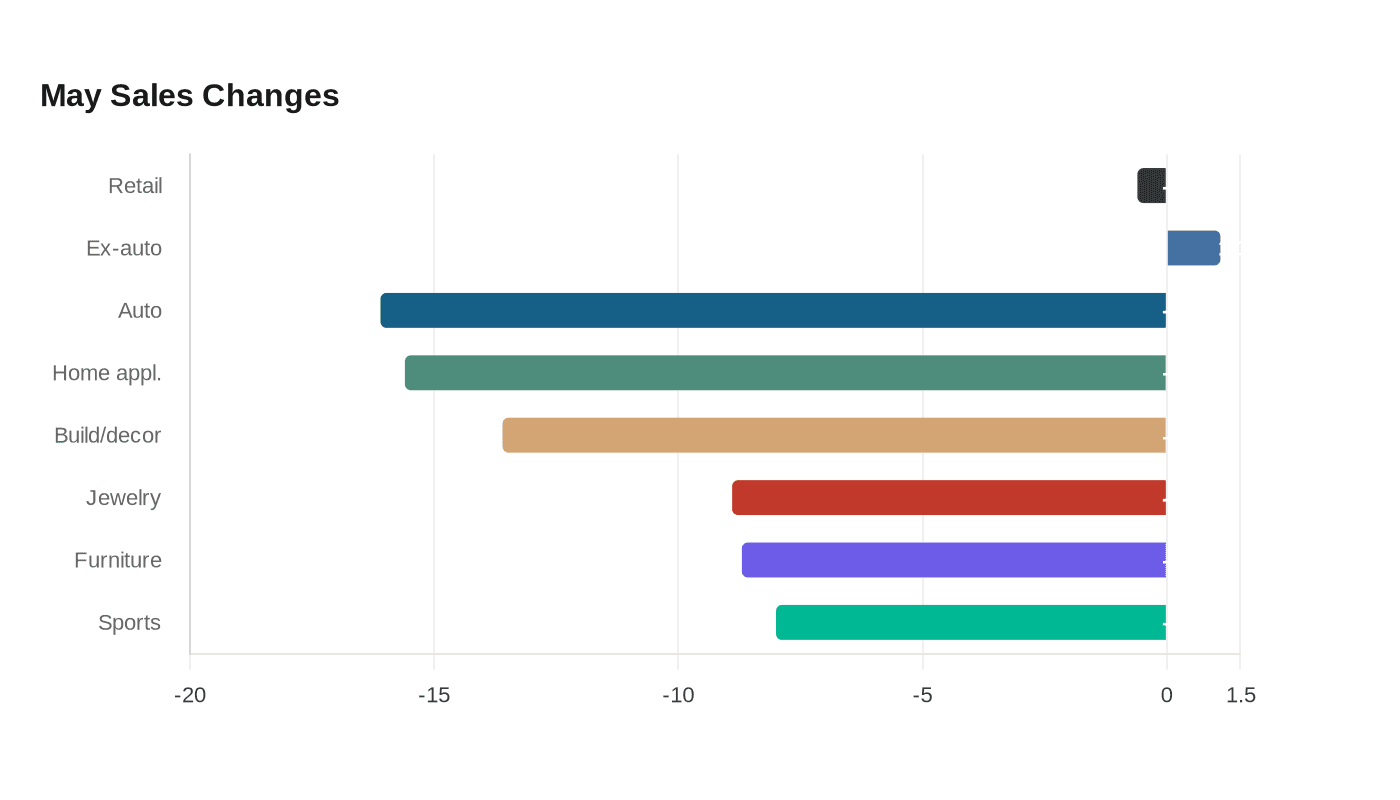
China’s economy is leaning harder on exports and factory output because households are still not spending enough to keep growth balanced. Retail sales fell 0.6% year on year in May, the first annual decline since December 2022 and the first drop in more than three years, while industrial output rose 4.5% from a year earlier, up from 4.1% in April.
The split showed up most clearly in consumer spending. Sales excluding automobiles still rose only 1.1% in May, but auto sales plunged 16.1%. Other discretionary categories also weakened sharply, including home appliances and audiovisual equipment, down 15.6%, building and decoration materials, down 13.6%, gold and silver jewelry, down 8.9%, furniture, down 8.7%, and sports and entertainment products, down 8.0%. The Labor Day holiday in early May did not provide enough of a lift to offset the slowdown.

For the first five months of 2026, retail sales were up only 1.4%, underscoring how fragile domestic demand remains. China’s total retail sales of goods and services rose 2.8% in that period, with services up 5.4% and goods up 1.2%, but the modest improvement was not enough to mask the weakness in household spending on big-ticket and discretionary items. The figures point to consumers still behaving cautiously as property-sector weakness and soft confidence weigh on spending decisions.
That imbalance matters well beyond China’s borders. When household demand stalls, Beijing has less of a domestic engine to counter weak consumption, leaving exports and industrial production to carry a larger share of growth. For global trade, that can mean more pressure for Chinese factories to keep shipping abroad. For U.S. markets, it raises the risk that China’s recovery remains uneven, with export strength and industrial resilience doing the heavy lifting while domestic demand stays subdued.
Beijing is now under added pressure to do more to support consumption while also managing persistent property-sector weakness and deflationary pressure. The latest numbers suggest the recovery remains fragile and that policymakers face a tougher choice over how much stimulus to deploy without deepening the economy’s reliance on factories and overseas demand.
This article was produced by Prism’s automated news system from verified source data, official records, and press releases, then run through automated quality and moderation checks before publishing. The system is built and supervised by the people who set the standards it runs under. Read our full AI policy.
Did this article answer your question?