China Says Large Firm Industrial Output Rose 5.9 Percent in 2025
China's industry ministry told state broadcaster CCTV that output at large industrial firms was expected to have risen 5.9 percent in 2025 versus 2024, a modest uptick from last year but slower than the pace logged earlier in the year. The projection matters for markets and global manufacturers because it reflects Beijing's industrial strategy and the likely continued use of state support to sustain growth.
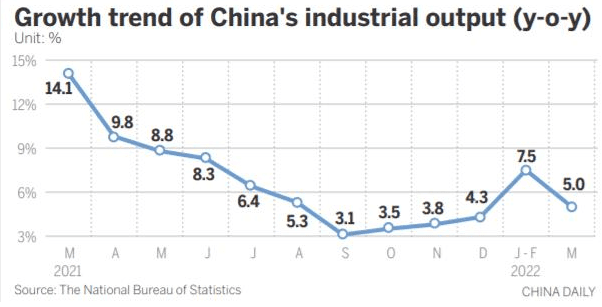
Beijing, Dec. 26. China's industry ministry told state broadcaster CCTV that output of large industrial firms was expected to have increased about 5.9 percent in 2025 compared with 2024. The ministry framed the projection as a year on year expectation rather than a final National Bureau of Statistics headline, and officials made the announcement at the annual national industrial work conference in the capital.
The 5.9 percent projection represents a modest acceleration from a 5.8 percent gain recorded in 2024, but it falls short of the roughly 6.0 percent year on year pace logged across the first 11 months of 2025 according to NBS monthly data. The divergence reflects softer activity in the closing weeks of the year, including a November print that showed 4.8 percent year on year growth in industrial output for large firms, the weakest monthly rise since August 2024. The large firm series covers companies with annual revenue of at least US$2.85 million.
Beijing has framed the projection against an explicit push to upgrade its manufacturing base under the long running Made in China 2025 policy and a broader drive to build a modern industrial system. At the national industrial work conference, officials pledged to pursue major breakthroughs in integrated circuits, the low altitude economy, aerospace and biomedicine, signaling continued prioritization of high technology sectors as engines of future growth.

Policy makers have a range of instruments to influence that trajectory. State funding, low interest loans, tax breaks and targeted subsidies were presented as tools to accelerate industrial restructuring and underpin output in strategic segments. Analysts note that the cost of sustained state intervention and the allocation of resources to technologically intensive sectors will shape medium term fiscal balances and the structure of China dependent global supply chains.
For markets, the ministry projection and the monthly slowdown carry several implications. A marginally faster headline gain for 2025 relative to 2024 could support demand for industrial commodities, while weaker late year momentum underscores vulnerability to domestic demand fluctuations and external demand shocks. State support measures aimed at boosting advanced manufacturing could intensify competition for inputs such as semiconductors and specialty metals, and alter trade flows as China seeks greater self reliance in critical technologies.

The ministry presentation emphasized technological self reliance amid intensifying rivalry with the United States over advanced industries, and top leaders have reiterated commitments to back that ambition with state resources. While the 5.9 percent figure provides a snapshot of large firm performance, final NBS annual figures and any revisions will be watched closely by investors and policy makers seeking a clearer read on underlying momentum and the effectiveness of Beijing's industrial policy.
This article was produced by Prism’s automated news system from verified source data, official records, and press releases, then run through automated quality and moderation checks before publishing. The system is built and supervised by the people who set the standards it runs under. Read our full AI policy.
Did this article answer your question?

