China to Probe Meta’s Purchase of Manus Over Export and Data Concerns
China’s Ministry of Commerce said on Jan. 8 it will assess Meta Platforms’ recent acquisition of Manus, a Singapore-based AI startup with roots in Beijing, citing potential violations of rules on outward investment, data transfer and technology exports. The review highlights rising regulatory scrutiny of cross-border tech deals amid U.S.-China tensions and could complicate integration of advanced AI capabilities into foreign platforms.
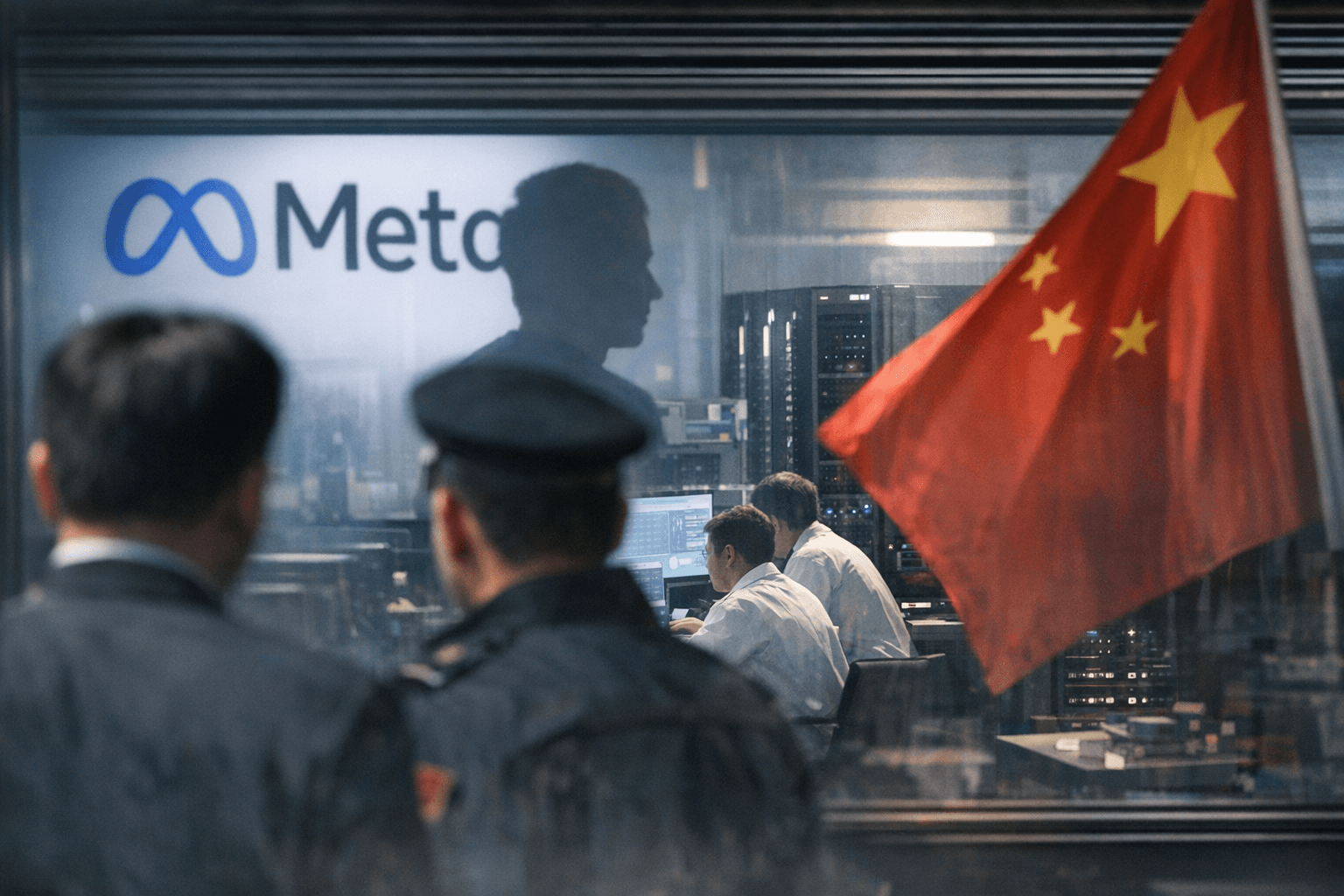
China’s Ministry of Commerce announced on Jan. 8 that it would assess Meta Platforms’ acquisition of Manus to determine whether the transaction complies with Chinese laws governing outward investment, cross-border data transfers, technology export and export controls. The ministry said it would work with "relevant departments" to review the deal’s consistency with domestic regulations, framing the action as an assessment rather than an immediate prohibition.
Meta finalized the purchase of Manus in late December 2025, a move that drew swift regulatory attention because Manus traces its origins to entities registered in Beijing even though it is incorporated in Singapore as Butterfly Effect Pte and its workforce is reported to be largely based in Singapore. Manus last year released a general-purpose AI agent capable of autonomously performing multi-step complex tasks and offered both free and paid subscription options. Meta has said there would be "no continuing Chinese ownership interests in Manus AI" and that Manus would discontinue its services and operations in China while continuing to operate in Singapore.
Terms of the transaction were not disclosed by either company. Several estimates have placed the value of the deal at roughly $2 billion, with some figures described as slightly higher; those numbers have not been confirmed by Meta or Manus in official filings. Chinese authorities characterized their review as focused on whether the sale involved the transfer or export of technologies subject to restriction or prohibition under Chinese law, or whether the deal might accelerate the relocation of AI startups and talent overseas.
Legal and policy concerns driving the review center on two questions: whether technologies restricted or prohibited from export under Chinese rules were moved without required licenses, and whether the acquisition contributes to a broader pattern of technology outflows that could undermine domestic innovation. University of International Business and Economics professor Cui Fan publicly questioned on WeChat whether any restricted technologies were being transferred without the necessary approvals. Gary Ng, senior economist for Asia Pacific at Natixis, warned that "security has become the top concern for Chinese policymakers," signaling heightened sensitivity to transactions that might enhance foreign firms’ capabilities.
As of Jan. 8, Chinese officials had not announced any formal blocking of the transaction or sanctions. The ministry’s statement emphasized compliance with applicable laws and suggested the review could involve multiple government bodies responsible for export controls, investment approvals and data governance. For Meta, the probe introduces regulatory uncertainty at a sensitive moment for the U.S.-based company as it seeks to integrate powerful AI tools and talent into its product roadmap.
Analysts say the case will be watched as a test of how Chinese authorities apply export control and investment rules to complex corporate transactions with multinational footprints. Depending on the outcome, the review could shape how global technology companies structure acquisitions of startups with cross-border ties and influence the calculus of founders deciding where to incorporate, locate staff and host sensitive training data.
This article was produced by Prism’s automated news system from verified source data, official records, and press releases, then run through automated quality and moderation checks before publishing. The system is built and supervised by the people who set the standards it runs under. Read our full AI policy.
Did this article answer your question?

