China urges lawful, balanced solutions after TikTok U.S. transfer
Beijing said it hopes companies involved in the transfer of TikTok U.S. operations will reach arrangements that comply with Chinese law and fairly consider all parties, while calling for reciprocal treatment for Chinese firms in America. The move follows binding agreements that would place TikTok U.S. under American led ownership, a step intended to avert a possible nationwide ban and end years of uncertainty.
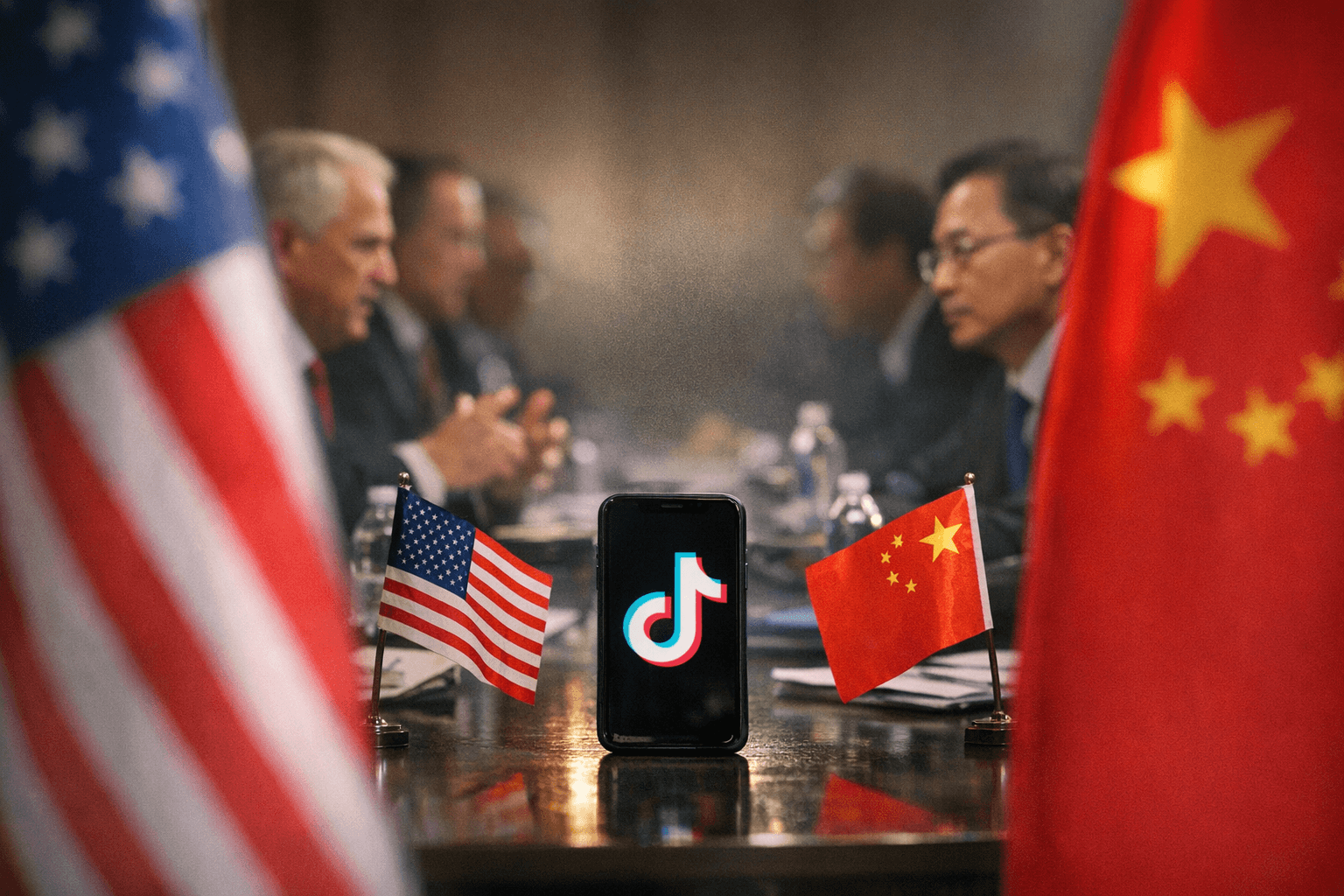
ByteDance has signed binding agreements to transfer control of TikTok’s United States operations to an American led investor group that includes Oracle, in moves described by those involved as aimed at preventing a U.S. ban and resolving prolonged uncertainty about the app’s future in the American market. Beijing responded on December 25 by urging a solution that respects Chinese law and balances the interests of multiple stakeholders.
China’s commerce ministry said it hopes the companies involved will reach solutions that "comply with Chinese laws and regulations" and "balance the interests of all parties." The ministry also called on the United States to provide a "fair, open, transparent, nondiscriminatory" business environment for Chinese firms, and framed stable China United States economic ties as dependent on "mutual respect, equal consultation and predictable rules for foreign firms."
The proposed transfer follows a period of intense political scrutiny in Washington over national security concerns and data access. Legislation passed last year required ByteDance to divest a large share of its U.S. assets or face a nationwide ban, a legal backdrop that parties say prompted the current agreements. Executives and government officials have not provided full public details of the deal structure or the governance terms of the new American led joint venture, leaving key questions about control and oversight unresolved.
Analysts say the transaction, if finalized, would represent a rare instance of a Chinese owned global technology company ceding operational control of its largest foreign market to an investor group headquartered in the United States. Supporters of the arrangement in Washington have argued that transferring management and data safeguards to American entities could address security concerns while preserving consumer access to a popular social platform. Opponents in both countries have warned that any deal must be closely scrutinized to ensure data protections are enforceable and meaningful.
Beijing’s emphasis on legal compliance and balanced consideration reflects its domestic regulatory priorities and a desire to shape the outcome in ways that protect Chinese economic interests. The commerce ministry statement also served as a reminder that China expects reciprocity in the treatment of its companies operating abroad, even as it signals a preference that commercial parties themselves resolve the dispute within the bounds of Chinese law.
Significant details remain to be clarified, including the full composition of the investor group beyond Oracle, the precise governance and data access arrangements, and the legal specifics of the U.S. statute that prompted the divestiture requirement. Regulators in both countries will face the task of evaluating whether the proposed transfer truly severs sensitive channels of control and whether the settlement can withstand political scrutiny on both sides. The outcome will test whether cross border technology ownership can be restructured to satisfy competing demands for national security, commercial fairness, and the protection of data.
This article was produced by Prism’s automated news system from verified source data, official records, and press releases, then run through automated quality and moderation checks before publishing. The system is built and supervised by the people who set the standards it runs under. Read our full AI policy.
Did this article answer your question?