China’s robot makers shift from spectacle to household usefulness
China’s humanoid robot makers are chasing chores, not applause. A Shenzhen startup says its machines have already worked in more than 50 homes.
Humanoid robots that once ran, flipped and danced for crowds are being pushed toward a far less glamorous test: whether they can clean a real home well enough for people to pay for it. In Beijing, a startup called X Square Robot showed machines slowly picking up litter and arranging flowers, a subdued demonstration meant to signal that China’s robotics race is shifting from spectacle to household use.
The company’s Wall-B model is the clearest example of that pivot. X Square Robot said the system was trained on data from more than 100 homes, a sign that the bottleneck is no longer just metal, motors and balance. Wang Qian, the company’s chief executive, has framed the challenge in blunt terms: the hardware is largely there, but the brain has not caught up. The model is set to be introduced into the company’s home-cleaning robots in late May, giving the machines a chance to deal with clutter, pets, changing light and the kind of unpredictable movement that defines daily life.
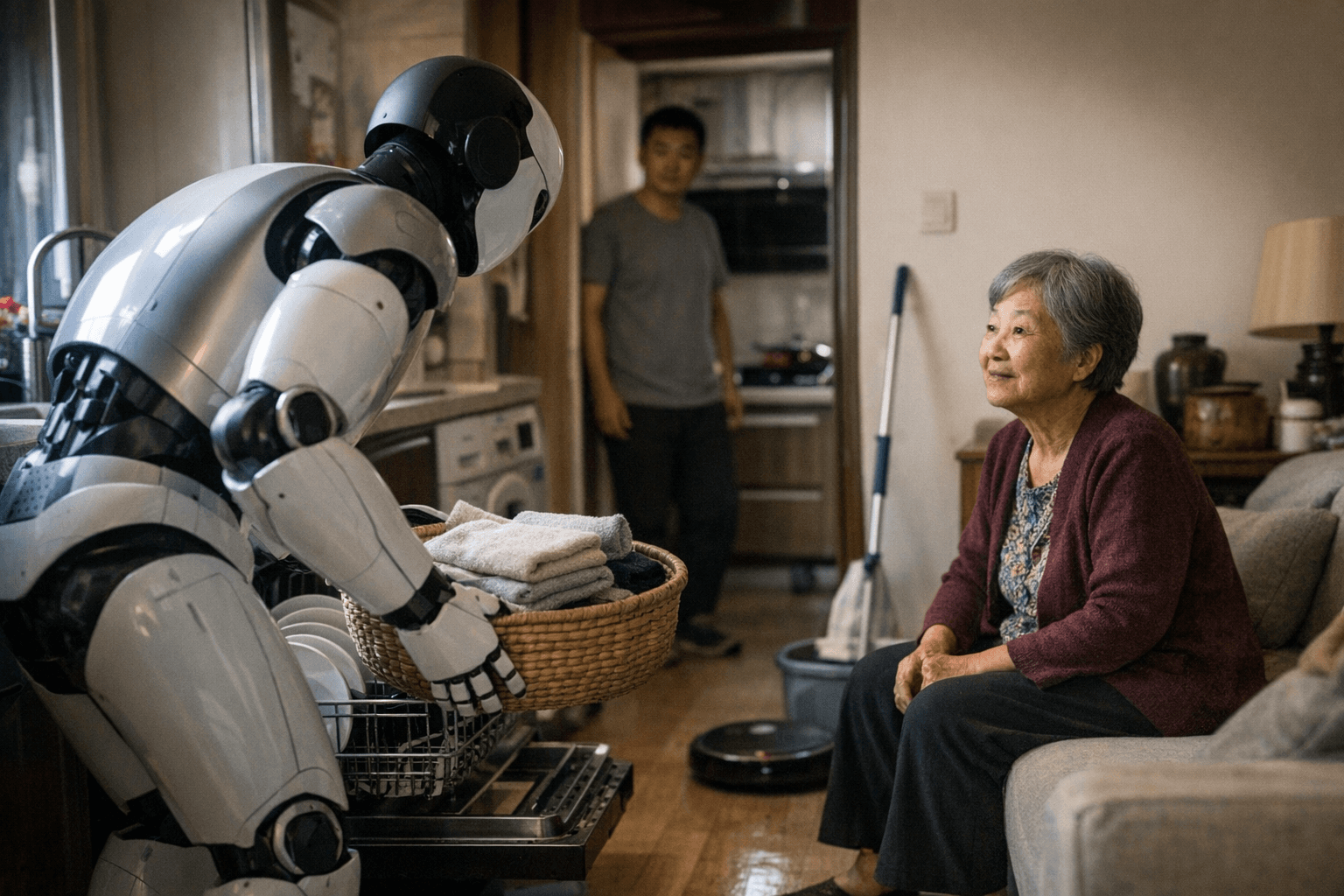
That commercial bet is already being tested in Shenzhen, where X Square Robot and 58.com launched what they called China’s first home-cleaning robot service in March. The service pairs a professional human cleaner with a robot and costs 149 yuan, or about $21.90, for a three-hour shift. X Square Robot said its machines have already served more than 50 households. Demand appears to be brisk enough that Shenzhen municipal media reported the earliest available slot had moved to April 1, even as some users described the robots as slow and clumsy.
The numbers matter because they point to the difference between novelty and a business. A machine that looks impressive in a demo may still fail the harder test of working around chairs, toys and half-finished chores. If X Square Robot and its peers can make household labor dependable, the market could stretch well beyond entertainment events and brand-building stunts into a much larger service economy around domestic work.

China is also trying to build a policy framework for that next phase. On February 28, the country released its first national standard system for humanoid robots and embodied AI, covering the industry chain and lifecycle, with more than 120 research institutions, enterprises and industry users involved. That standard-setting push, along with X Square Robot’s January Series A++ funding round of about $140 million backed by investors including ByteDance and HongShan, shows how much capital and state attention are converging on the same question: can robots move from showpiece machines to tools that save time, cut labor and earn their place in ordinary homes?
This article was produced by Prism’s automated news system from verified source data, official records, and press releases, then run through automated quality and moderation checks before publishing. The system is built and supervised by the people who set the standards it runs under. Read our full AI policy.
Did this article answer your question?