Choosing PLA, PETG, ABS Filaments with Practical Settings for Hobbyists
PLA remains the beginner default for hobby 3D printing; practical temperature, bed and safety tips help newcomers avoid warping, jams and poor extrusion.
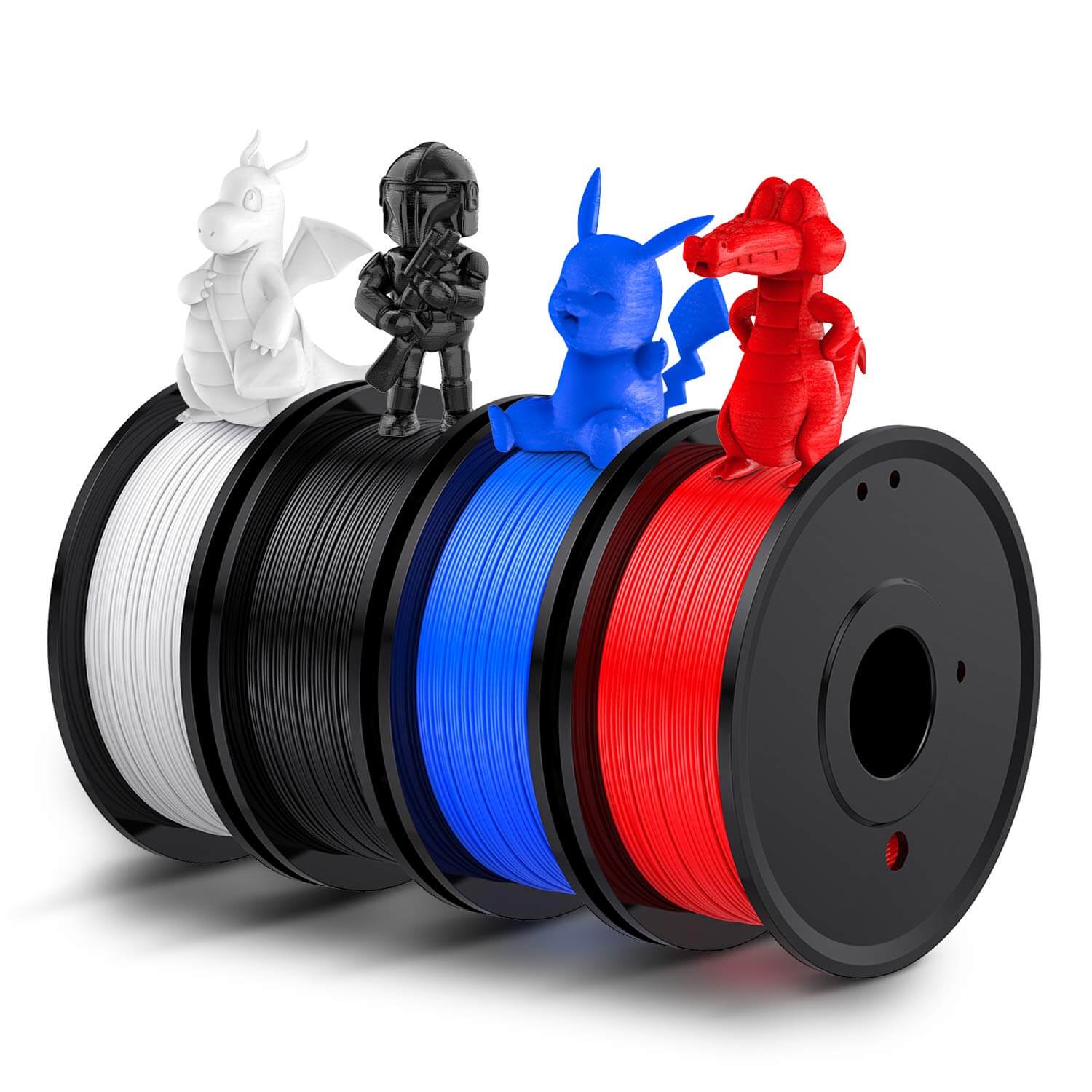
PLA keeps its place as the go-to filament for newcomers because it prints at low temperatures, minimizes warping, and often works without a heated bed. Multiple community guides describe PLA as forgiving and cost-effective, making it the easiest way to learn extrusion printing while producing useful prototypes and tooling.
Print temperature guidance varies by source, so treat ranges as reported starting points. 3DPrintingCanada cites typical nozzle temps of 180–220°C and a bed range of 0–60°C, noting many prints succeed on an unheated bed. Wiki Bambulab gives a nozzle range of 190–230°C and bed temps of 35–55°C. Simplify3D warns that blended or additive PLAs can shift those needs and that “different additives can lead to variations in printing temperature between 190-230 degrees Celsius,” which in turn can cause oozing, stringing, and under-extrusion if not tuned.
Know the material profile before you dial in settings. Wiki Bambulab summarizes PLA’s mechanical traits as “Strength: Medium | Flexibility: Low | Durability: Medium,” with minimal shrinkage or warping and low difficulty to print. PLA is plant-derived and biodegradable: multiple sources note it is “derived from crops such as corn and sugarcane” and that it can give off a “sweet aroma during printing.” Keep filament dry though—Wiki Bambulab recommends keeping spools away from humid environments even if most PLAs do not heavily absorb moisture.
Adhesion and shop setup affect first-layer success. 3DPrintingCanada advises matching bed surface to workflow, recommending PEI sheets or glass plus glue stick to minimize warping, and blue painter’s tape for quick tests. Use a spool holder that allows free rotation and avoid tight bends in the filament path to prevent jams, and measure filament diameter with calipers to confirm consistency—Torwelltech notes common diameters are 1.75mm and 2.85mm, with 1.75mm more widely used.
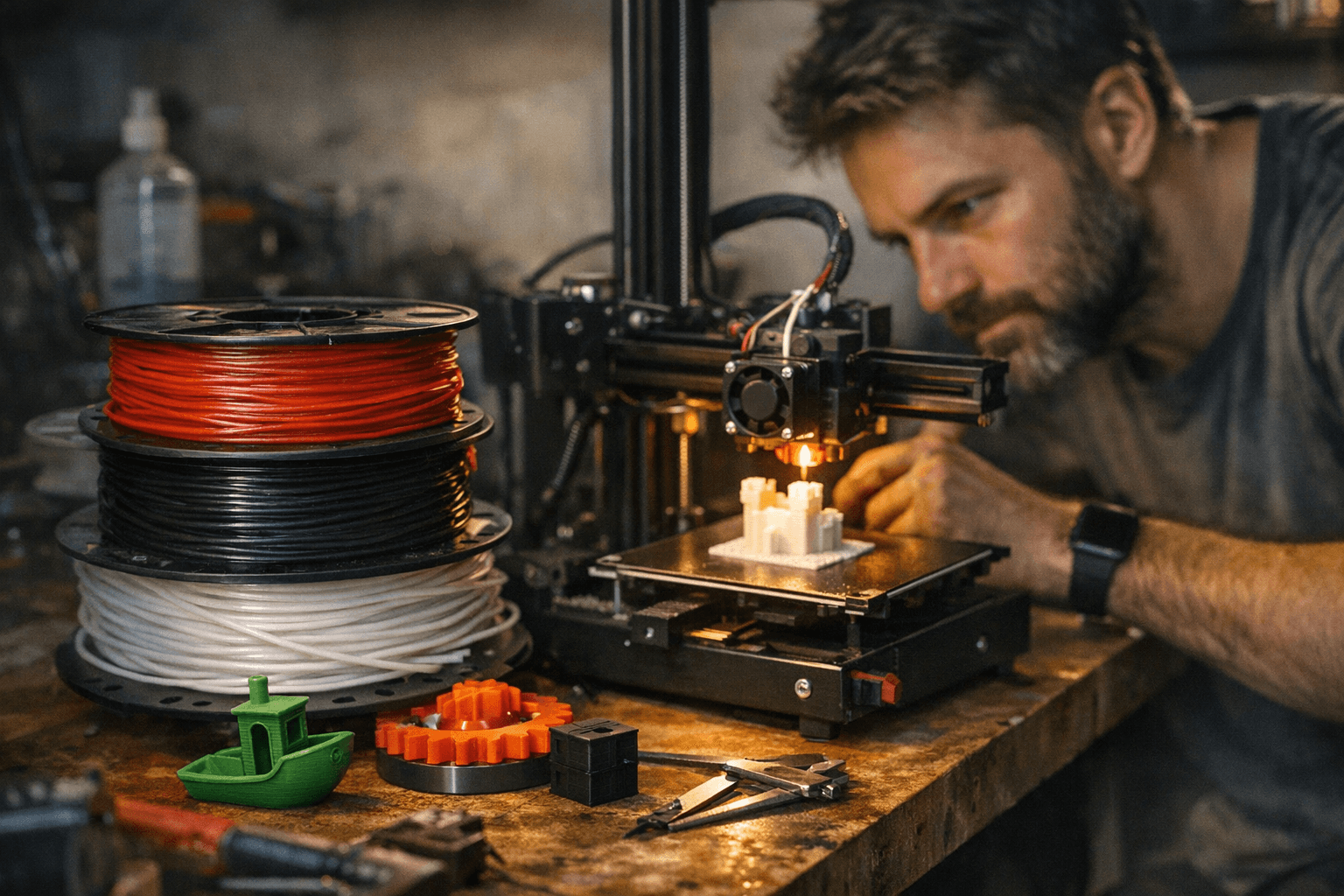
Safety and shop practices matter. 3DPrintingCanada recommends wearing heat-resistant gloves when clearing jams while the hotend or bed is warm and keeping a fire extinguisher rated for electrical fires on hand. For composite or colored blends, use good ventilation to reduce fumes while preserving print quality.
If you plan to branch beyond PLA, Simplify3D offers short notes: “ABS is a low-cost material, great for printing tough and durable parts that can withstand high temperatures,” and “PET and PETG filaments are known for their ease of printability, smooth surface finish, and water resistance.” Those materials need further tuning and ventilation planning.
What this means now is practical: start with PLA, match your nozzle and bed temps to the ranges above, confirm filament diameter, use appropriate bed surfaces, manage cooling for detail, and follow safety precautions. For help sourcing materials or shop advice, 3D Printing Canada lists free shipping on select orders over $150 and a contact line at 963-9066. Keep testing small prints to dial extrusion and cooling, and consult manufacturers’ datasheets before attempting food-contact parts.
Know something we missed? Have a correction or additional information?
Submit a Tip