Chris Sununu Warns Airline Industry Faces Worker Shortage Amid Government Shutdown
TSA officers have worked 87 days without pay this fiscal year; Airlines for America CEO Chris Sununu says the shutdown is pushing new recruits away from aviation security.
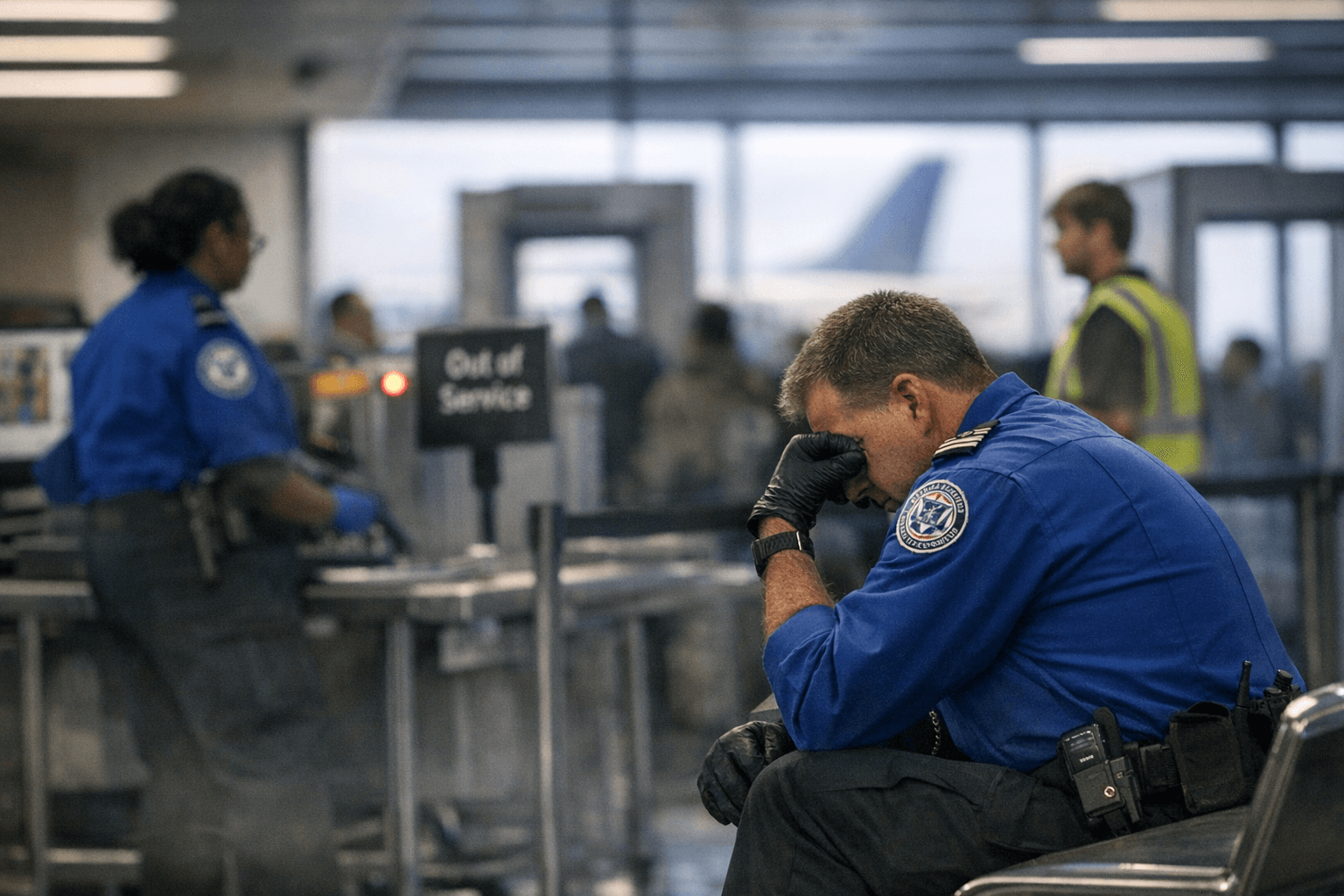
Ten airline CEOs sent a letter to Congress demanding pay for TSA workers, but Chris Sununu, president and CEO of Airlines for America, said on March 17 that he did not believe those calls had fallen on deaf ears. What he did warn, plainly, was that the partial government shutdown was doing something more lasting: poisoning the talent pipeline.
"We're disincentivizing folks from coming into a field that is robust, very important to our national security," Sununu said in an interview with host Chris Jansing. The field he described extends well beyond passenger screening: the aviation system, he argued, delivers "all the products and all the healthcare and the FedEx and UPS and Atlas's airlines of the world," touching supply chains on a global scale.
The partial government shutdown began when DHS funding lapsed on February 14. By this Friday, March 27, missed paychecks for TSA officers will total nearly $1 billion. Airlines for America launched a "Thanks TSA" campaign ahead of millions of travelers heading to airports for spring break, with Sununu noting that assaults on TSA officers are up more than 500 percent since the shutdown began.
The workforce damage is already measurable. More than 400 TSA workers have quit since the partial government shutdown began on February 14, the Department of Homeland Security said. Houston Intercontinental Airport recorded a callout rate of 36.6 percent on a single day last week, while Houston Hobby Airport hit 51.5 percent the same day. The back-to-back shutdowns have made it harder for the agency to attract and retain workers, and more than 1,000 security officers resigned from TSA during October and November of last year alone.
Sununu's message to lawmakers was direct: "To everyone who has said no to funding so far, just say the next time it comes for a vote, say yes and we can move on." He acknowledged that DHS policy changes were already underway and framed them as leverage for a deal, saying, "There will be policy changes at DHS. There already have been policy changes at DHS," and calling the moment "a huge opportunity to make sure that some of these long-term changes folks want to see are going to be there."
When asked by Jansing whether the industry's lobbying effort had simply gone unheard, Sununu pushed back. He said Democrats had "capitulated a little bit and actually engaged with the White House," though he acknowledged he did not know the details of those conversations.
Sununu has also stated publicly that "Congress and the administration must act with urgency to reach a deal that reopens DHS and ends this shutdown." He has added that "America's transportation security workforce is too important to be used as political leverage."
Several bills put forward by Democrats to fund TSA while a larger deal on DHS is worked out have failed to pass, with both sides blaming the other for chaos at airports. Both chambers of Congress are scheduled to be out of Washington the first two weeks of April, raising the prospect of the standoff dragging further into spring. A 2024 Government Accountability Office report found that TSA's workforce has long struggled with some of the lowest morale in the federal government, driven in part by years of comparatively low pay. Sununu's warning is that a shutdown stretching into its second month is not just a staffing crisis for today; it is a recruiting crisis for years ahead.
This article was produced by Prism’s automated news system from verified source data, official records, and press releases, then run through automated quality and moderation checks before publishing. The system is built and supervised by the people who set the standards it runs under. Read our full AI policy.
Did this article answer your question?

