Clemson Brings Garrett Riley to Ignite Tigers Offense
Clemson hired TCU offensive coordinator Garrett Riley to be its new offensive coordinator in a move meant to jump start a stalled attack, sources said. The multi year contract that took effect December 30 will pay Riley roughly 1.75 million dollars per season, signaling Clemson’s commitment to change at a pivotal moment for the program.
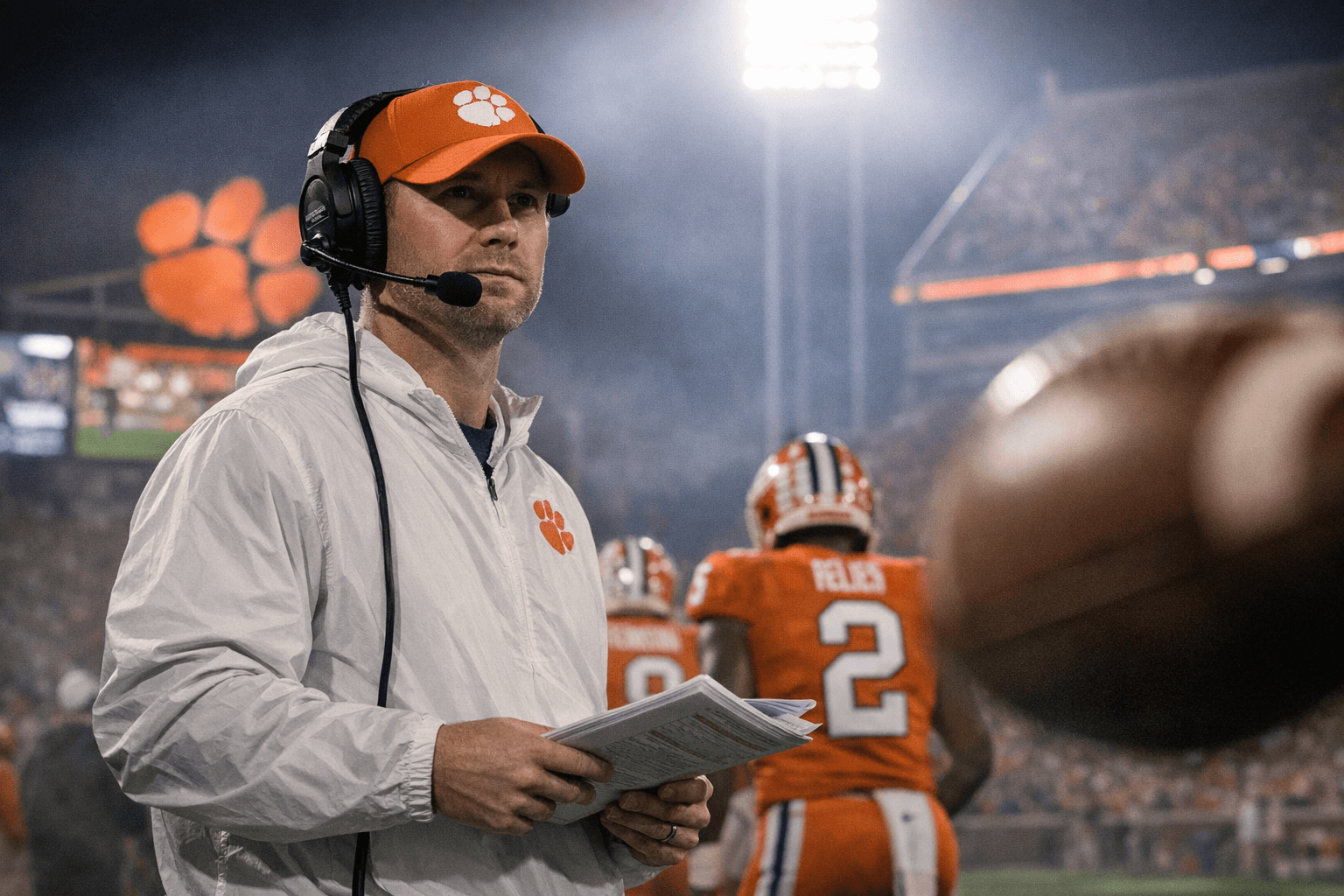
Clemson coach Dabo Swinney hired TCU offensive coordinator Garrett Riley as the Tigers new offensive coordinator in a deal announced December 30, bringing in a 33 year old play caller who has been credited with helping transform TCU’s offense. Riley signed a multi year contract that sources say will pay him roughly 1.75 million dollars per season, a figure that underscores the growing market for elite assistants and raises expectations for immediate offensive improvement.
The addition of Riley represents a clear strategic shift for a program that has been searching for fresh ideas on offense. Clemson under Swinney has been defined for more than a decade by powerful recruiting classes and a strong defensive identity, but the modern college game rewards innovation on the other side of the ball. Clemson’s investment in Riley reflects the belief that a high level coordinator can alter game planning, recruit differently and accelerate on field results.
Riley comes from a TCU staff where he was widely praised for injecting a more dynamic approach to play calling and tempo. At age 33 he joins a wave of younger coordinators who are commanding premium compensation and moving rapidly up the coaching ladder. The salary attached to Riley’s contract is part of a larger trend that has seen schools pay top assistant coaches at levels approaching those of head coaches at mid major programs, driven in part by the transfer portal and name image likeness dynamics that demand immediate production.
Beyond play calling, Riley’s hire is significant for recruiting and roster construction. Coordinators now play central roles in selling schemes to recruits and in coaxing high school and transfer portal prospects to campus. Clemson’s clear signal that it will spend on offensive expertise could sharpen its pitch to offensive skill players and coaches in the Southeast and beyond. It also positions the Tigers to be more aggressive in adapting to contemporary offensive schematics, which place a premium on versatility and quarterback friendly designs.
The move also has cultural and institutional implications. For Swinney, who has been the face of Clemson football through its most successful era, bringing in a rising coordinator suggests a willingness to change without sacrificing program identity. It will be closely watched by fans and alumni who expect the Tigers to remain nationally competitive. Financially, the commitment adds to the arms race among power conference programs to secure proven assistants, a competition fueled by escalating revenues and high stakes postseason expectations.
Clemson now faces the challenge of integrating Riley’s approach with current personnel while managing expectations that often accompany well paid hires. Success will be measured not only in points and wins, but in whether this hire helps the Tigers recruit at a higher level, retain talent in the transfer era, and reconnect with the offensive dynamism that has become the currency of college football in the 2020s.
This article was produced by Prism’s automated news system from verified source data, official records, and press releases, then run through automated quality and moderation checks before publishing. The system is built and supervised by the people who set the standards it runs under. Read our full AI policy.
Did this article answer your question?
.jpg&w=1920&q=75)