Clio tops $500 million in ARR as legal AI competition intensifies
Clio said it passed US$500 million in ARR as it deepens its push into enterprise legal AI, while Anthropic adds more tools for law firms.

Clio said it has surpassed US$500 million in annual recurring revenue, a milestone that signals how quickly legal software is being adopted across one of the economy’s most paperwork-heavy sectors. The Vancouver, British Columbia-based company said its platform now serves hundreds of thousands of legal professionals in more than 130 countries, putting its product suite inside firms and legal departments far beyond its Canadian roots.
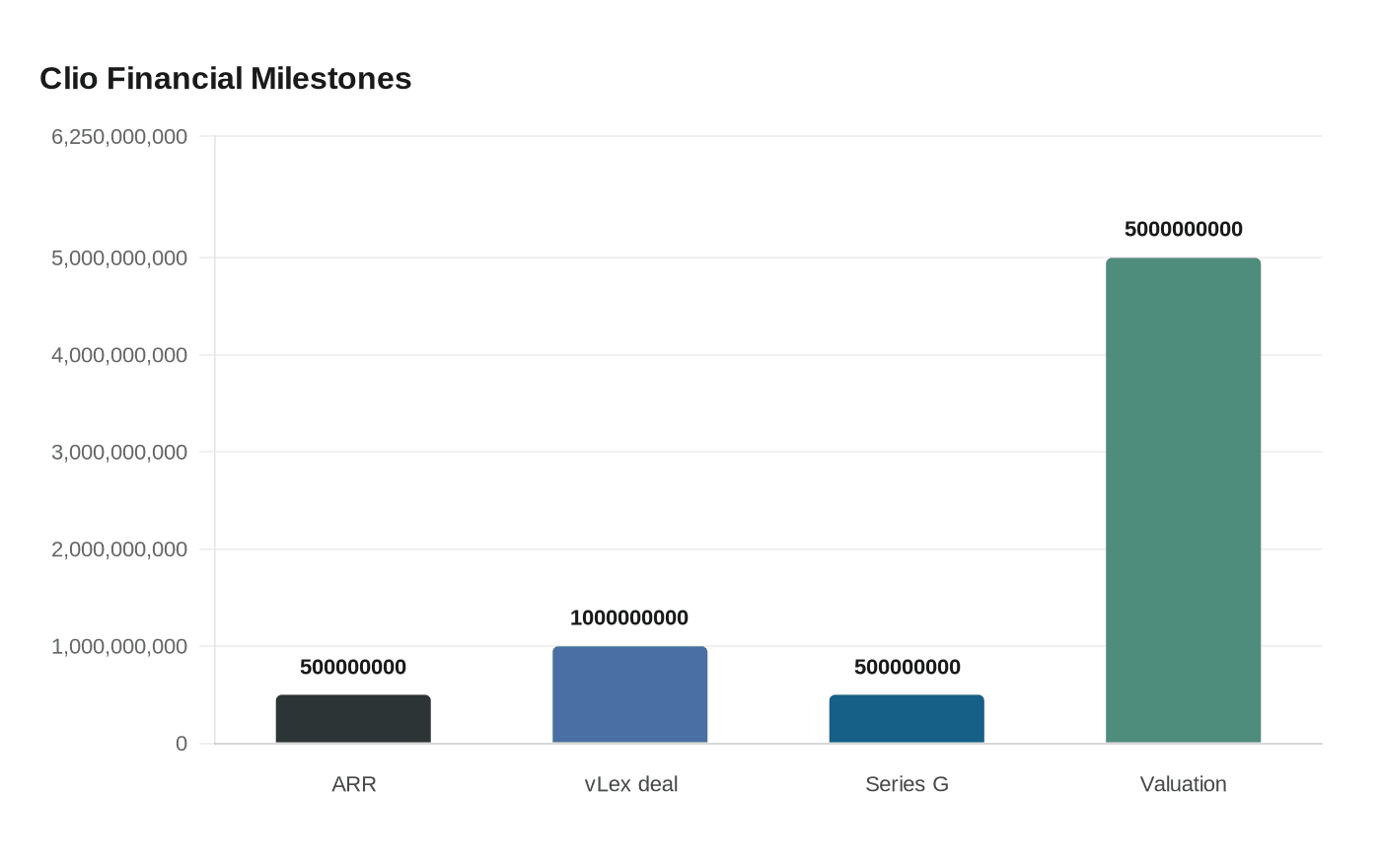
The revenue mark comes after a year of aggressive expansion. Clio completed its US$1 billion acquisition of vLex and closed a US$500 million Series G round led by New Enterprise Associates at a US$5 billion valuation. Clio described the vLex deal as the largest M&A transaction in legal technology history. It also launched Clio for Enterprise on October 16, 2025, creating a division and product suite aimed at the world’s largest law firms and corporate legal departments, where billing, document management and legal research are tightly linked.
That combination matters because the legal market is not just buying software, it is reorganizing around it. Clio’s operating system, paired with vLex’s research and AI capabilities, gives the company a broader foothold in the workflows that determine how lawyers search, draft, review and charge for work. For smaller firms, that can mean faster turnaround and less administrative overhead. It can also mean greater dependence on a handful of vendors that control the tools, data and pricing.
Clio’s announcement landed the same day Anthropic widened its own legal push, adding more than 20 MCP connectors and 12 practice-area plugins for Claude. Anthropic has framed its legal tools around contract review, redlining, extraction, drafting and day-to-day document work, a signal that foundation-model companies now see legal practice as a major commercial battleground, not a niche experiment.
The competition has implications beyond Silicon Valley-style product launches. If AI systems become embedded in routine legal work, they could lower costs for some clients and make basic services more accessible. But they could also intensify pressure on billing models, shift value away from billable time and toward software subscriptions, and concentrate influence in the hands of a few large vendors that now sit between lawyers, clients and the documents that drive the profession.
This article was produced by Prism’s automated news system from verified source data, official records, and press releases, then run through automated quality and moderation checks before publishing. The system is built and supervised by the people who set the standards it runs under. Read our full AI policy.
Did this article answer your question?