Closing Arguments Delivered at Austin Thompson Sentencing Hearing in Wake County
Closing arguments were delivered at the sentencing hearing for Austin Thompson in Wake County; the decision will shape local confidence in how serious criminal cases are punished.
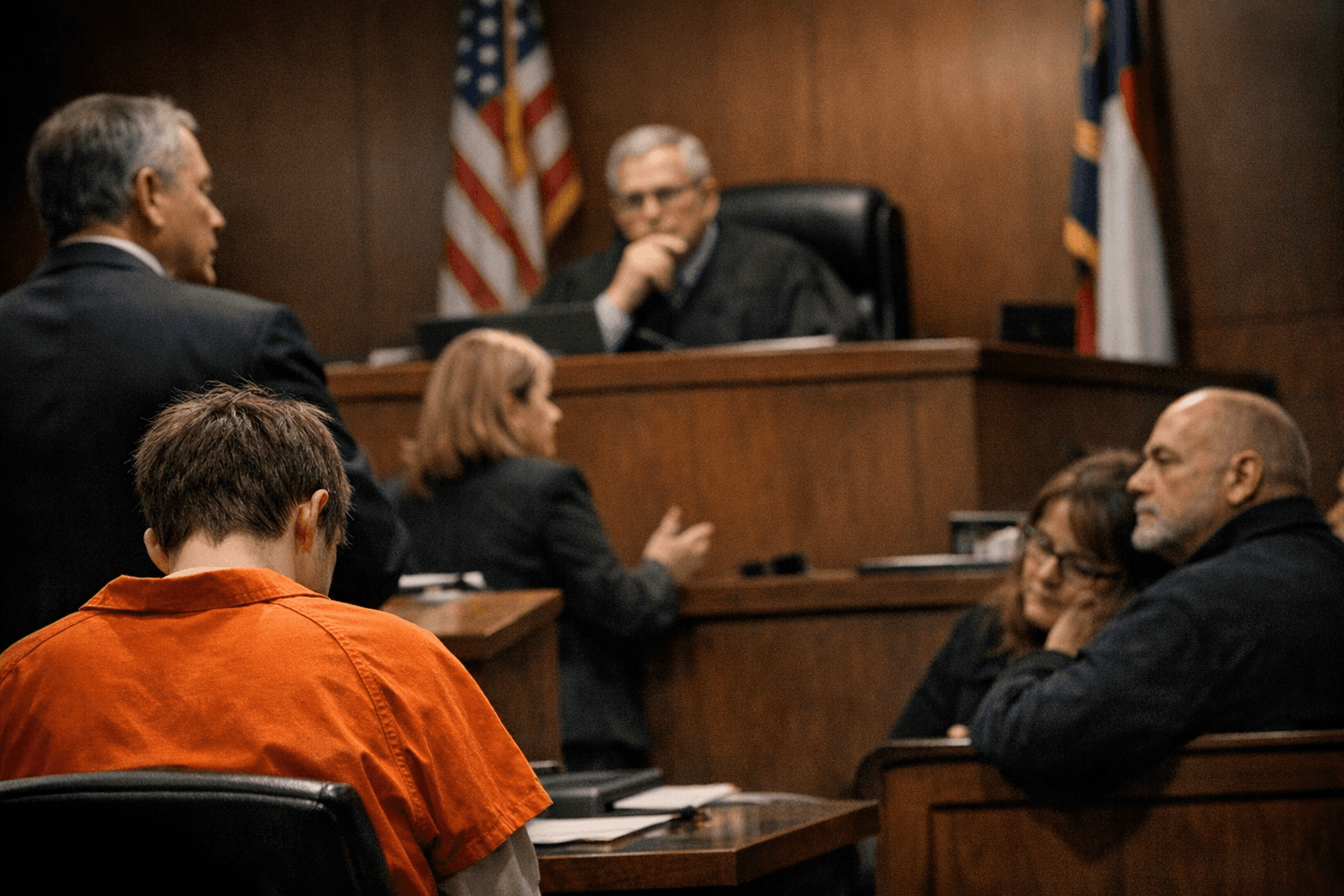
Closing arguments concluded the sentencing hearing for Austin Thompson at the Wake County courthouse, drawing to a close the courtroom phase that will determine his punishment following the case that brought him before the court. Counsel for both sides summarized the record and urged the judge to adopt contrasting views of how punishment and accountability should be applied in this instance.
Prosecutors framed their closing around the facts established at trial and the gravity of the offenses, urging a sentence that they say reflects community safety and deterrence. Defense counsel emphasized mitigating factors and urged the court to consider alternatives to a lengthy term behind bars. Video of the proceedings was part of the public record and was made available as the county followed standard open-court reporting practices for a matter of public interest.
The hearing underscores procedural and policy pressures facing Wake County criminal justice institutions. Sentencing outcomes in high-profile cases influence public trust in the District Attorney’s Office, the public defender system, and the judiciary. County leaders and elected officials who oversee budgets for courts, probation services, and community supervision will be watching the outcome for its implications on local resources and recidivism management.
For victims and families, the hearing represents a formal point of closure and a test of whether the court’s response aligns with expectations for safety and restitution. For defendants, the sentence will determine access to prison-based programs, eligibility for early release or parole, and supervision conditions if the court imposes probation or community-based sanctions.
The case also feeds into broader conversations among Wake County voters about public safety policy, sentencing reform, and investment in diversion and reentry services. Local elections for positions that shape criminal justice policy can hinge on voters’ perceptions of how fairly and effectively prosecutors, defenders, and judges handle serious cases. Civic engagement on these topics often rises after high-profile hearings, as residents weigh the trade-offs between tougher sentences and alternatives intended to reduce reoffending.
Court officials indicated that the judge will issue a sentencing decision after considering the closing arguments and any presentence materials submitted to the bench. The resulting sentence will have concrete effects on correctional capacity, supervision workloads, and community expectations about accountability. Wake County residents should monitor the judge’s ruling and the county’s subsequent policy and budget responses, since those decisions will influence how similar cases are handled going forward.
Know something we missed? Have a correction or additional information?
Submit a Tip