Coast Guard finds overturned cargo ship after typhoon, six missing
A disabled engine, then silence, then an overturned hull: the Mariana was found after Typhoon Sinlaku, with six people still missing.
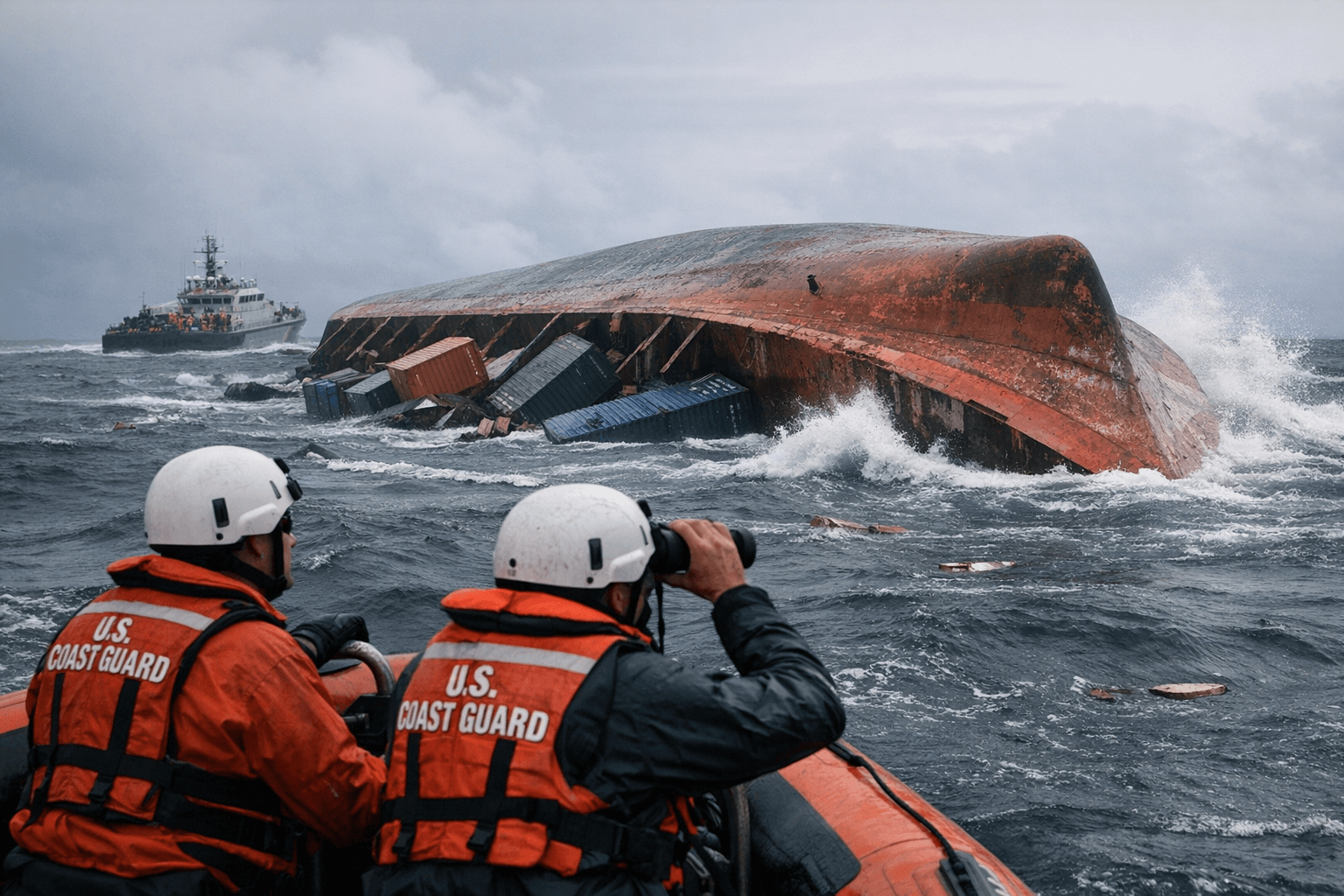
A disabled starboard engine, a one-hour communication schedule and then silence marked the last known hours of the Mariana before a Coast Guard aircraft found an overturned vessel in the storm-battered Pacific. The 145-foot U.S.-registered dry cargo ship had six people aboard when watchstanders first received the distress report on Wednesday, April 15, about 140 miles north-northwest of Saipan.
The sequence points to how quickly a manageable mechanical problem can become a life-threatening emergency when a vessel is caught near a powerful Pacific storm. Coast Guard watchstanders set up regular check-ins through the vessel manager after the initial report, and no medical concerns were raised at that time. Communications were lost Wednesday evening and had not been restored as of the latest Coast Guard update.
Search crews then had to fight the weather as Typhoon Sinlaku moved through the region. A Coast Guard Air Station Barbers Point HC-130 Hercules launched Thursday to search but returned to Guam because of heavy winds in the area, underscoring the limits severe weather can impose on even urgent rescue operations. By Friday, the search continued, with the Coast Guard widening its effort as conditions allowed.
On Saturday morning, in ChST and GST time as noted in Coast Guard updates, an HC-130 sighted an overturned vessel about 34 nautical miles northeast of Pagan, roughly 100 nautical miles northeast of the Mariana’s last known position. The Coast Guard said U.S. Navy P-8A Poseidon aircraft and a Japan Coast Guard aircrew were also slated to assist in the search, signaling the scope of the response across a wide stretch of ocean north of Guam and Saipan.
The distance between the vessel’s last reported location and the overturned hull sharpened the central question in the case: whether routing, staffing and emergency protocols were sufficient for the weather the Mariana faced. The vessel had reported engine trouble while north of Saipan, but the loss of contact on Wednesday evening left rescuers tracking a drifting target in a region where high winds can ground aircraft and erase precious time.
For mariners moving through the Northern Mariana Islands, the search is a stark reminder that failure in extreme weather rarely comes in isolation. Mechanical trouble, storm-force winds and a widening communications breakdown can combine fast, and once they do, the margin for error at sea narrows to almost nothing.
This article was produced by Prism’s automated news system from verified source data, official records, and press releases, then run through automated quality and moderation checks before publishing. The system is built and supervised by the people who set the standards it runs under. Read our full AI policy.
Did this article answer your question?