Coastal homeowner faces $2.4 million fine over unpermitted pickleball court
A lawsuit filed January 14, 2026, challenges a roughly $2.4 million enforcement action tied to beachfront access and an unpermitted pickleball court. The outcome could reshape how coastal courts and backyard builds are regulated.
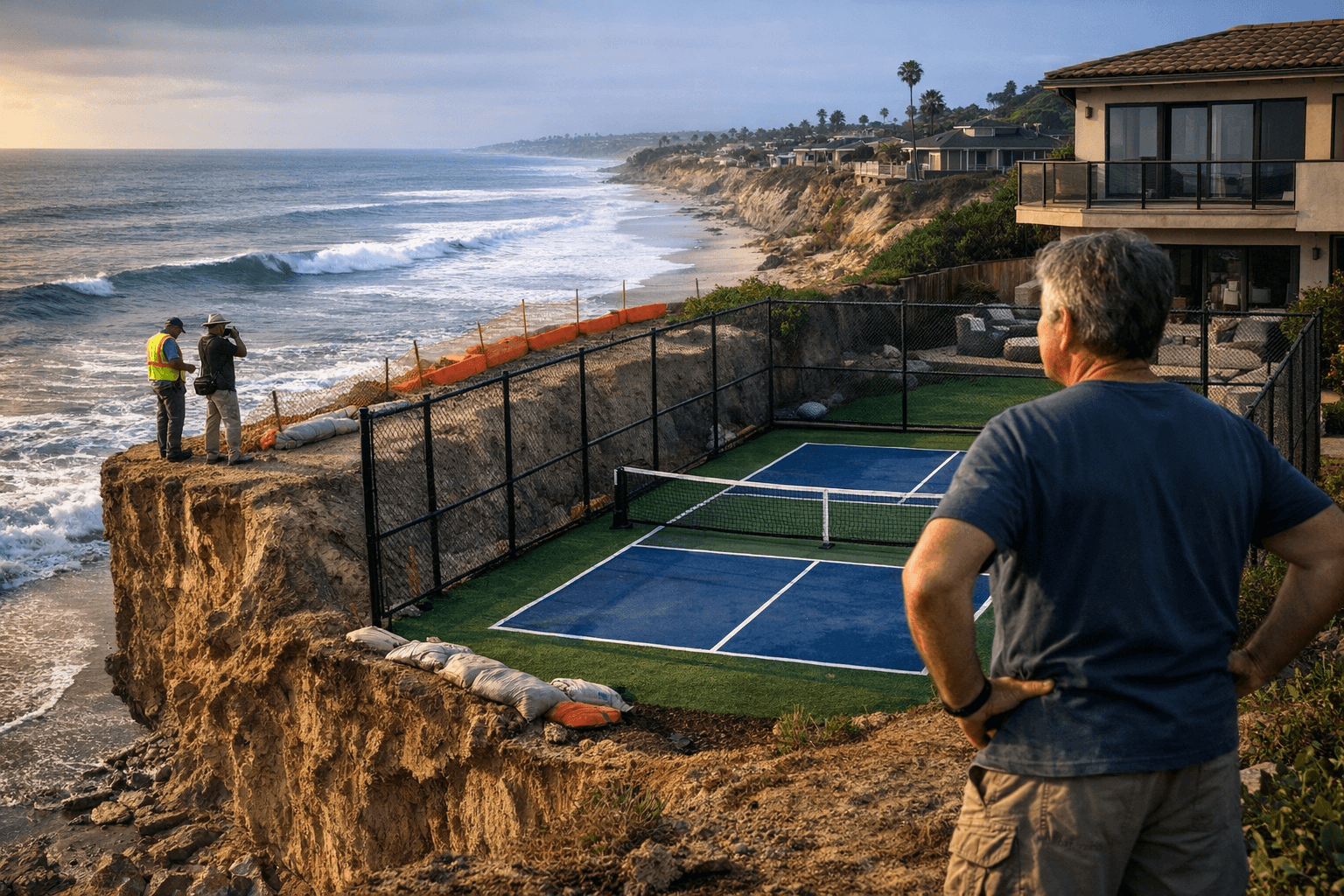
A coastal homeowner is contesting a roughly $2.4 million penalty from the California Coastal Commission after regulators alleged multiple violations on his property, including blocked public beach access, alteration of shorebird habitat, unpermitted development and an unpermitted pickleball court. A lawsuit filed January 14, 2026, argues the Commission exceeded its authority by imposing large administrative fines without judicial oversight.
The dispute centers on longstanding easement and access questions that escalated into environmental concerns and enforcement actions. Regulators contend the property modifications interfered with an access easement and damaged habitat used by protected shorebirds, while the property owner disputes the Commission’s process and legal basis for the fines. The owner’s attorneys contend the agency acted as investigator, prosecutor and judge by assessing and imposing monetary penalties directly.
For the amateur pickleball community, the case highlights practical risks when courts are built near public coastal areas or on properties with complicated access and environmental designations. A backyard court that looks like a simple amenity can trigger coastal development permit requirements, public access obligations and habitat protections. Failure to obtain proper permits or to honor easements can result in removal orders, restoration mandates and steep fines that dwarf the price of a net and surface material.
This legal fight also raises due-process questions that could affect how the Commission and local agencies enforce rules going forward. If courts remain able to levy administrative fines without court review, property owners risk sudden, high-cost enforcement actions. If the lawsuit succeeds in imposing tighter judicial oversight, enforcement may become slower but subject to more courtroom review.
Verify easements and coastal permits before building near the shore. Check local planning departments and the Coastal Commission’s permit rules for development, vegetation removal and habitat protections. Document any public access agreements on title reports and consult legal counsel when an easement or habitat designation is unclear. Those steps reduce the chance of a costly takedown or protracted legal battle.
The case promises a lengthy appeals process that could set precedent for how recreational features like pickleball courts are treated in sensitive coastal zones. For now the net result is a clear reminder: proximity to sand brings extra rules, and amateur players hoping for court time by the sea should make permits and protections part of the game plan.
Sources:
Know something we missed? Have a correction or additional information?
Submit a Tip