Coffee grounds and plastic bottles turned into carbon filters
University of Sharjah patented a co-pyrolysis method turning spent coffee grounds and PET into activated carbon that can capture industrial CO₂, offering a reuse path for two large waste streams.
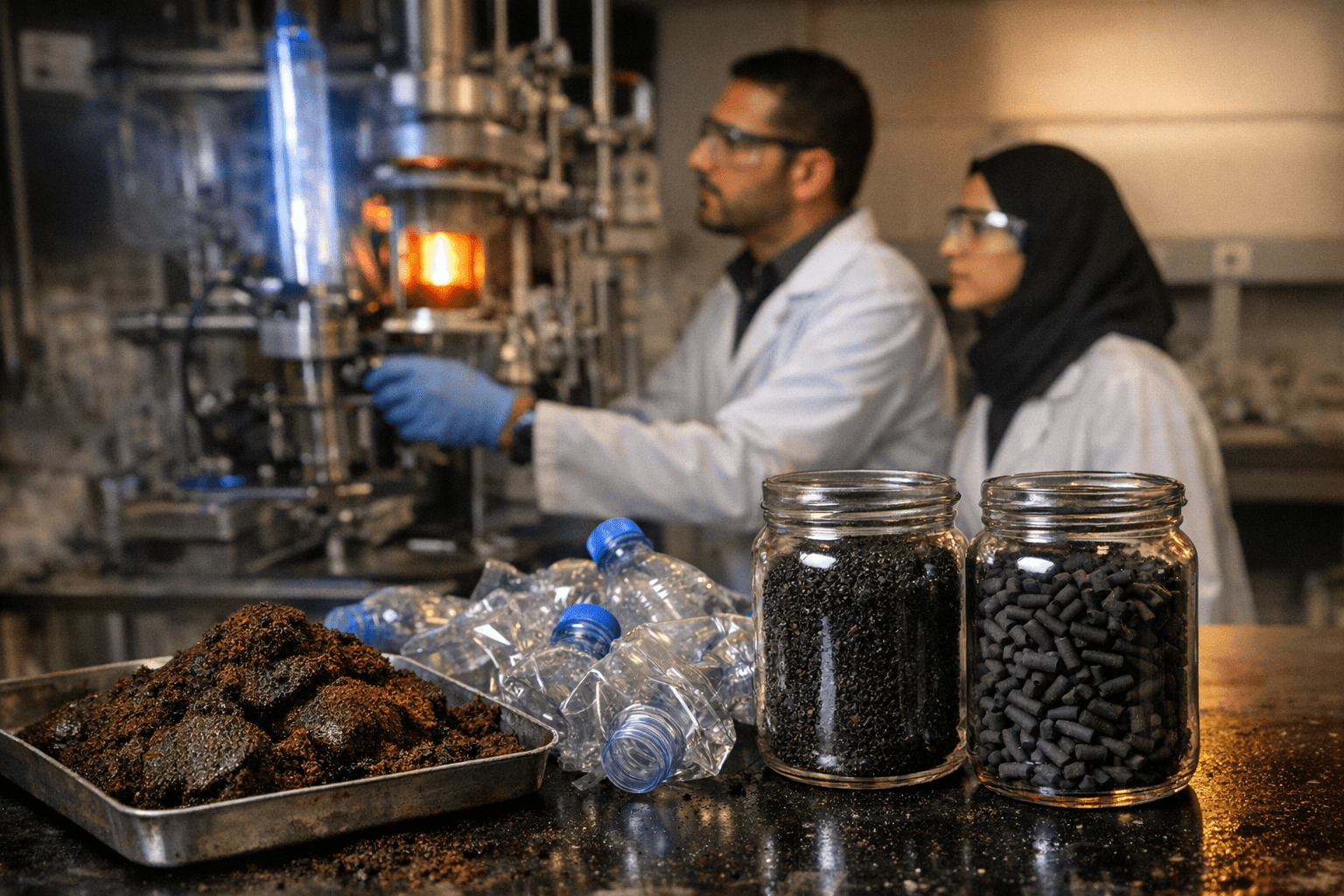
Researchers at the University of Sharjah were awarded a U.S. patent for a co-pyrolysis process that converts spent coffee grounds and PET plastic into activated carbon capable of capturing carbon dioxide from industrial emissions. The technique mixes coffee grounds, PET and potassium hydroxide, then heats the blend with activation around 600°C to yield highly porous carbon adsorbents compatible with existing filtration systems.
This development matters because it targets two massive, persistent waste streams at once: used coffee grounds and discarded PET bottles, each produced in the millions of metric tons annually. By turning those feedstocks into a marketable adsorbent, the approach aims to give cafés, roasters and waste collectors a practical reuse route while supplying materials for carbon-capture equipment already in place at many plants.
The patent, held by the University of Sharjah and listing four inventors, outlines the chemistry and processing concept but leaves scale-up and commercial timelines proprietary. Because the technical disclosure is tied to patent filings rather than an open-access paper, specific pilot-scale yields, long-term durability data and cost-per-ton estimates were not made public. The inventors say the material is intended for integration into current filtration platforms, which could lower retrofit barriers for industrial operators looking to reduce point-source CO₂ emissions.
For the coffee community, the implications are concrete. Spent grounds are a bulky, wet waste stream that most shops struggle to repurpose at scale; collection programs tied to local recycling or materials-processing partners could turn that liability into feedstock for adsorbent manufacture. Likewise, diverting PET from landfill or incineration into a value-added product strengthens circular-economy claims and reduces overall material footprint. However, practical hurdles remain: the process uses potassium hydroxide and requires activation at roughly 600°C, meaning production will need industrial equipment, chemical handling protocols and thermal management — not something to try at the back of a café.
The commercialization pathway will depend on licensing decisions by the university and interest from environmental technology firms and waste-management players. If producers license the IP and fund pilots, local pilots could follow, pairing coffee collection routes with plastics recovery streams and a nearby activation facility. That integration would make the concept more than a laboratory curiosity and could channel spent grounds from espresso machines right into carbon-capture supply chains.
Our two cents? Track and quantify the grounds you generate, explore partnerships with recyclers, and flag this kind of cross-stream reuse to your suppliers and local authorities. Brewing innovation into everyday waste takes coordination — but this patent shows the grounds for optimism.
Know something we missed? Have a correction or additional information?
Submit a Tip