Coinbase withdrawal prompts Senate pause on landmark crypto overhaul
Senate Banking delays markup after Coinbase says current draft is unacceptable, prolonging regulatory uncertainty for U.S. crypto markets.

The Senate Banking Committee postponed consideration of a high-profile digital-asset market-structure bill after Coinbase Global Inc. publicly withdrew its support, creating a major setback for a bipartisan push to clarify U.S. crypto rules. Committee Chairman Sen. Tim Scott (R-S.C.) announced the pause on Jan. 14, saying bipartisan negotiations would continue and no new date for a markup has been set.
Coinbase chief executive Brian Armstrong posted on X that the company “would rather have no bill than a bad bill” and that the draft contained “too many issues.” His abrupt public rejection came the same day Senators unveiled a draft intended to create a comprehensive regulatory framework: defining when tokens qualify as securities, commodities, or other instruments and assigning oversight of spot digital-asset markets to the Commodity Futures Trading Commission. Scott described the proposal as an effort to deliver “clear rules of the road that protect consumers, strengthen our national security, and ensure the future of finance is built in the United States.”
Armstrong and Coinbase flagged several explicit objections. Company officials said the draft included what would amount to a de facto ban on tokenized equities, amendments that would “kill rewards on stablecoins,” and provisions they viewed as an erosion of CFTC authority together with problematic oversight proposals for decentralized finance. Those policy concerns are significant because they touch on core business models at major U.S. exchanges and two-sided markets that rely on tokenized products, staking, and programmatic rewards.
Political reactions across the committee were swift. Sen. Cynthia Lummis (R-Wyo.) wrote on X that the industry response “proves they just are not ready” and said she was “deeply disappointed” while pledging to continue work with stakeholders. Armstrong replied to her post, “Agreed, and thank you!” Sen. Scott characterized the pause as brief, saying industry, financial-sector leaders, and senators were “at the table working in good faith.” Two people familiar with negotiations said the committee lacked the votes to advance the bill even if Coinbase had stayed on board, underscoring fractures in the bipartisan package.
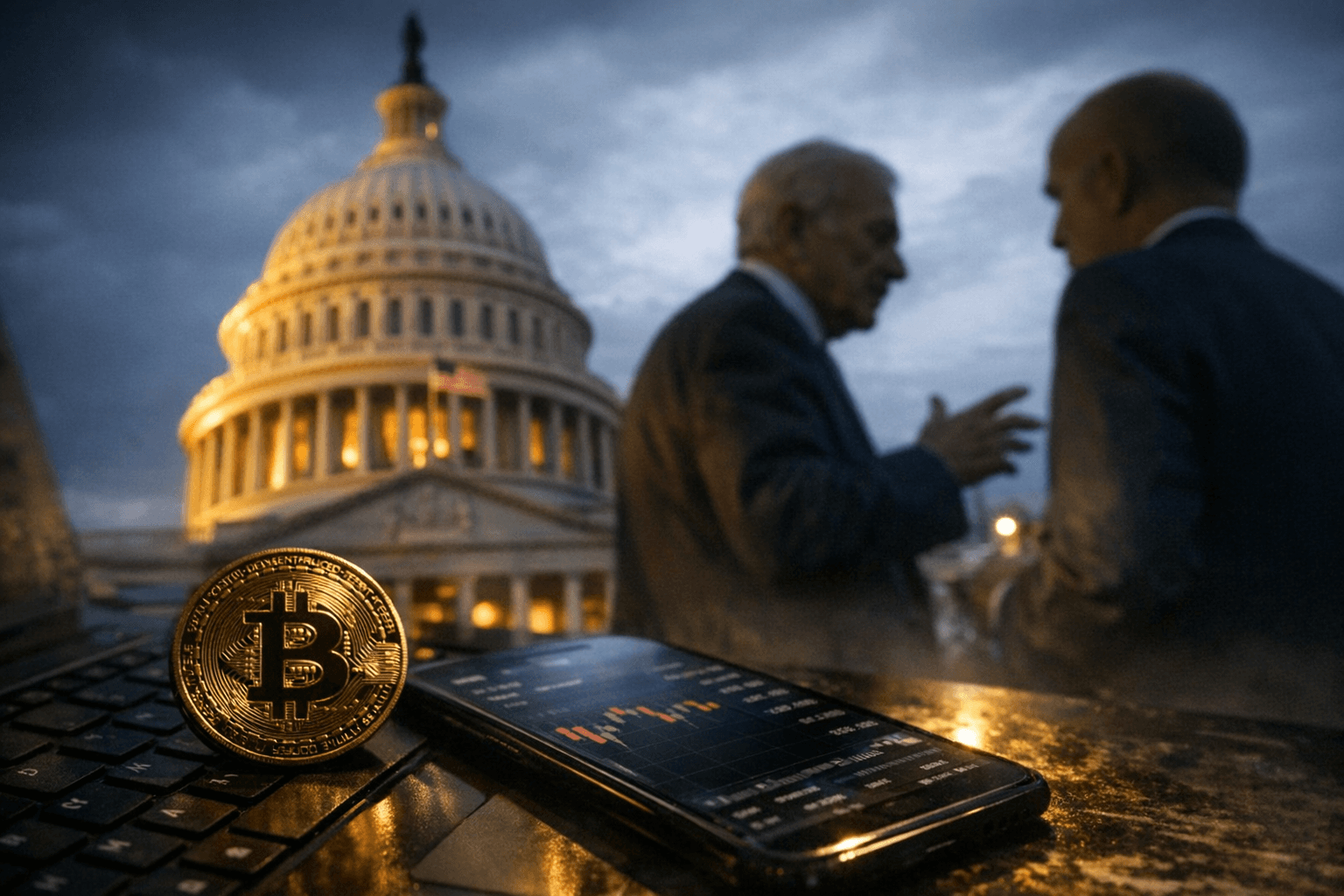
Market participants and analysts warned of broader consequences. TD Cowen analyst Jaret Seiberg said Coinbase’s exit could derail the legislation this Congress. Digital-asset prices, which had been rallying earlier in the week, edged lower after news of the postponement as investors digested the prospect of prolonged regulatory uncertainty.
The procedural delay matters because the planned markup would have been the committee’s first major step toward finalizing text for floor consideration. With no revised draft published that addresses Coinbase’s objections, it is unclear whether senators will substantially rewrite the bill or attempt narrower fixes. Timing pressures from the congressional calendar and election-year politics raise the odds that the issue could stall until next year, increasing the risk that regulation will be shaped outside the United States or through piecemeal agency action.
Longer term, the episode highlights a central dilemma for lawmakers: reconciling industry business models with statutory clarity in a sector that evolves rapidly. If compromise cannot be reached on token classifications, stablecoin rules, and agency jurisdiction, firms may face continued uncertainty that could damp investment, shift innovation offshore, and complicate the United States’ ability to steward market integrity and national-security concerns in digital finance.
This article was produced by Prism’s automated news system from verified source data, official records, and press releases, then run through automated quality and moderation checks before publishing. The system is built and supervised by the people who set the standards it runs under. Read our full AI policy.
Did this article answer your question?

