Cold Weather and Rough Terrain Slash GPS Dog-Collar Battery Life
Real-world tests show GPS dog collars often last far less than ad claims once frequent updates, satellite links and poor signal kick in — plan for shorter runtimes and carry backups.
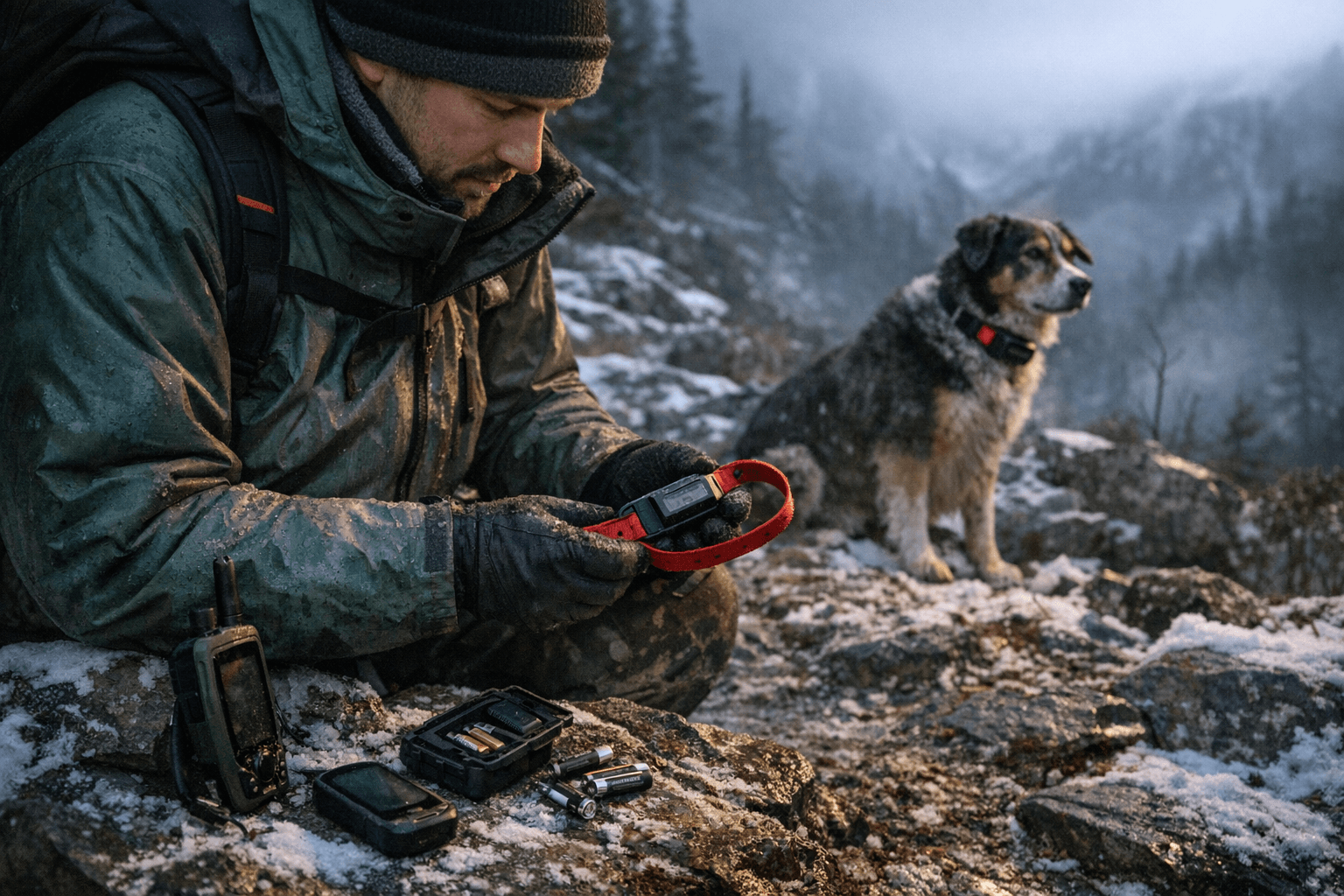
Field tests and product reviews are converging on a blunt message for active dog owners: advertised runtimes are conditional, and real-world use eats battery life fast. High-frequency location updates, continuous satellite or cellular communication, lost-dog modes and weak signal environments are the main culprits behind collars that die when owners need them most.
Treelinereview’s hands-on testing illustrates how settings matter. “The connection speed on the Garmin Alpha T 20 was the fastest of the dog GPS collars I tested.” The Alpha T 20 defaults to a dynamic update rate that uses a 30-second refresh when the dog is motionless and a 2.5-second refresh when the dog moves; “the dynamic update rate saves battery life,” but Treelinereview found that using the dynamic setting yielded about 2.5 days of continuous use. Switching the update rate to two minutes extended that to about three and a half days. The same review also notes that “satellite communication drains the battery faster,” which helps explain why collars that promise months of runtime in ads often perform in days or weeks in the field.
Other devices show a wide range. A Go Explore 2 unit lasted about 17 days in Treelinereview’s regular-use profile — defined as three to four walks per day, at least one drive per day and a few hikes each week — while the Apple AirTag’s coin-cell battery “didn’t die during testing” and is expected to last roughly a year. Outdoorlife’s testing of the Fi Series 3 highlights the tradeoffs that come with aggressive tracking: “In a suburban area with good AT&T coverage, a fully-charged Fi Series 3 battery lasted 21 hours in lost dog mode,” even though the same device can last more than a month under low-frequency, everyday use.
Hunting and training systems offer different balances. Field & Stream reports the Garmin Alpha 300i handheld runs up to 55 hours, and paired collars typically “can hold a charge for 50 to 70 hours.” For users who need extra endurance, Garmin and other vendors sell extended battery options — Outdoorlife notes the TT25 can reach around 136 hours with an optional extended battery — but those are heavier and intended for long backcountry trips rather than everyday wear.
Practical advice matters more than specs. Satellai’s buyer guidance warns that “a standard tracker might only last a day, which is insufficient for real outdoor use,” and urges users to “Before heading out, always check the cellular coverage map for the area you'll be exploring.” Field & Stream author SM also flags a common human factor: “The collar does offer a light signal for when the collar is running low, but you have to hit the stim button while the collar isn’t on your dog check for it. I sometimes forget to do this and have been stuck in the field with a dead collar; this issue can be easily avoided by charged the collar more frequently.”
What this means for readers is straightforward. Set conservative expectations: treat multi-day or satellite-heavy outings as battery-intensive, test your device settings in your usual terrain, and carry a charging plan or an extended battery pack if you head far from power. For everyday containment, lightweight trackers from Kippy, Tractive and Pawfit advertise two-week to multi-day runtimes and affordable subscriptions, but for hunting, backcountry adventures or active lost-dog searching, prioritize devices and configs that trade reporting frequency for endurance. In short, assume that real-world conditions will shorten runtime, and plan so your connection to your dog never goes to the dogs.
Know something we missed? Have a correction or additional information?
Submit a Tip