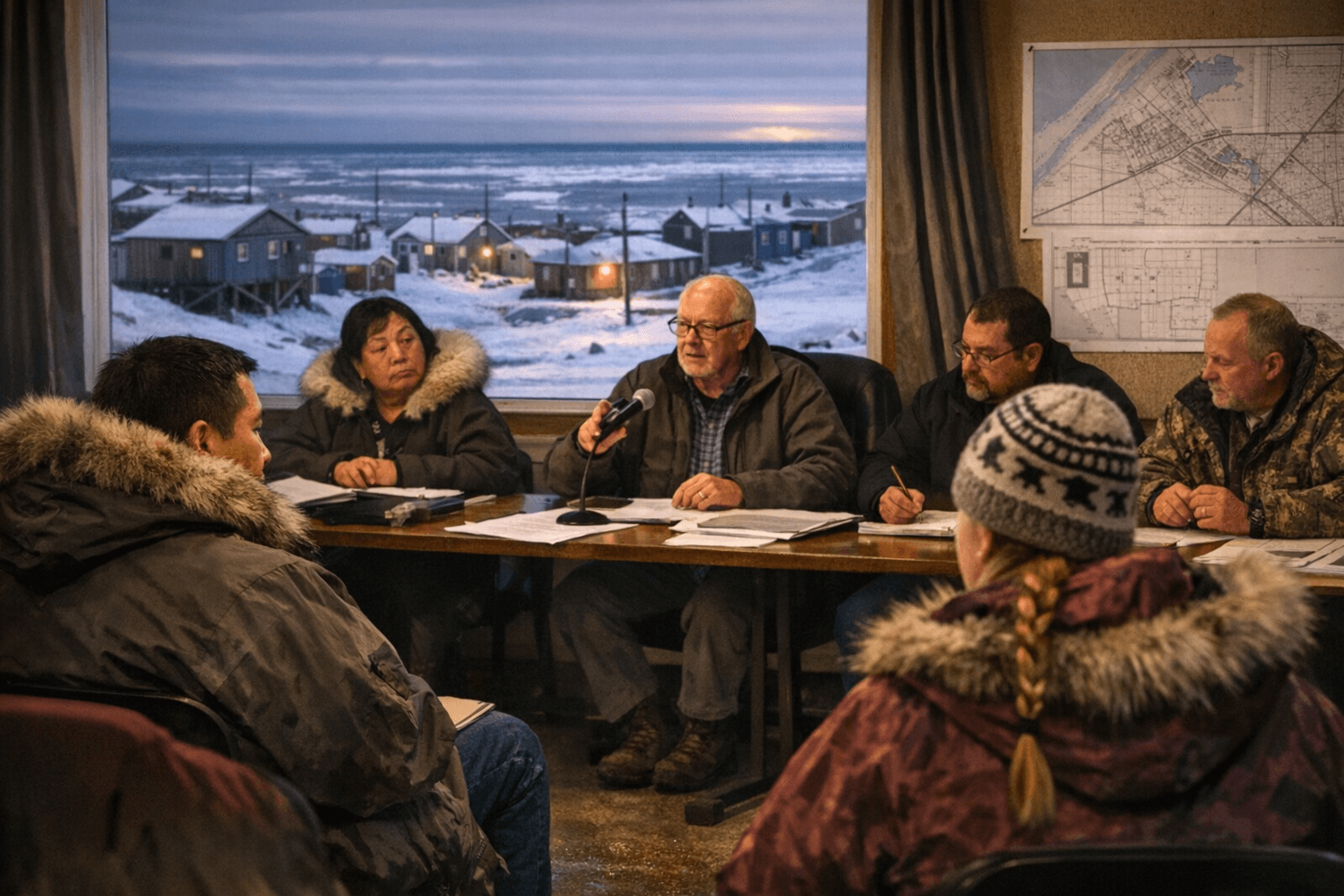
Collar Cameras on 12 Bears Document Behavior of North Slope Grizzlies
Twelve grizzlies on Alaska’s North Slope wear collar-mounted cameras that captured a bear meeting a wolf pack and two bears playing on the tundra.
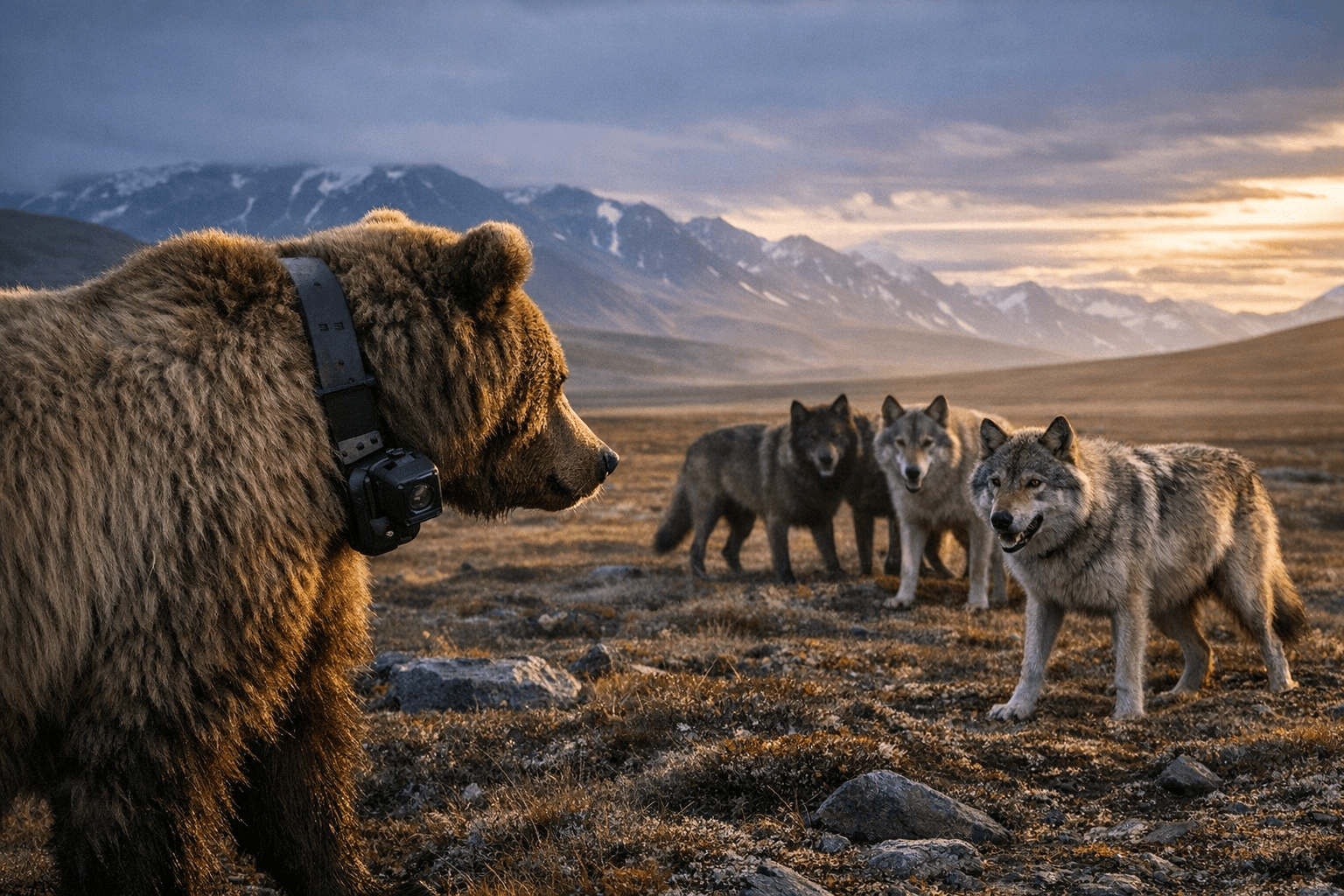
Twelve of about 200 grizzly bears that roam Alaska’s North Slope have been fitted with collar-mounted video cameras, providing close-up footage of behavior and survival in frigid, treeless terrain near the Arctic Ocean. Washington State University and the Alaska Department of Fish and Game are listed as research partners in the project that aims to document one of the world’s most isolated grizzly populations.
The project covers bears within a region the Associated Press describes as roughly 94,000 square miles (243,459 square kilometers) of North Slope tundra, an area home to about 11,000 people. Nearly half of those residents live in Utqiagvik, the nation’s most northern community, formerly known as Barrow, situating the study amid the sparse human presence of the borough.
Video clips and image frames made from the collar cameras show a range of behaviors: bears playing or fighting with companions, gnawing on a caribou, snarfing up berries, napping on a beach, and swimming in a pond looking for fish. The clips are often brief but have yielded moments that researchers describe as offering a rare perspective on how grizzlies find food and survive in Arctic conditions; many clips are partially obscured by the undersides of whiskery muzzles, a technical limitation noted in distributed materials.
Washington State University provided undated image frames in January 2026 that were distributed via The Associated Press. One frame is captioned, "This undated image provided by Washington State University in January 2026, made from a video taken from a grizzly bear’s collar camera, shows the bear encountering a wolf pack on the snow-covered tundra of Alaska’s North Slope. (Washington State University via AP)." Another frame is captioned, "This undated image provided by Washington State University in January 2026, made from a video taken from a grizzly bear's collar camera, shows two grizzly bears playing on the tundra in Alaska's North Slope. (Washington State University via AP)."
A researcher identified only as Vincent offered an operational observation about foraging: "One thing that’s really nice about these bears is that when they’re foraging on a particular food they tend to do that one thing for a long period of time, so these bears will spend pretty much their entire day eating, so the chances of us actually seeing what they’re doing are pretty high," Vincent said. Materials circulated on social media included a Facebook post excerpt noting, "Grizzly bears on Alaska’s North Slope are recording their own lives with collar cameras, offering a rare look at how they find food and survive the Arctic. Researchers plan to expand the study. | AP | Facebook."
The distributed social post metadata captured in reporting shows an AP Facebook post with the timestamp "AP February 2 at 11:04 PM ·" and a snippet of engagement reading "99 · 3 comments · 6.8K views." Project documents provided so far do not identify Vincent’s affiliation, the date collars were deployed, collar technical specifications, capture and handling protocols, funding sources, or a timeline for the planned expansion.
Images and video frames used in the reporting were provided by Washington State University and distributed via The Associated Press. Copyright 2026 The Associated Press. All Rights Reserved.
Know something we missed? Have a correction or additional information?
Submit a Tip