Colombia candidates end campaign with huge rallies before vote
Huge rallies closed Colombia’s campaign and exposed a three-way split over security, Petro’s legacy and turnout as Iván Cepeda led the final polls.

Mass rallies marked the end of Colombia’s campaign, and they did more than fill plazas. They showed a country heading into the May 31 first round with its politics hardened around security fears, anger over crime and a sharp argument over whether President Gustavo Petro’s project should continue or be reversed. Iván Cepeda, the leftist lawmaker at the center of the Historic Pact’s bid, emerged as the front-runner in the final poll before the vote, but the race remained open enough to feed speculation about a June 21 runoff.
Cepeda, 63, has campaigned on continuing social reforms and reducing poverty and inequality. On the right, Abelardo de la Espriella has leaned into a hardline anti-crime message, calling for unified command posts and the dismantling of gangs. Paloma Valencia, the Democratic Center’s center-right contender and ally of former President Álvaro Uribe, has argued that Petro’s “total peace” policy should give way to “total security,” and said her first decree would reactivate arrest warrants. Senator Clara López dropped out on April 6 and endorsed Cepeda, leaving 13 candidates in the field and helping clarify the blocs now forming around the leading names.
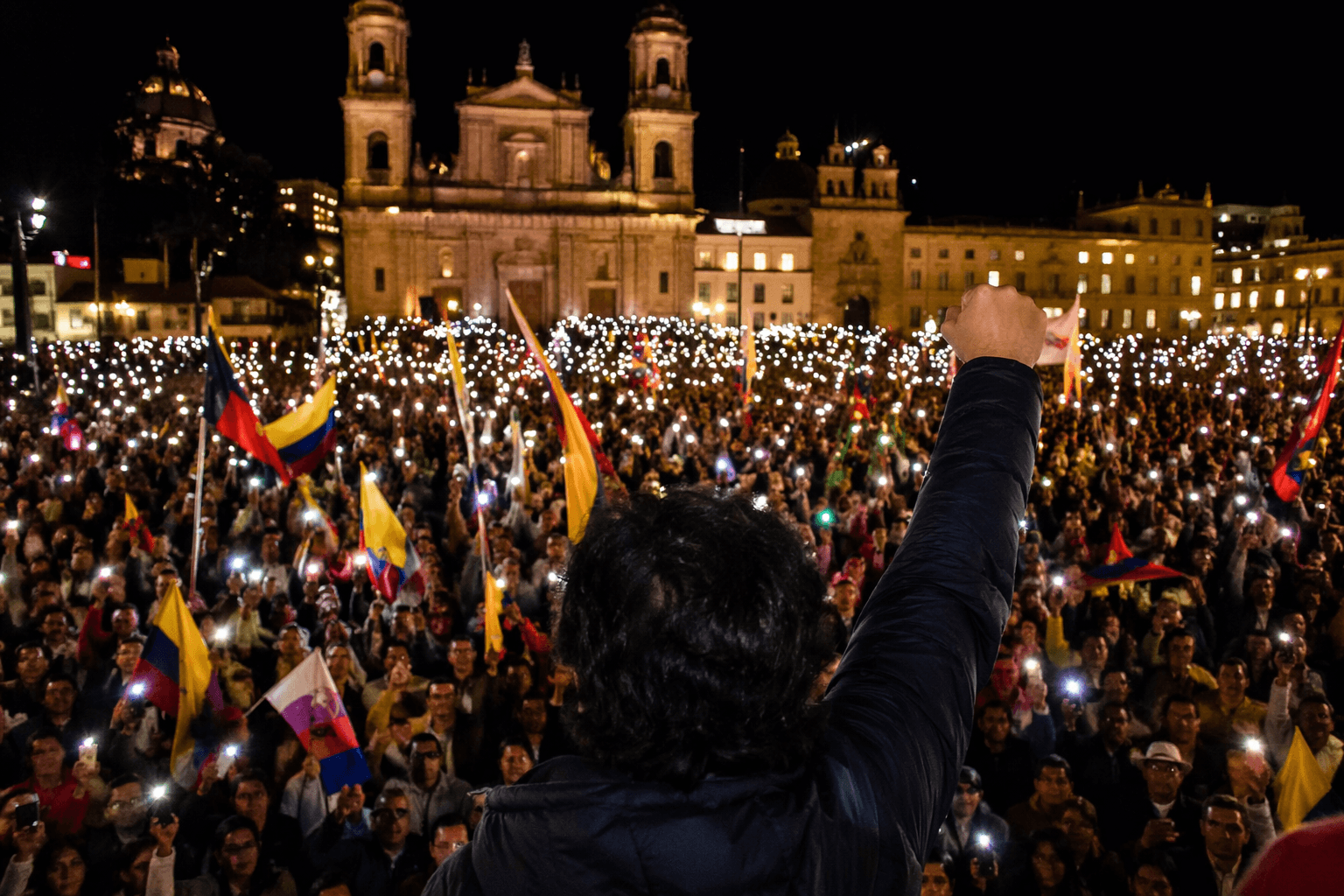
The size and tone of the closing rallies reflected a deeper national unease. Security is the top electoral concern, and recent bombings in southwestern Colombia have intensified the mood. Political violence has also loomed over the race since the June 2025 assassination of a presidential hopeful and threats against other candidates. At the same time, criticism of Petro has sharpened because his government’s reduced coca-eradication focus coincided with record cocaine production and persistent armed-group violence.

The institutional stakes are just as stark. Colombia’s electoral calendar sets the first round for May 31, a runoff for June 21 if no candidate tops 50 percent, and inauguration for August 7. The president serves a single four-year term with no reelection, and Petro is constitutionally barred from running again. With turnout averaging about 46 percent, well below the 55 percent seen in the first round of the 2022 election, the closing days are likely to matter less for converting committed supporters than for pushing reluctant voters to the polls.

That is why the rallies mattered as a test of consolidation. Cepeda’s camp appears to be building the left around Petro’s legacy, de la Espriella is trying to unify voters around security and order, and Valencia is trying to capture the center-right and anti-Petro vote. The March 8 legislative elections left Congress fragmented, which means the next president will likely need cross-party alliances to govern. The final campaign scenes showed a country not merely choosing a winner, but sorting itself into competing visions of authority, reform and public safety.
This article was produced by Prism’s automated news system from verified source data, official records, and press releases, then run through automated quality and moderation checks before publishing. The system is built and supervised by the people who set the standards it runs under. Read our full AI policy.
Did this article answer your question?