Colombia’s new president vows war on narco-terrorism, wins U.S. aid pledge
Trump pledged $1 billion in security aid as Abelardo de la Espriella took office in Cali and vowed an "all-out war" on narco-terrorism.
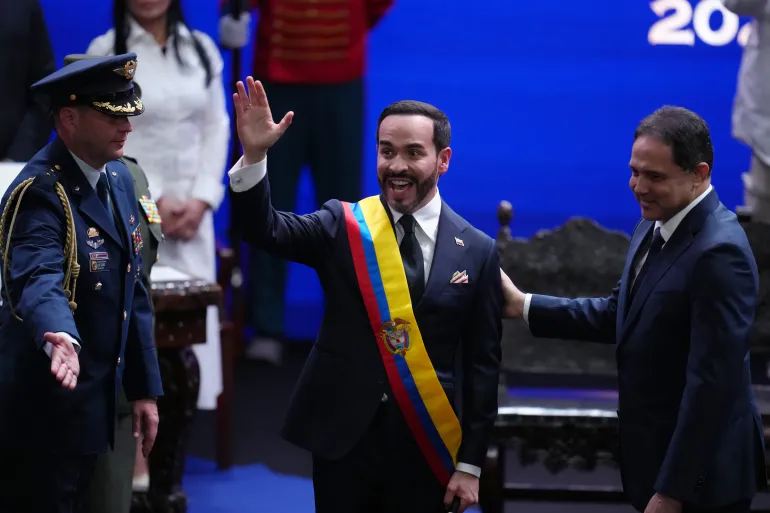
The Trump administration said it plans to provide $1 billion in security assistance to Colombia as Abelardo de la Espriella was sworn in as president in Cali, where he vowed an "all-out war" on "narco-terrorism." The ceremony took place under heightened security and broke with tradition by moving the inauguration away from Bogotá, the capital.
De la Espriella won June’s runoff election by less than one percentage point, ending four years of Gustavo Petro’s first leftist government. A right-wing lawyer who had never held elected office before, he has branded himself "The Tiger" and made security the center of his pitch, promising to "defeat narco-terrorists" and crack down on armed groups, drug trafficking and other organized crime.
Washington’s aid pledge is aimed at Colombia’s security apparatus. Reports said the money is intended to strengthen Colombia’s security forces, expand operational capabilities and support the fight against organized crime, a sign that the new administration in Washington sees de la Espriella less as a risky populist experiment than as a partner for hard-power cooperation.
The political bargain is broader than policing alone. De la Espriella has also promised to shrink the state by as much as 40%, revive the oil and gas sector and pull Colombia closer in line with the United States and Donald Trump. That agenda marks a sharp turn from Petro’s presidency and fits a wider rightward shift across Latin America, where conservative leaders are gaining ground after years of left-leaning momentum.
For Washington, the return it wants is likely to be practical as well as symbolic: tougher counternarcotics operations, a steadier hand on migration and a government in Bogotá that will back U.S. influence more reliably in a region that is moving right. Colombia has long been central to U.S. efforts against drug trafficking, and the bilateral relationship has already been tested by disputes over deportations, making de la Espriella’s alignment with Trump an immediate test of whether ideological affinity can produce measurable security gains.
This article was produced by Prism’s automated news system from verified source data, official records, and press releases, then run through automated quality and moderation checks before publishing. The system is built and supervised by the people who set the standards it runs under. Read our full AI policy.
Did this article answer your question?