Colorado River Indian Tribes Seeks Contractors for CRIP Drain Cleaning, Vegetation Management
CRIT seeks contractors to clean drains and mechanically manage vegetation on the Colorado River Irrigation Project near Parker and Poston, affecting local irrigation and infrastructure.
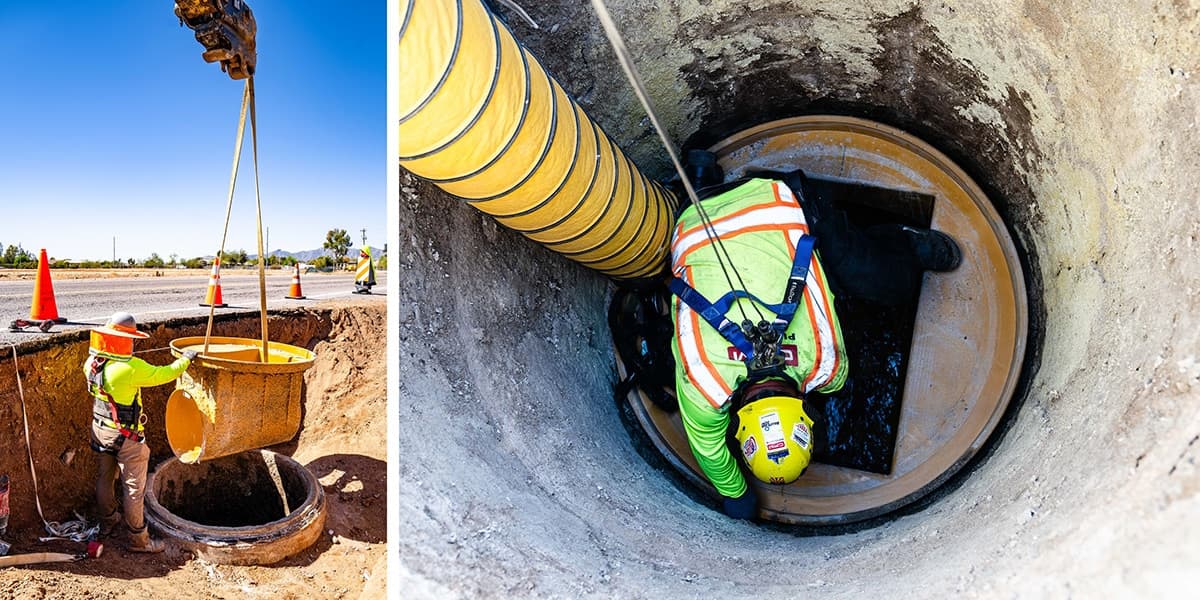
The Colorado River Indian Tribes Water Resources Department has issued a request for proposals for drain cleaning and mechanical vegetation management on the Colorado River Irrigation Project near Parker and Poston, Arizona. The work is intended to restore and maintain open surface drains that serve local farms and infrastructure, and it is funded under federal contracting rules with an important funding caveat.
The RFP requires year-round drain cleaning and mechanical vegetation management to achieve "a maintenance level of effort." Contractors will remove "debris, tules and submerged vegetation, sediment, and other obstructions" and perform mechanical work on both banks of drains while doing drain-cleaning tasks "working from one side of the drain." The RFP also calls for removal of salt cedar and other vegetation, with the document fragment stating "The Contractor shall remove salt cedar and other vegetation using knifing or [...]."
Financial and legal terms are explicit. The work is "funded via a Public Law 93-638 contract with the Bureau of Indian Affairs (BIA) and is subject to the availability of federal funds." Contractors must coordinate with federal and tribal operations: "The Contractor will be required to collaborate with the BIA for any contract activities on the CRIP and with CRIT’s farming operation, ‘Amat Kuhwely, for any contract activities which could impact farming operations." The RFP response must "recognize that the drains are in varying conditions due to a lack of maintenance by the BIA, and that CRIT has no liability for the system." The final agreement must include "a release of liability for CRIT."
Operational and reporting requirements are specific. The RFP notes that "The Contractor’s available heavy equipment must have a minimum reach of 25 feet for some drain locations." It also sets contract deliverables and oversight expectations, including the listed contract text: "• At least one monthly progress report meeting between the Contractor and the CRIT Representative;" and "• The Contractor shall remove debris, sediment, vegetation, and other obstructions from drains. Contractor shall prioritize drain cleaning based on existing conditions in consultation with the CRIT Representative;" and "• The Contractor shall remove salt cedar and other vegetation using knifing or [...]" The RFP instructs bidders that "Proposals should follow the guidelines provided in this RFP and be submitted in digital" form, a fragment that indicates digital submission requirements are set in the full document.
For local contractors and irrigators, the work could ease conveyance blockages, reduce risk to canals and levees, and affect field access near Parker and Poston. CRIT explicitly requires contractors to "prevent damage to canals, levees, roads, and other CRIP infrastructure." Prospective bidders should note the funding caveat and the required coordination with the BIA and the CRIT farming operation.
For context, other regional RFPs and vegetation-management plans show common methods and procurement schedules: the Yuba County Resource Conservation District RFP lists chipping, pile burning and inspection-before-payment procedures; SAFCA guidance describes hand-pulling, excavator/backhoe removal and periodic water-level drawdowns; and a City of Chino Hills RFP illustrates vendor question deadlines and anticipated award timelines. Those documents are cited as procedural comparators, not as CRIT requirements.
What comes next for readers is practical: contractors should obtain the full CRIT RFP to confirm deadlines, complete submission rules, insurance and liability language, and technical specifications before bidding, and local irrigators should watch for work schedules that could affect water delivery and access along the CRIP.
Know something we missed? Have a correction or additional information?
Submit a Tip