Community joins blue campaign outside Family Justice Center in Asheville
Residents gathered Jan. 14 to mark Human Trafficking Prevention Month and support survivor services at the Family Justice Center. The event spotlighted local resources and collaboration.
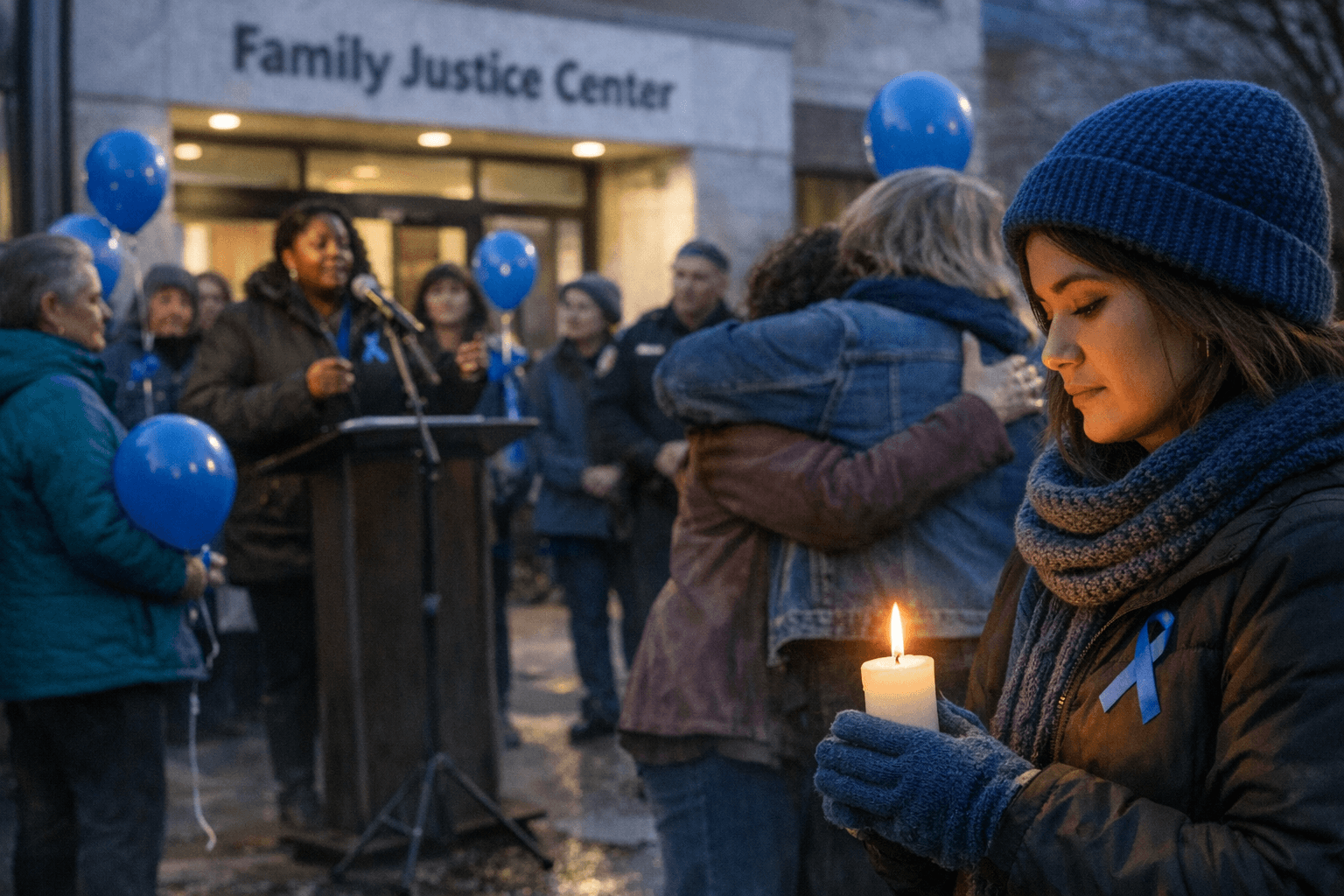
Buncombe County residents and service providers gathered Wednesday afternoon outside the Family Justice Center at 35 Woodfin St. in Asheville for the annual Human Trafficking Prevention Month group photo, a Buncombe County Justice Services notice said. The county posted the notice Jan. 13, 2026 inviting the public to wear blue—the official color for the month—and to show support for survivors and prevention efforts.
The gathering was organized by Our Voice, a partner of the Family Justice Center that provides advocacy and therapy for survivors of labor and sex trafficking ages 13 and older. The post emphasized that Our Voice works in collaboration with the Mountain Child Advocacy Center to serve minor survivors, underscoring coordination across agencies that handle complex and age-specific cases.
Public visibility at events like this matters in practical ways. Awareness campaigns help lower barriers to reporting and referral, and increased public recognition of available services can shorten the time survivors need to access advocacy, medical care, and counseling. For a county-level service system, those faster linkages can improve outcomes and help direct community donations, volunteer time, and grant funding to the programs most used by residents.
The Family Justice Center location on Woodfin Street functions as a central access point for multiple services, making it easier for families and survivors to navigate legal, health, and social services without repeated trauma from moving between agencies. The explicit call to wear blue and participate in a visible group photo was designed to normalize community support and to put the agency network—advocates, therapists, and child-focused partners—on residents’ radar.
Human trafficking prevention work also ties into larger conversations about public budgets and social services. Early intervention and coordinated support can reduce long-term public costs tied to emergency medical care, criminal justice processing, and chronic social services. For local policymakers and nonprofit funders, visible community engagement helps justify continued or expanded support for trauma-informed services for survivors.
If you missed the Jan. 14 event but want to support survivors or learn more about services, the Family Justice Center at 35 Woodfin St. is the local hub listed in the county notice. If you suspect someone is in immediate danger, call 911. The takeaway? Showing up—by wearing blue, sharing information, or linking neighbors to help—makes the county’s network of survivor services more effective and easier to find when it matters. Our two cents? A small public gesture can translate into real access for someone who needs it.
Sources:
Know something we missed? Have a correction or additional information?
Submit a Tip