Compact Buyer’s Checklist for New Hobby Woodturners: Specs, Speed, Construction, Accessories
A compact buyer's checklist lays out lathe specs, speed control, construction and essential accessories so new woodturners can match machines to projects and budget.
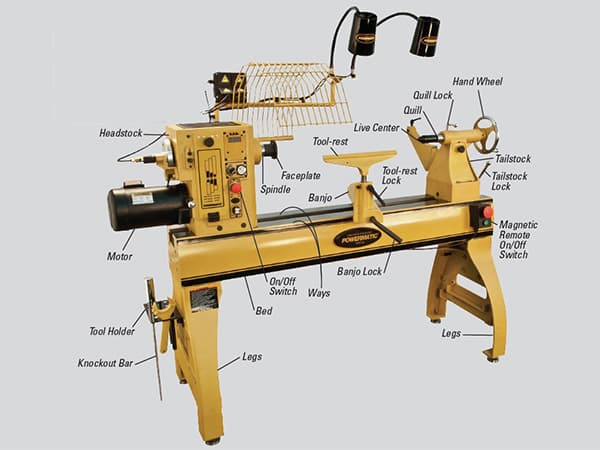
Match the lathe to the work you plan to do: swing over bed and distance between centers control what you can turn, and choosing the right balance of power, speed control and rigidity prevents early frustration. Swing measurements of 10"-16" cover most bowl and general hobby work, with 12"-16" a flexible sweet spot; between-centers lengths of 16"-30" determine spindle and long-turning capability. Motor options run from 1/2 HP to 2 HP, and a 1-1.5 HP motor fits most beginners who want to turn bowls and spindles without constantly stalling.
Variable speed matters more than a wide range of pulleys. Electronic variable speed such as VFDs gives stable torque at low RPMs for large-diameter bowls and makes speed changes quick and safe. A digital RPM display provides repeatable results for sanding and hollowing. If you plan frequent low-speed, high-torque work, prioritize machines that hold torque down near the bottom of their range.
Construction and bed type drive finish quality. Heavy cast-iron beds and headstocks reduce vibration and improve surface finish; heavier machines damp vibration better and make sanding easier. Avoid flexible beds for medium-to-heavy work. Check bed length and rigidity if you expect to do long spindles or use a steady rest. A rigid bench-mount beats a flimsy built-in stand, but built-in stands are fine if they are substantial and bolted down.
Compatibility and features influence long-term value. Verify spindle thread sizes such as 1"-8 TPI and Morse taper sizes MT2 and MT3 so chucks and accessories fit. Look for indexing to speed decorative work and repeated patterns. Reversing is handy for sanding but not essential at the start. Outboard capability or a removable headstock expands capacity for occasional very large diameter turning. Controls should be accessible: a large, guarded or magnetic on/off switch reduces accidental knocks, and centerline height affects user comfort—consider an adjustable stand if you are tall or short.

Aftermarket support and parts availability are practical buying filters. Check local dealer warranties and the availability of replacement belts, chucks and bearings. Read community reviews for vibration issues, motor longevity and customer support experiences. When buying used, inspect for spindle runout, bearing noise and bed damage, and run a blank if possible.
Match setups to projects rather than marketing hype. A pen and spindle start can live on a 10"×18" benchtop with a good speed range. Bowl and general turning benefit from a 12"-16" swing, roughly 16"-20" between centers and a 1-1.5 HP motor. Hybrid turning works well on a 12"-16" swing with reliable low-speed torque. Prioritize a faceplate and 4-jaw chuck, spur and live centers, a steady rest, tool rest extension, quality bowl and spindle gouges, a good sharpening system and dust collection.
If unsure, buy a lathe that gives a little more capability than your first projects need to avoid outgrowing it. Join a local woodturning club to try different lathes, learn tool techniques and tap community knowledge before committing. This approach saves money, reduces learning friction and gets you turning cleaner, faster and with less risk of a nasty catch.
Know something we missed? Have a correction or additional information?
Submit a Tip