Complete Baby Shower Checklist: Food, Guests, Games, and Venue Tips
Six weeks of focused planning is all it takes to throw a baby shower guests will remember; here's the complete countdown checklist, from venue booking to thank-you notes.
What Does a Baby Shower Checklist Cover?
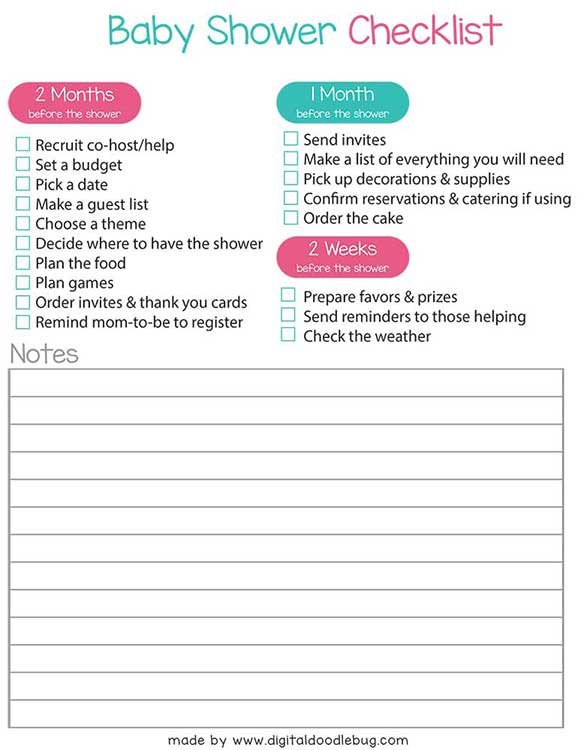
A baby shower checklist covers every planning task from the guest list and venue booking to food, games, registry coordination, and post-party thank-you notes, organized by a 6-to-8-week countdown so nothing slips through the cracks.
According to Minted, baby showers are typically held early in the third trimester, around weeks 28 to 36 of pregnancy, or roughly 4 to 8 weeks before the due date. That window gives hosts enough time to book a venue, send invitations with proper notice, and coordinate food without last-minute scrambling.
Which Baby Shower Format Are You Planning?
Before building any checklist, lock in the shower format. The format shapes every downstream decision, from guest count to budget.
- Traditional: 20 to 30 guests, hosted at a home or catering venue, focused on the guest of honor
- Co-ed/couples shower: Partners and friends of all genders attend; typically more casual, with yard games or a cocktail-style spread
- Virtual shower: Guests join via Zoom or a similar platform; requires a digital invitation with a video link and a coordinated gift-shipping plan
- Micro shower (sip and see): Under 15 guests, sometimes held after the baby arrives; lower cost and lower logistics overhead
- Drive-by shower: Guests pull up to drop off gifts and wave; popular for high-risk pregnancies or guests with travel limitations
Identifying your format first prevents wasted effort. A drive-by shower does not need a seating chart; a couples shower calls for a casual snack table, not a formal finger-sandwich spread.
8 Weeks Out: Set the Foundation
Eight weeks before the shower is the time to lock in the biggest variables: date, budget, and venue.
- Confirm the due date with the parents-to-be and work backward to choose a shower date
- Draft the guest list; 20 to 30 guests is standard for a traditional shower, while micro showers cap around 15
- Set a realistic budget; according to WebBabyShower, in-person showers range from a few hundred dollars to well over $1,000 depending on venue, food, and guest count
- Book the venue early; full-service spaces such as Villa Russo Catering or private event rooms at restaurants fill up faster than most hosts expect
- Identify co-hosts and assign clear ownership: one person handles invitations, one manages food, one owns decorations
Budget Tiers by Shower Size
| Shower Type | Guest Count | Estimated Cost |
|---|---|---|
| Home shower | Under 20 | $200 to $400 |
| Mid-range venue | 20 to 40 | $500 to $900 |
| Full-service catering | 40+ | $1,000 and up |
6 Weeks Out: Theme, Registry, and Invitations
Six weeks out is the invitations deadline. According to Party.Pro, sending invitations at this stage gives guests enough time to RSVP, arrange travel, purchase gifts, and secure childcare.
- Finalize a theme: woodland animals, floral garden, celestial, and neutral minimalist are all popular choices
- Order or create invitations that match the chosen theme
- Send digital or printed invitations; platforms such as Evite (free RSVP tracking, supports up to three registry links), Paperless Post (with a guest comment wall and dietary question fields), Greenvelope, and Invitfull (a completely free platform with RSVP tracking, custom guest questions, a potluck coordinator, and event messaging for up to 500 guests) all remove the paper-management headache
- Confirm the gift registry with the parents-to-be; Babylist is a widely used all-in-one registry that pulls items from multiple retailers into a single link
- Include the registry link inside the invitation so guests do not have to search for it separately
Digital invitations solve one of the most common host oversights: collecting dietary restrictions. Platforms like Paperless Post let you embed a "Guest Question" directly into the RSVP flow, so the information arrives with each response.
4 Weeks Out: Plan the Menu and Games
Food and games are the two elements guests remember most, and both require more lead time than most hosts anticipate.
Food Planning
- Choose a service model: catering, potluck, or DIY. A potluck spreads the effort across willing guests and is one of the most budget-friendly options available, according to Babylist
- If the guest of honor is pregnant, include pregnancy-safe items: mocktails, veggie sushi, and pasteurized cheeses
- For a traditional shower, finger foods travel well and are easy to eat standing: mini sandwiches, fruit skewers, cheese boards, and a signature punch
- Budget roughly $15 to $25 per guest for a catered spread; storebought drinks average $50 to $100 for a mid-sized event, according to WebBabyShower
Game Planning
- Classic options include "Guess the Baby Food," "Baby Word Scramble," "Diaper Raffle," and "How Big is the Bump" using measured rolls of toilet paper
- Budget up to $50 for game supplies and approximately $2 per guest for prizes, according to WebBabyShower
- Prepare printed sheets and pencils in advance for any written games
- Assign a dedicated game host; according to Minted, that person explains the rules for each game, keeps a live scoreboard, plays music during competition rounds, and announces winners
2 Weeks Out: The Confirmation Pass
Two weeks before the event is the verification checkpoint. No new decisions, only confirmations.
- Send RSVP reminders to non-responders
- Finalize headcount with the venue or any catering contact
- Order or bake the cake and confirm any custom decoration orders
- Write out the day-of run-of-show: arrival and setup window, food service, games block, gift opening, and departure
- Designate a photographer or plan a self-serve photo booth with props
- Pack an emergency kit; Villa Russo Catering recommends including scissors, tape, extra utensils, stain remover wipes, a first-aid kit, and phone chargers, noting that these small items can save the day when something unexpected comes up
1 Week Out: Final Prep
The week before the shower is for shopping, staging, and mental preparation.
- Purchase all non-perishable food items, drinks, and decorations
- Print any game sheets or scorecards
- Confirm arrival times with vendors, helpers, and co-hosts
- Write the day-of schedule on a single index card so every co-host is working from the same plan
- As Purebaby recommends, take a moment to relax and enjoy the anticipation; double-check that everything is in place and then step back
Day of the Shower: The Full Checklist
Arrive early. According to both Bowy Made and Villa Russo Catering, building extra setup time into the schedule prevents last-minute scrambling and sets a calm tone for the event.
- Setup: Arrange seating, décor, centrepieces, table settings, food stations, and activity areas before the first guest arrives
- Welcome: Greet each guest personally at the door and direct them to the gift table, food, and seating
- Games: Run the games block after food service and before gift opening; keep transitions quick and energy high
- Photos: Have a designated photographer circulating throughout the event; according to Villa Russo Catering, a self-serve photo booth with props encourages guests to capture their own candid moments
- Gift tracking: Assign one person to log who gave what as the guest of honor opens gifts; this data feeds directly into thank-you notes
Minted recommends that the game host pass out paper and pencils, maintain a visible scoreboard, and keep music playing during competition rounds.
Post-Shower: Thank-You Notes
Thank-you notes are one of the most consistently overlooked items on a baby shower checklist. The standard etiquette window is within two weeks of the event.
- Write personalized notes that reference the specific gift from each guest
- Use the gift log created during opening to keep every note accurate
- Mail or deliver within two weeks; digital thank-you cards through Paperless Post or Evite are an accepted modern alternative for large guest lists
- Batching the work in groups of ten notes per day prevents the task from feeling overwhelming after a tiring event
Frequently Asked Questions
How far in advance should you start planning a baby shower?
Start planning 6 to 8 weeks before the shower date, with venue booking as the first priority since popular spaces fill quickly. Once the venue is confirmed, work backward: send invitations 3 to 4 weeks out to give guests enough time to RSVP, arrange travel if needed, purchase a gift, and organize childcare. For higher-risk pregnancies or guests who need to travel long distances, Minted recommends starting the planning process even earlier than 8 weeks.
Who typically plans and pays for a baby shower?
Traditionally, close friends or family members plan and host the shower, not the parents-to-be themselves. Co-hosted showers are now common, with two or three people splitting planning duties and costs. Each co-host typically covers a designated budget area, such as one person handling food costs and another managing decorations and venue. Assigning clear task ownership at the start prevents both overlap and gaps in planning coverage.
What is the average cost of throwing a baby shower?
According to WebBabyShower, an in-person baby shower ranges from a couple hundred dollars to well over $1,000, depending on guest count, venue, food, games, and decorations. Home showers for under 20 guests typically run $200 to $400. Mid-range venue events for 20 to 40 guests average $500 to $900. Full-service catering events with 40 or more guests can exceed $1,000. Potluck-style food service and free digital invitation platforms are two of the most effective ways to reduce cost without sacrificing the guest experience.
Know something we missed? Have a correction or additional information?
Submit a Tip