Congo Ebola responders run out of protective gear as outbreak worsens
Boots, gloves and masks ran short in eastern Congo, forcing Ebola responders to improvise even as cases and deaths climbed.
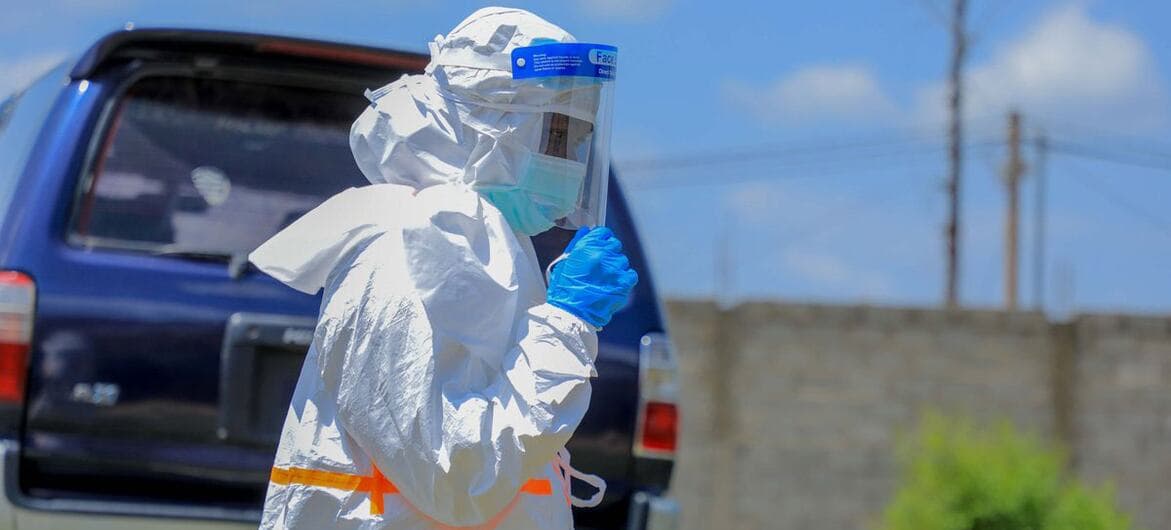
Frontline teams in eastern Democratic Republic of Congo have run short of the most basic protective gear just as Ebola has widened across the region. In North Kivu and neighboring zones, medics lacked boots, chlorine and body bags, leaving some to improvise in ways that exposed them further to infection and made safe burial more difficult.
A chief doctor in the Butembo zone said a suspected Ebola victim’s body was wrapped in a blue tarpaulin and taken away on the roof of a taxi because there was no body bag or ambulance. “What little we have is improvised,” he said, a line that captures how a response meant to contain a lethal virus has been forced to improvise at the most basic level.
The outbreak was first detected in early May, when the World Health Organization was alerted on May 5 to a high-mortality unknown illness in Mongbwalu Health Zone, Ituri Province, including deaths among health workers. The Democratic Republic of Congo formally declared its 17th Ebola outbreak on May 15. WHO said the cause was Bundibugyo virus, a rare Ebola species with no licensed vaccine or specific treatment, and previous outbreaks of the strain recorded case fatality rates of 30% to 50%.
The shortage of protective equipment has been driven by the scale of the outbreak, reduced pre-positioned stockpiles after aid cuts and transport problems that have pushed up the cost of personal protective equipment. The International Rescue Committee warned on June 9 that stocks of essential protective gear could run out within days. Temporary border closures with Uganda and Rwanda, along with insecurity along transport routes, have slowed deliveries and forced aid groups to source supplies through constrained channels.
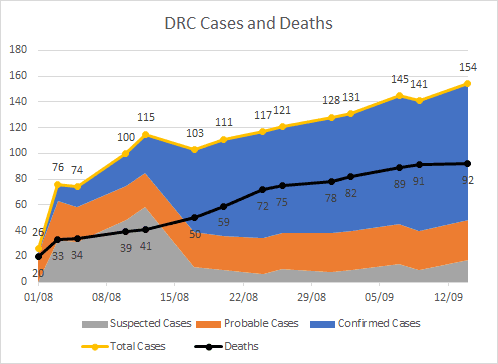
The human cost has already spread beyond the treatment centers. As of June 2, the U.S. Centers for Disease Control and Prevention said there had been 378 confirmed cases and 63 confirmed deaths across Congo and Uganda, with 363 cases and 62 deaths in Congo alone. WHO’s June update said Congo had 210 confirmed cases, 17 confirmed deaths, nearly 350 suspected cases under investigation and 16 infected health workers. Uganda had reported seven confirmed cases linked to the outbreak, including two healthcare workers and one death.
WHO said the response depended on rapid response teams, surveillance, laboratory confirmation, infection prevention and control, safe treatment centers and cross-border preparedness. But the outbreak has unfolded amid humanitarian crisis, displacement, armed violence and heavy population movement across eastern Congo, where UN News said it had spread across 11 health zones by late May. Tedros Adhanom Ghebreyesus called it a “catastrophic collision of disease and conflict,” warning that tracing contacts and isolating cases became nearly impossible as bombs fell.
This article was produced by Prism’s automated news system from verified source data, official records, and press releases, then run through automated quality and moderation checks before publishing. The system is built and supervised by the people who set the standards it runs under. Read our full AI policy.
Know something we missed? Have a correction or additional information?
Submit a Tip