Congo’s Ebola outbreak spreads in Ituri as health workers struggle
Four health workers died within days in Mongbwalu, where an Ebola outbreak has spread through a poor gold-mining zone with no approved vaccine or specific treatment.

Exhausted health workers in Ituri Province were among the first to die, and their losses quickly signaled how fast Ebola can outrun a fragile response. In Mongbwalu Health Zone, a poor gold-mining town of about 130,000 people, the outbreak has exposed a system stretched by insecurity, weak infrastructure and little room for rest.
The World Health Organization said it was first alerted on May 5, 2026, to a high-mortality unknown illness in Mongbwalu, including reports that four health workers died within four days. By May 15, the Democratic Republic of the Congo had officially declared its 17th Ebola outbreak after laboratory tests confirmed Bundibugyo virus disease in eight samples, and Uganda confirmed an imported case the same day.
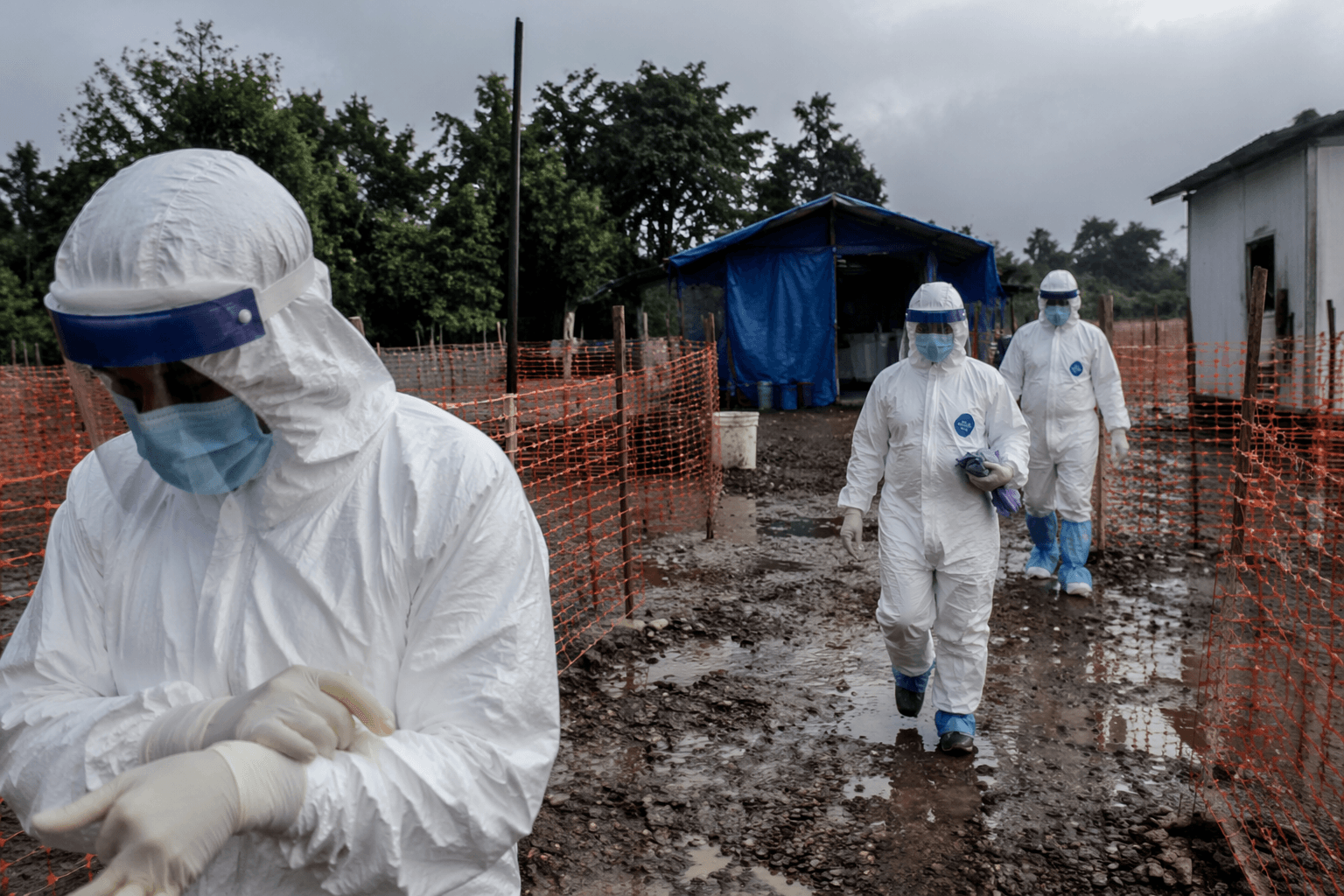
By May 16, WHO said the outbreak had reached at least three health zones, Bunia, Rwampara and Mongbwalu, with 8 confirmed cases, 246 suspected cases and 80 suspected deaths in Ituri Province. The agency said response teams were deployed to Mongbwalu and Rwampara to investigate the outbreak and track transmission in a region already burdened by displacement and poor access to care.
The strain on health workers is central to the crisis. The Bundibugyo species involved has no approved vaccine or specific treatment, though candidate products are being studied. That leaves nurses, doctors and burial teams relying on isolation, tracing and basic infection control even as many are working with little pay or rest. Médecins Sans Frontières called the situation deeply alarming for communities and frontline health workers.
WHO’s Africa Regional Office said the outbreak is unfolding in a challenging context marked by humanitarian crisis, remoteness, population density and insecurity. Those conditions make it harder to move supplies, protect staff and isolate patients quickly enough to slow spread. In a place where clinics are already thinly staffed, the death or exhaustion of even a few workers can weaken the entire chain of response.
The danger reaches beyond one province. Uganda’s imported case showed how quickly Ebola can cross borders when surveillance is uneven and health systems are under pressure. DRC has confronted repeated Ebola outbreaks since the virus was first identified in 1976, but the scale of fear remains shaped by the 2014 to 2016 West Africa epidemic, which killed more than 11,300 people. In Ituri, the immediate test is whether the people expected to stop Ebola can keep working long enough to contain it.
This article was produced by Prism’s automated news system from verified source data, official records, and press releases, then run through automated quality and moderation checks before publishing. The system is built and supervised by the people who set the standards it runs under. Read our full AI policy.
Did this article answer your question?


