Congressional Push to Reshape College Sports Regulation Falters
Legislation backed by the NCAA and the White House, known as the SCORE Act, was pulled from a planned House vote on December 4, 2025 after procedural trouble and resistance from members. The delay leaves a major federal effort to create national standards for college athletics uncertain, with big implications for media markets, athlete compensation, and the balance of power among programs.
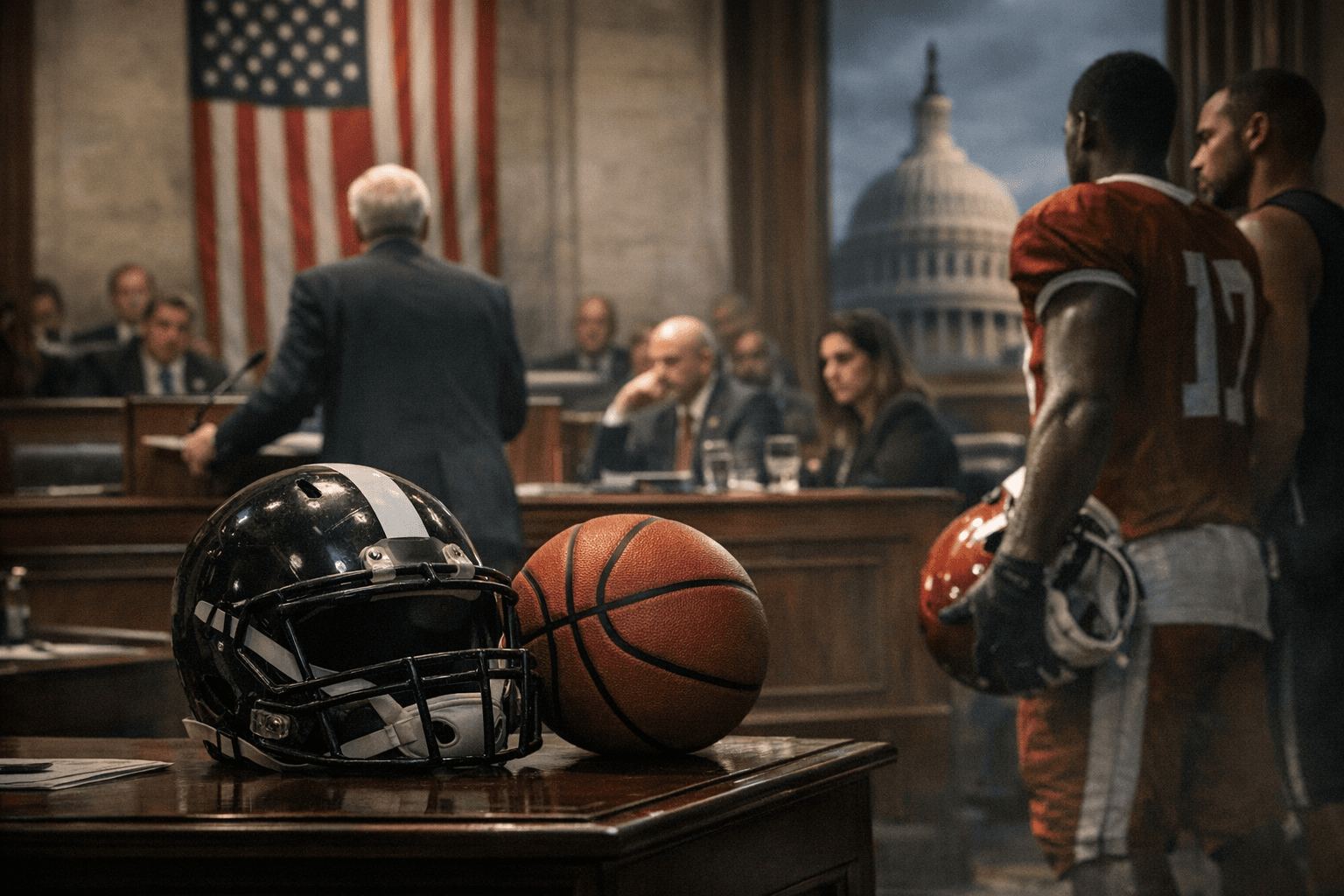
On December 4, 2025, congressional leaders abruptly removed the SCORE Act from the House calendar after lawmakers encountered procedural problems and growing unease among members. Republican leadership said it would postpone the vote to build a broader coalition, leaving the future of the bill unclear as Congress moves into a busy winter calendar.
Backed by the NCAA and supported at the White House level, the SCORE Act was designed to create federal authority for coordinating college sports rules and standards across roughly 1,100 member institutions and an athlete population that numbers in the hundreds of thousands. Supporters argued the measure would provide stability after years of state-by-state patchwork and litigation, and would offer a single national framework for eligibility, benefits, and governance. Opponents countered that the bill would grant the NCAA sweeping power, and could cement advantages for the largest programs and conferences that already capture the lion’s share of television revenue and corporate sponsorship dollars.
The bill’s stall highlights the tension between two competing economic logics in college athletics. One logic favors uniform federal rules to reduce transactional friction for athletes, conferences, and broadcasters. The other warns that centralizing authority risks reinforcing existing market concentration, where a handful of Power Five conferences dominate media rights, ticket sales, and donor flows. Media rights for top conferences routinely attract bidding in the billions, and any law that affects governance or compensation could shift bargaining leverage across networks, schools, and athletes.
Legal context compounds the political uncertainty. Federal courts in recent years have constrained the NCAA’s regulatory latitude, notably in the Supreme Court’s 2021 decision that affirmed antitrust scrutiny of NCAA restrictions. That jurisprudence has opened new pathways for athlete compensation frameworks and state initiatives on name image and likeness markets. A federal statute that redefines federal preemption or delegations of authority to the NCAA could prompt fresh antitrust and constitutional challenges, prolonging legal uncertainty rather than resolving it.
For athletes and the commercial ecosystem tied to college sports, the practical effects are significant. A unified national standard could simplify recruitment and compensation compliance for athletes who move across state lines. At the same time, entrenched governance could make it harder for smaller programs to compete if rule making privileges institutions with the largest followings and revenue bases. For broadcasters and sponsors, the prospect of national rules raises the possibility of more predictable rights windows and uniform compliance regimes, which could increase the value of long term contracts for marquee competitions while potentially depressing competition for niche properties.
With the House vote delayed, advocates on both sides now face a compressed timeline. Lawmakers must reconcile concerns about concentrated power, federal authority, and the commercial stakes for billion dollar media markets. The delay pushes any final resolution into the new year, where shifting congressional priorities and a tight legislative calendar will determine whether the SCORE Act returns in its current form, is substantially revised, or is abandoned. The decision will shape the business model of college sports for years to come.
This article was produced by Prism’s automated news system from verified source data, official records, and press releases, then run through automated quality and moderation checks before publishing. The system is built and supervised by the people who set the standards it runs under. Read our full AI policy.
Did this article answer your question?

