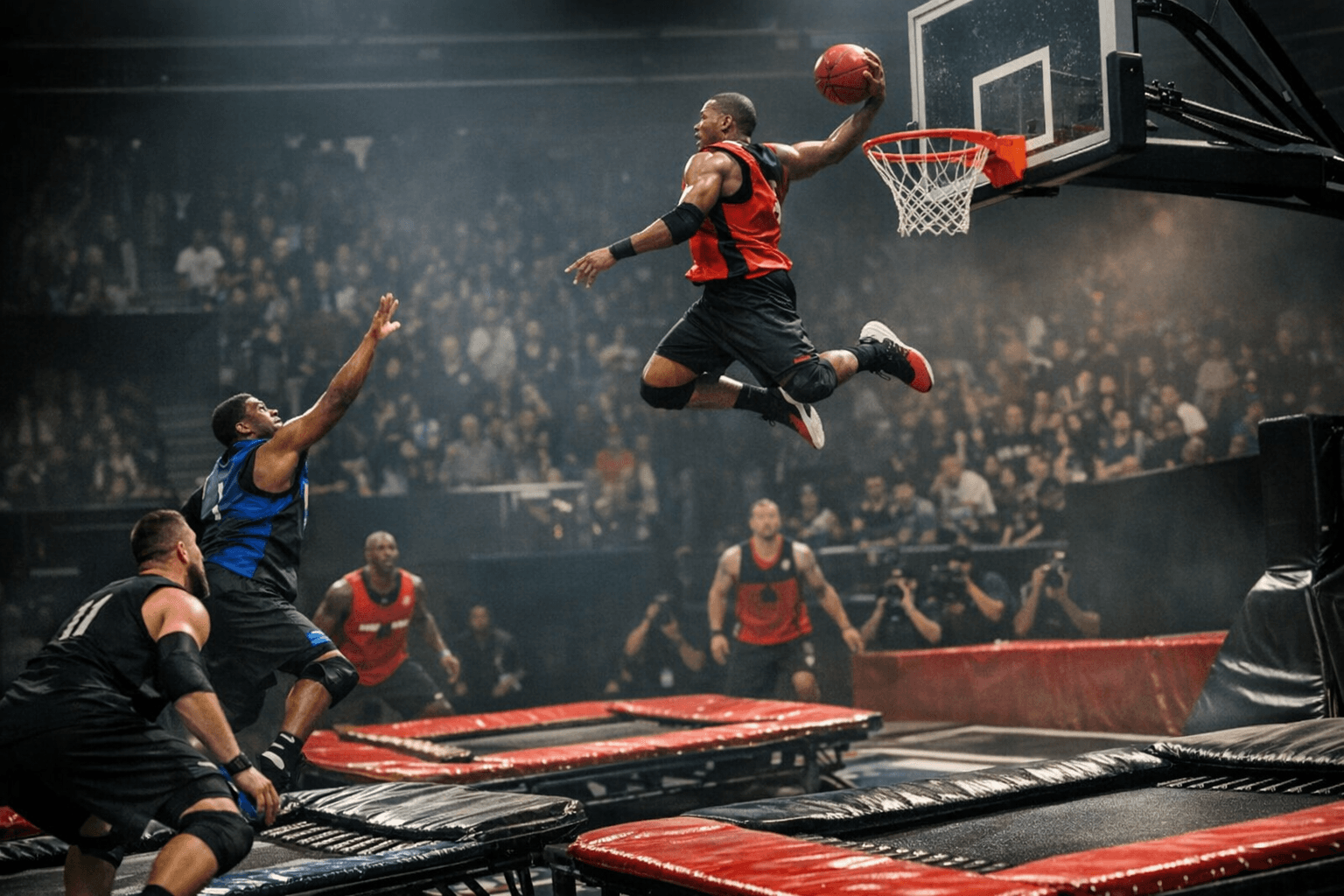
Converting Trampoline Parks into SlamBall Courts: Practical Checklist
A compact, practical checklist outlines the physical layout, equipment, safety and operational steps venues need to convert trampoline space into a SlamBall court. Properly built SlamBall installations can create a new attraction for trampoline parks, drive group bookings and enable local tournaments while requiring commercial-grade components and updated staff training and insurance.
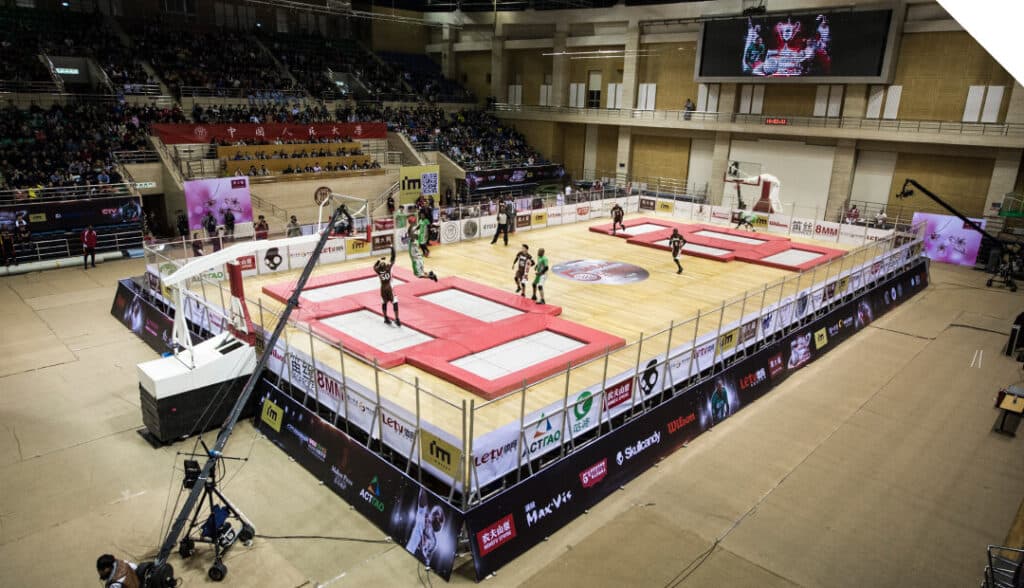
SlamBall blends trampoline-powered aerial play with full-contact rules, and venues planning to add it must meet precise equipment and safety standards to run sessions responsibly. The core benefit is clear: a properly installed SlamBall court becomes a distinctive draw for walk-ins, group bookings and community leagues, but it demands commercial-grade trampolines, robust padding and operational changes that venues cannot improvise.
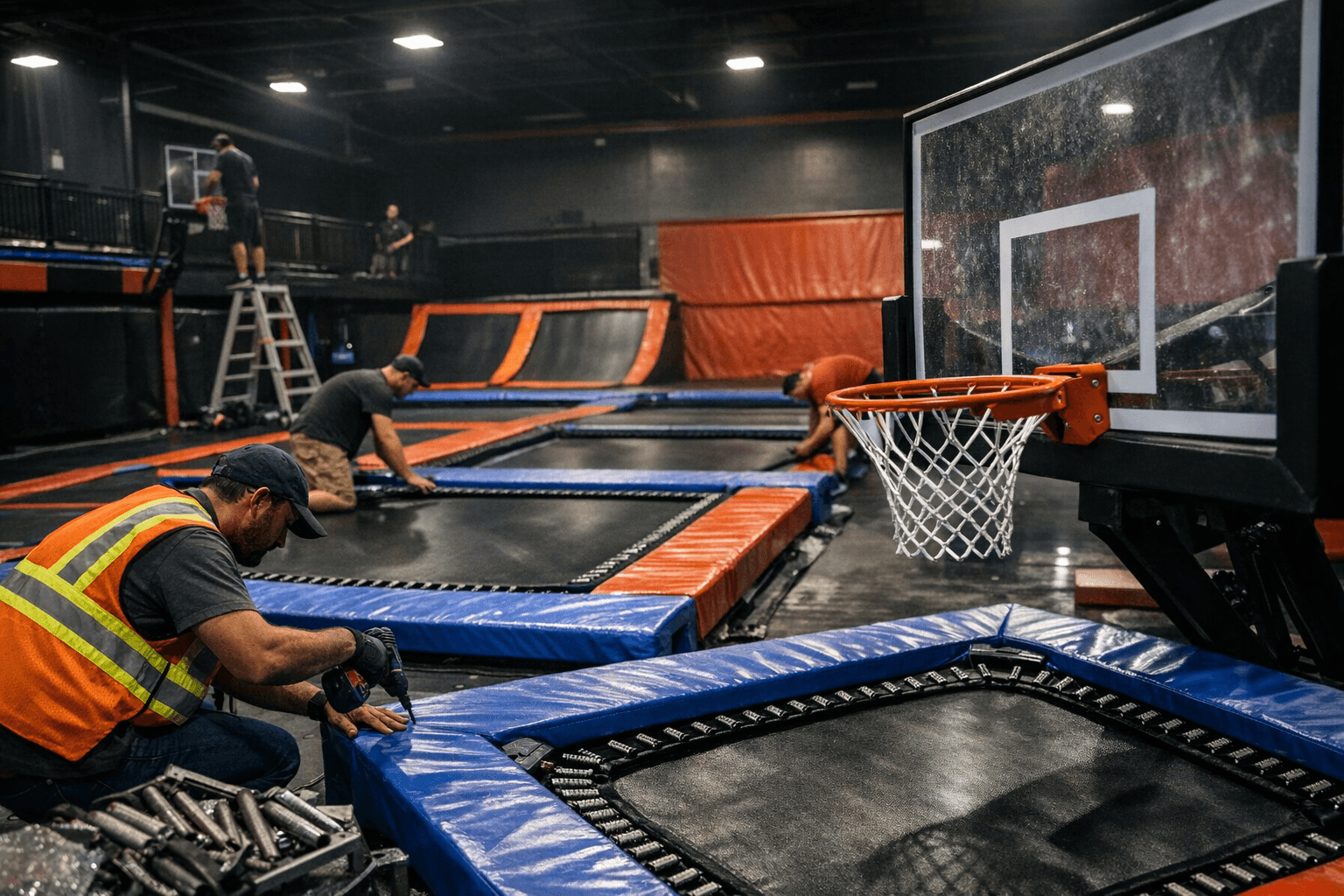
At the center of a compliant setup are the trampoline beds configured as quads around each basket. Professional setups combine 7'×14' beds with custom 10'×14' beds to create consistent bounce and predictable player launch. Total trampoline count generally runs eight beds, four at each end, plus a springboard floor adjacent to the trampolines. Frames should be heavy-duty and custom-built, with tapered safety spring pads and shock-absorbent panels that fully cover rails and edges to reduce impact zones.
Court surround and hardware are equally important. Install plexiglass-style walls approximately 8 feet high to keep the ball in play and protect spectators. Fit regulation SlamBall rims and a short shot clock; if you plan sanctioned play, consult league rules for exact timing and rim specifications. On the surface, vendors recommend dropping frames into the springboard floor by about 4 inches to integrate with the surrounding floor and using spring extensions or tighter springs to match bed tensions across the court.
Safety and operations demand attention before opening sessions. Mandatory scrum-cap style helmets are required under the SlamBall revival rules introduced in 2023; offer optional knee and elbow pads and enforce protective cups where appropriate. Update liability policies, require signed waivers, and consider age, height and weight limits for sessions. Train staff on spotting, fall management, player rotation, and emergency procedures, and stagger other park activities to avoid collisions.
Work with an experienced trampoline manufacturer, vendors like MaxAir supply custom beds and advise on sizing and tensioning, to ensure installation meets commercial standards and local building codes. Start with a prototype: host a demo day or a 3v3 tournament to test the layout, gather feedback and generate local interest. Promote the court through social channels, local sports clubs and school programs, and partner with DJs, artists or influencers for launch events. These steps turn a technical installation into a community asset that supports leagues, training and recurring bookings.
Know something we missed? Have a correction or additional information?
Submit a Tip