Cornell, NY State and NYRA Launch Three-Year Fetlock Injury Imaging Study
A three-year, $18 million state-funded study with a $2 million NYRA equipment gift will use standing CT and PET at Cornell Ruffian to hunt hairline fetlock injuries in New York Thoroughbreds.
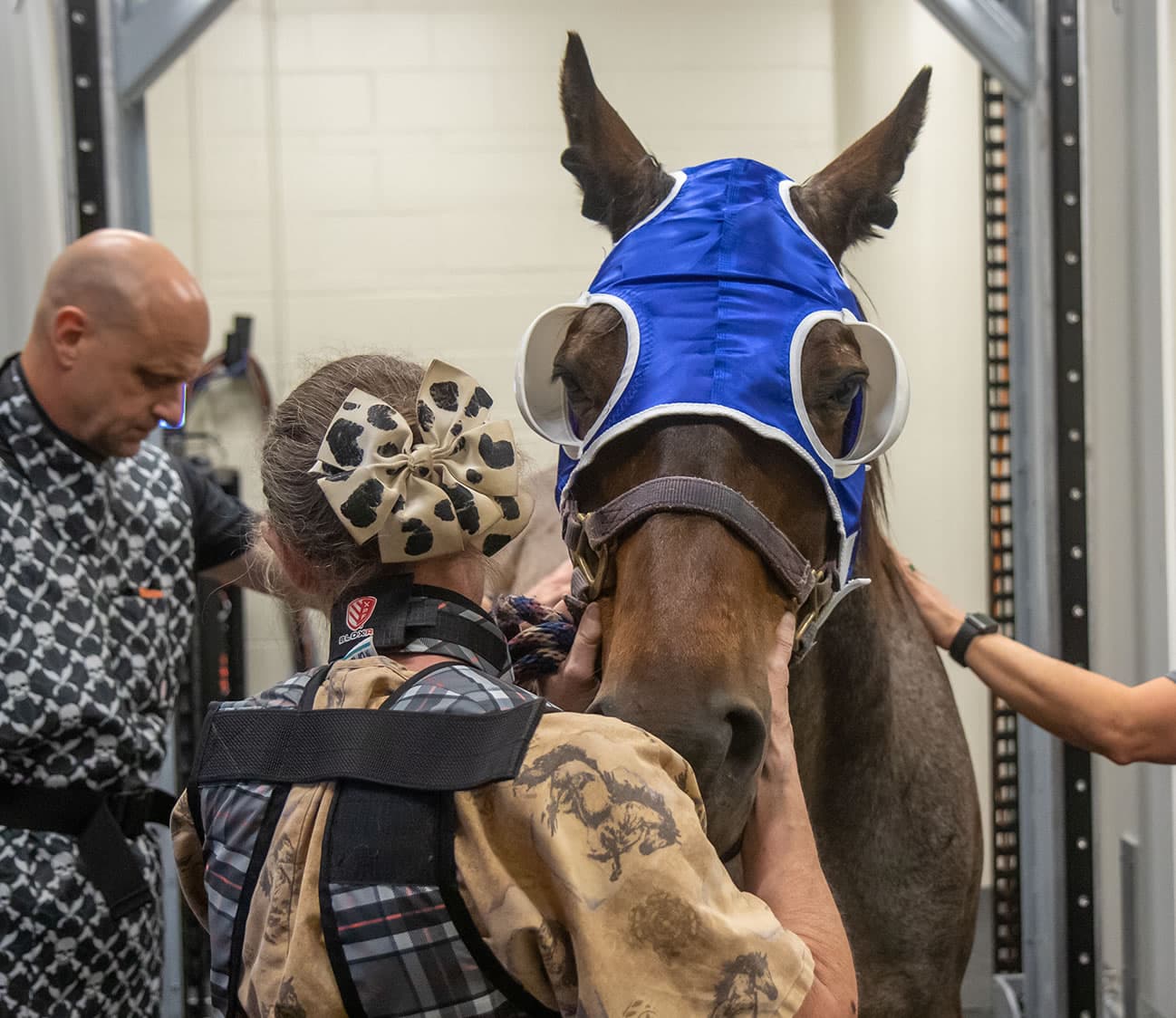
Cornell University’s College of Veterinary Medicine has launched a three-year research program backed by New York State and The New York Racing Association to detect fetlock fractures and pre-fracture pathology before those injuries become catastrophic. New York is investing $18 million through the 2025–26 enacted budget and NYRA has donated $2 million toward advanced imaging equipment that will be installed at Cornell Ruffian Equine Specialists, the hospital adjacent to Belmont Park.
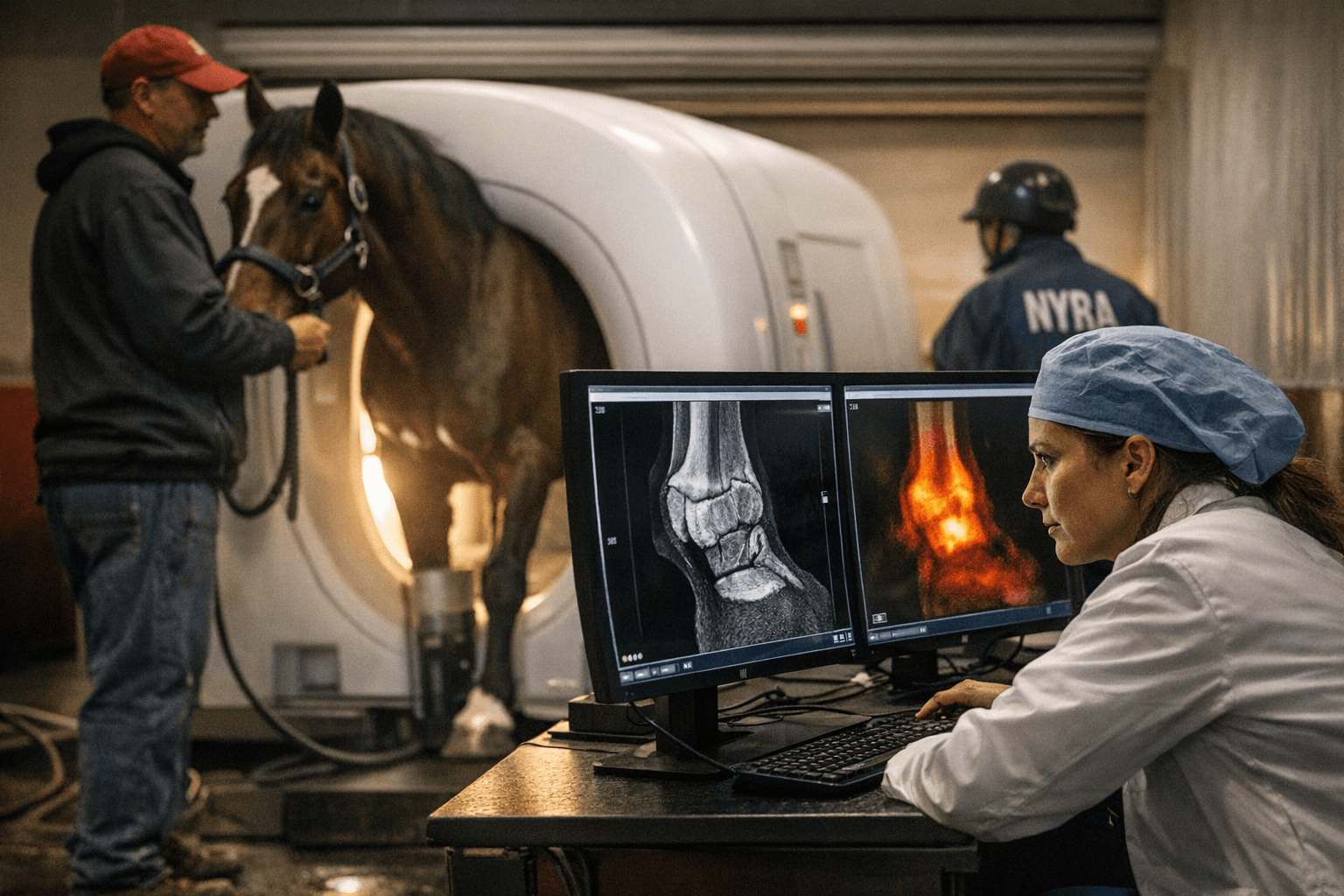
The project will place state-of-the-art standing computed tomography and positron emission tomography machines at Cornell Ruffian to scan racehorses treated at that facility. The CT, which “provides a high-resolution image of the bony anatomy, allowing for identification of microstructural changes prior to being apparent on a radiograph,” and the PET, which “detects increased bone metabolic activity in three different planes, allowing for the exact identification of regions of bone pathology,” are intended to catch hairline fractures and remodeling that conventional radiographs can miss.
The study’s stated aims include identifying fetlock fractures and pre-fracture pathology, determining the sensitivity and specificity of various imaging techniques, further characterizing biomarkers in healthy and lame horses, and refining a risk factor index for fatal musculoskeletal injuries. Data will come from horses seen at Cornell Ruffian, giving the study direct access to Thoroughbreds training and competing in New York and those stabled or treated near Belmont Park.
David O’Rourke, President and CEO of NYRA, framed the collaboration as a safety and research investment: “Continuously improving equine safety is an organizational imperative at NYRA. This partnership will dramatically expand access to an important veterinary diagnostic tool while improving scientific research around thoroughbreds training and competing in New York. We thank Governor Hochul for her steadfast commitment to horse racing as we look forward to the opening of a new Belmont Park in September.”
Assemblywoman Carrie Woerner, Chair of the Assembly’s Standing Committee on Racing and Wagering, tied the funding to animal welfare and industry stability: “Protecting the health and welfare of our Thoroughbreds and the future of horseracing is a priority of our committee, my district and for me, personally. I am grateful for Governor Hochul’s commitment to the safety our equine athletes and to NYRA for its financial support of this important study. I have no doubt the research obtained over the next 3‑years will help New York develop effective strategies in reducing injuries to our beloved racehorses and improve this historical industry in our state.”
Study organizers say results will be published in peer-reviewed periodicals and presented at veterinary research conferences. What remains unspecified in published announcements are several operational details that matter on the ground: the principal investigators, precise start date and enrollment numbers, the study design and statistical endpoints, and the date the new scanners will become operational at Cornell Ruffian. Those items will determine how quickly trainers and veterinarians can expect actionable screening tools and a refined risk tool to influence racing and training decisions.
If the imaging and biomarker work delivers on its aims, the three-year effort backed by $20 million in public and industry support could change pre-race and pre-training screening for New York Thoroughbreds and reduce the kind of undetected bone pathology that has led to fatal injuries. The immediate next milestone is the installation and commissioning of the standing CT and PET units at Cornell Ruffian and the first tranche of scanned cases that will form the study’s diagnostic backbone.
Know something we missed? Have a correction or additional information?
Submit a Tip