County commissioners uphold Knapp homeowner exemption after assessor dispute
Commissioners overturned the assessor's finding and restored Allyson Knapp's homeowner exemption, a decision that affects residency rules and a May primary challenge.
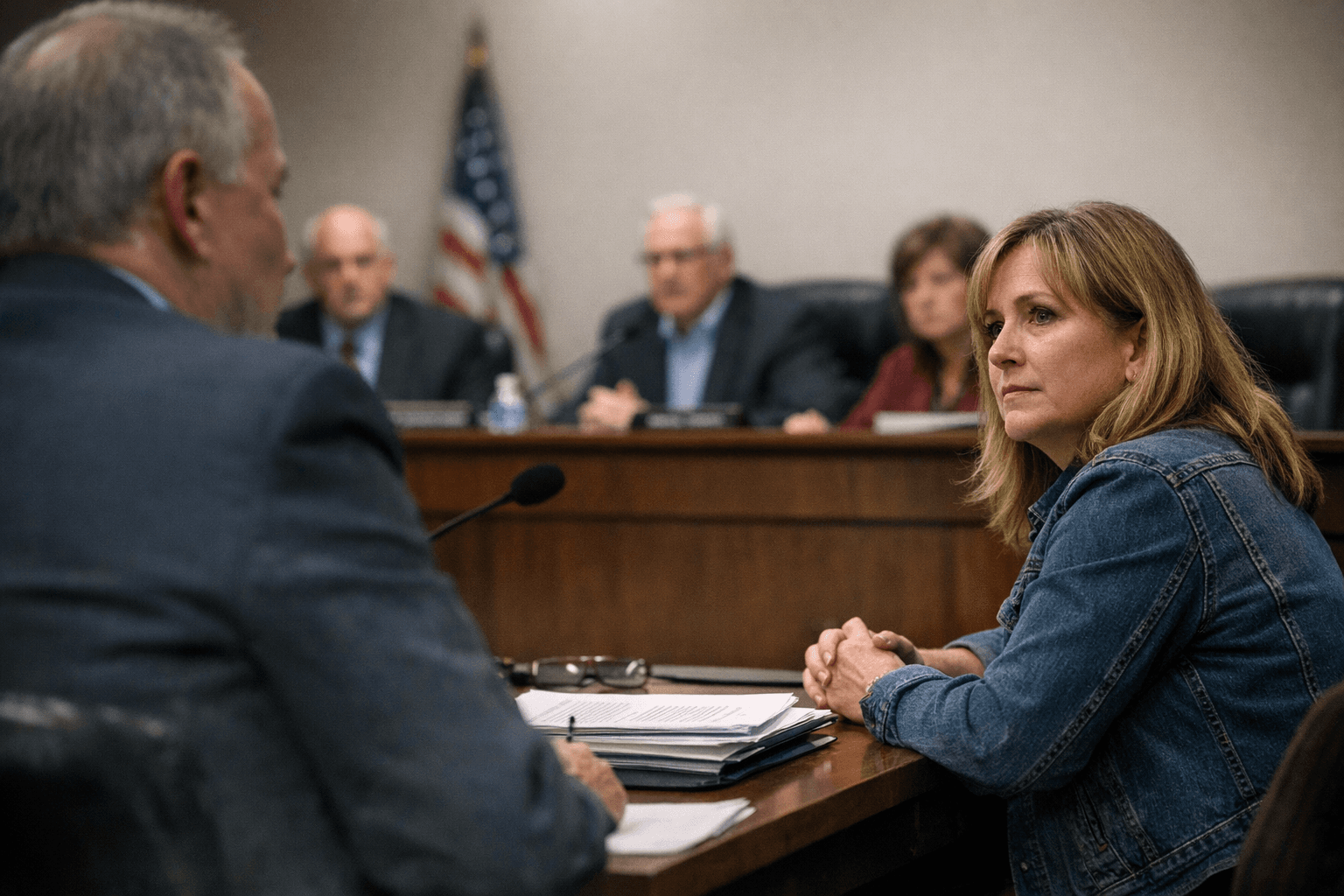
Kootenai County commissioners voted Wednesday to overrule Assessor Bèla Kovacs and uphold a homeowner's exemption for Allyson Knapp after more than a month of Board of Equalization hearings and hundreds of pages of submitted records.
Commissioners Bruce Mattare and Leslie Duncan voted to reverse the assessor's determination of ineligibility; Marc Eberlein abstained from the vote because of a personal relationship with the assessor. The decision preserves the tax status on Knapp’s Rathdrum property and ends the immediate administrative challenge to her residency that has attracted local attention.
Knapp, a former chief deputy assessor who has announced a run against Kovacs in the May 2026 Republican primary, appealed a notice declaring her ineligible. Kovacs' office had sent a letter saying it “is investigating the ownership and validity and status” of the homeowner’s exemption and warning that “Anyone who falsely claims a homeowner’s exemption when they in fact do not legitimately qualify for the program is committing a serious crime.” Kovacs also said “five or six” people had approached him expressing belief that Knapp lives in Washington, and that initiating the inquiry “was a lightning rod.”
At the hearings, commissioners heard competing documentation. Knapp has been the Rathdrum property's sole owner since 2018, is registered to vote at that address since 2022, lists it on her driver’s license, and provided vehicle registrations and utility bills in her name. “My Rathdrum property is my one and only residence,” she told the board. Knapp also told county officials earlier that the assessor was attempting to undercut her campaign: “He’s trying to say I’m not a full-time resident so I can’t run against him. He’s wrong.” She later said, “I really hope he doesn’t do this to anyone else.”
Mattare noted the assessor's own position that no single document proves residency but said Kovacs did not supply records confirming residency at another address: “The assessor admitted there is no single-document test to establish residency, but he did not produce documents that confirmed residency at another address.” He added that easily checked records are a common starting point: “That is the basic litmus test an average person would reasonably use to determine if one was a resident or not,” and that “Instead, the assessor’s documentation focused on business and mailing address, which is not the same as residence address.”
Kovacs suggested the board could require additional evidence, including years of mailing history, Amazon parcel records, an internal inspection of the Washington property and neighbor affidavits. Former office staff raised concerns about his methods; former administrative manager Reba Gritnis called the approach out of line, saying, “I don’t normally speak up like this, but this is so egregious and petty.” A former deputy cited tax return characterizations and state tax commission information, which Knapp disputed and said her accountant's letter confirms Idaho returns were filed.
For Kootenai County residents the episode highlights how residency, documentation and administrative discretion intersect with local elections and property tax programs. Expect close attention in the weeks ahead as Knapp's primary campaign proceeds and county officials consider whether procedures around homeowner exemption investigations need clearer rules or safeguards to prevent politically sensitive enforcement.
Sources:
Know something we missed? Have a correction or additional information?
Submit a Tip