Court rejects Mitch Winehouse claim over Amy Winehouse auction sales
A High Court judge found no proof Amy Winehouse’s stylist and friend hid auctioned items, weakening Mitch Winehouse’s bid to police her posthumous legacy.
Control over Amy Winehouse’s name, clothes and memorabilia stayed with the estate, not with the people Mitch Winehouse accused of selling them off in secret. In London’s High Court, a judge rejected his claim that stylist Naomi Parry and friend Catriona Gourlay deliberately concealed dozens of items auctioned in the United States, a ruling that sharpens a long-running question around celebrity estates: who gets to profit from a dead star’s belongings, and who has the standing to stop it?
Deputy High Court Judge Sarah Clarke KC ruled on Monday that neither woman had deliberately hidden the disputed items. She also said that even if that finding were wrong, Mr Winehouse could have uncovered the sales with reasonable diligence. The case centered on auctions in 2021 and 2023, including a 2021 sale whose catalogue contained 834 items and raised $1.4 million, or £1.05 million, for the estate.
That auction sent a share of the proceeds to the Amy Winehouse Foundation, which was founded in 2011 in the singer’s memory and says it supports young people in building self-esteem, resilience and emotional wellbeing. The legal fight nevertheless exposed how fractured the handling of posthumous celebrity property can become when items move through friends, stylists and auction houses before an estate administrator sees the full picture.
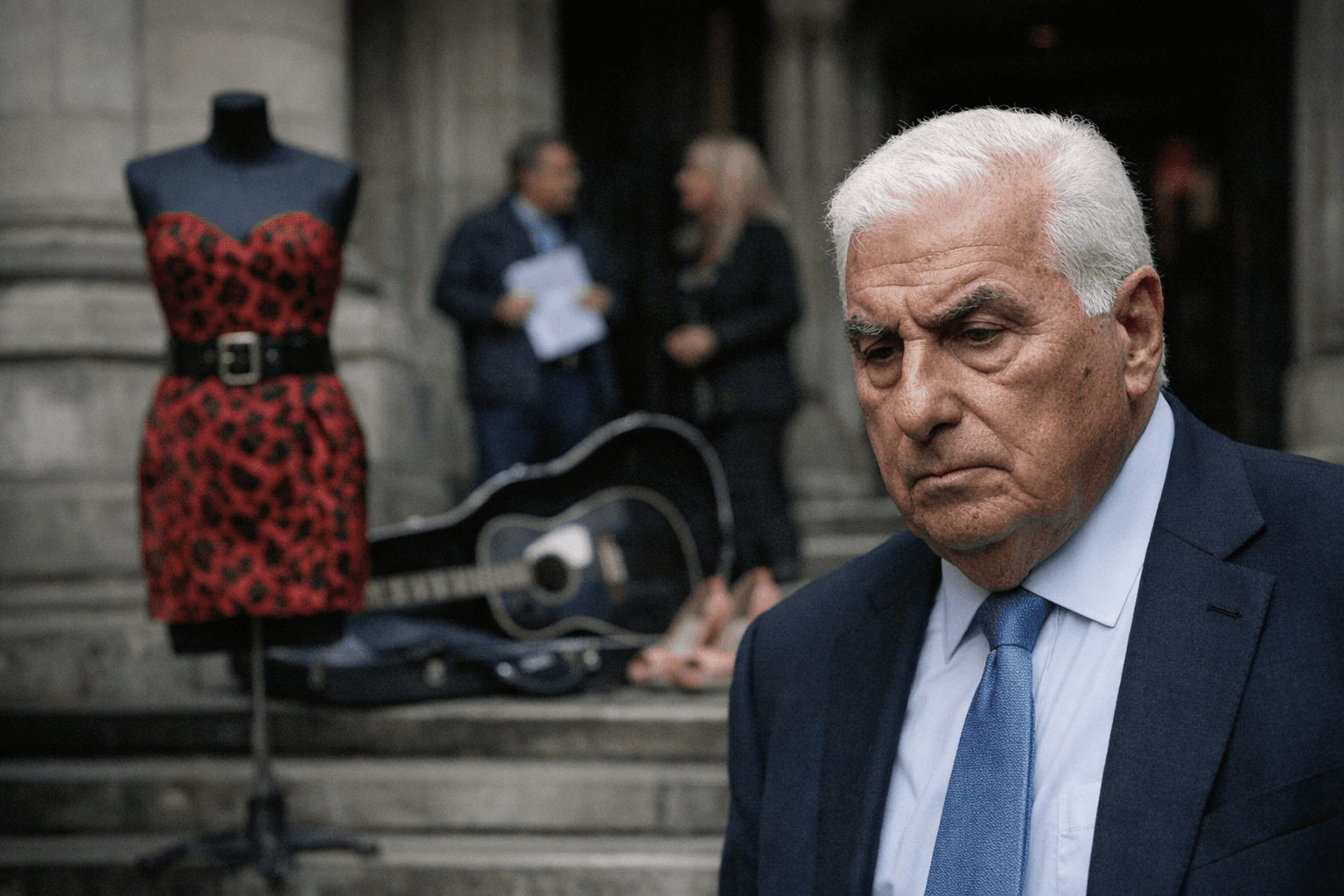
One of the highest-profile lots was a silk mini-dress worn by Winehouse during her final performance in Belgrade, Serbia. It sold at Julien’s Auctions in Beverly Hills for $243,200, or £182,656, underscoring the commercial value attached to even a single garment from the singer’s final public moments.
Mr Winehouse, acting as administrator of Amy Winehouse’s estate, had argued that he believed the 2021 auction proceeds would be split between himself, Amy’s mother Janis Winehouse and the foundation. The trial in December 2025 also turned personal, with lawyers for Ms Parry accusing him of acting out of “petty jealousy,” a claim he denied.
Ms Parry said after the ruling that it had “cleared my name” and restored the truth, and that defending the case had taken a toll on her health, work and life. Winehouse died from alcohol poisoning in July 2011 at the age of 27, but the fight over her belongings shows that the battle over a celebrity legacy can last far longer than the life that created it.
This article was produced by Prism’s automated news system from verified source data, official records, and press releases, then run through automated quality and moderation checks before publishing. The system is built and supervised by the people who set the standards it runs under. Read our full AI policy.
Did this article answer your question?