Coyotes have spread nationwide, reshaping urban ecosystems in Chicago
Coyotes are now a permanent Chicago fact of life, and the city’s long-running study shows coexistence works better than panic.

A species that no longer has an edge
Coyotes are no longer a western outlier. The U.S. National Park Service says they have moved from west of the Mississippi River to every state except Hawaii, and today they reach as far north as the Arctic. Audubon puts that spread in still broader terms, noting that coyotes have expanded across the continent over the past 300 years, from Alaska to Panama.
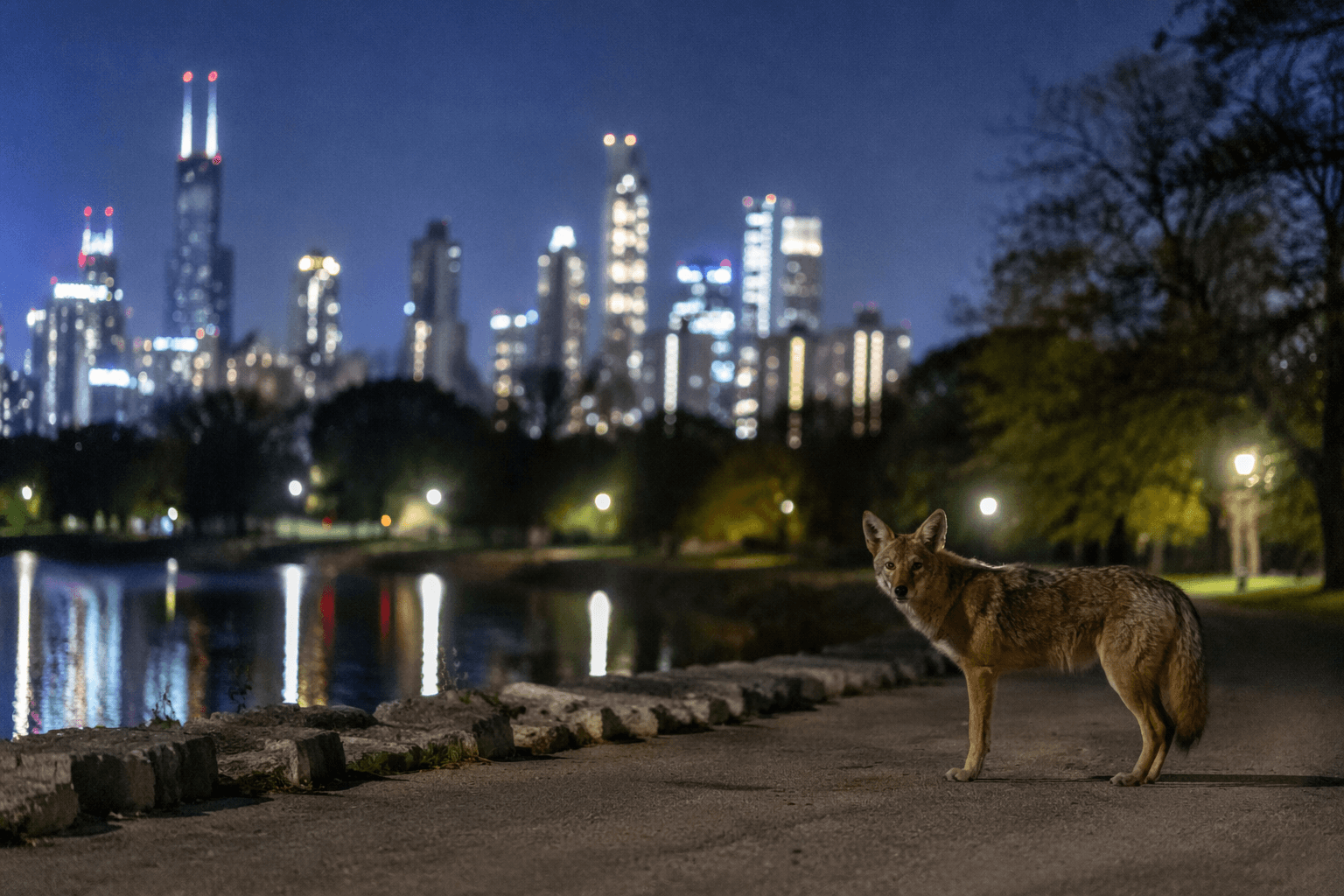
That range shift is why the coyote story is now a national coexistence story, not a local curiosity. In suburbs, parks, exurbs, and dense cities, the species has become part of everyday life because it adapts quickly, travels widely, and survives in landscapes that were never designed for it.
Why Chicago became the model
Chicago has one of the best-documented urban coyote populations in the country. The Cook County Coyote Project, also known as the Urban Coyote Research Program, began in 2000 as a non-biased effort to fix gaps in what cities knew about urban coyote ecology and management. The study is still underway, which matters because long-term data are the only way to separate real risk from routine animal behavior.
The City of Chicago says the project expanded in late 2013 to include neighborhoods citywide. That shift turned the city into a living laboratory, and the numbers show the scale of the work: more than 1,283 coyotes have been tagged in the broader project, including 60 within Chicago city limits. For wildlife managers, those tags are not trivia. They are the backbone of a policy approach built on evidence rather than fear.
What Chicago’s rules actually allow
Chicago’s coexistence plan treats coyotes as a managed part of the urban ecosystem, not as a species to be wiped out. It says coyotes in urban areas may become nocturnal and are rarely seen in densely populated areas, a reminder that many encounters are shaped by timing and habitat, not by an animal suddenly becoming more dangerous.
When a coyote becomes problematic, the city says it may be removed only if the Illinois Department of Natural Resources issues a nuisance wildlife permit. Illinois rules are narrow: such permits are issued only when an animal is causing substantial property damage or presents a serious public health or safety concern. That standard matters because it pushes public response away from reflexive removal and toward targeted intervention when there is a true threat.
What works in a permanent urban ecosystem
The Chicago model points to a practical lesson for other places now living with coyotes: coexistence depends on management systems, not on the fantasy that the animals will simply go away. The strongest tools are the ones that are specific, measurable, and public-facing.
- Long-term tracking gives cities enough data to understand where coyotes move and how they use neighborhoods.
- Citywide guidance helps keep response consistent, instead of leaving every block to improvise its own rules.
- Removal is reserved for the limited cases that meet Illinois permit standards, which keeps policy focused on real damage or safety risks.
- Clear information about nocturnal behavior and low visibility in dense areas helps reduce panic when residents do spot one.
That approach also has a social equity dimension. When wildlife policy is vague, fear tends to fall hardest on residents who have the least access to timely information and the fewest resources to absorb conflict. A citywide plan, backed by a long-running study, makes coyote management a public responsibility instead of a neighborhood-by-neighborhood burden.
Why the coyote carries so much cultural weight
Coyotes are not only ecological actors. Britannica says the animal figures prominently in the mythology and folklore of the North American Plains, California, and Southwest tribes, where Coyote appears as creator, lover, magician, glutton, and trickster. The National Park Service says Nez Perce stories cast Coyote variously as a teacher, trickster, or hero.
That layered role helps explain why public reaction to coyotes is often so intense. The animal arrives with a preloaded reputation, and that reputation can distort response. In reality, the coyote is not a symbol of chaos so much as a species that has learned how to live in the spaces people built.
Its image has also long appeared in art, which only deepens its place in the American imagination. But the artistic and mythic versions of Coyote should not be confused with the animal moving through a backyard or along a park edge. One is a cultural figure; the other is a highly adaptable wild species learning the geography of modern life.
What coyotes eat, and why they endure
Part of that adaptability comes from diet. The National Park Service says coyotes eat a wide range of foods, including small mammals, fish, frogs, insects, snakes, deer, fruit, and grass. That flexibility lets them thrive across a remarkable variety of settings, from parks and playgrounds to urban alleys, backyards, deserts, forests, and grasslands.
This is the core reason coyotes have become so visible in cities like Chicago. They are not invading in the dramatic sense people often imagine. They are exploiting a landscape that offers food, shelter, and movement corridors, then adjusting their behavior to survive there.
The result is a species that is effectively permanent in the American urban story. Chicago’s experience shows that the question is no longer whether coyotes belong in the landscape, but how communities manage that reality with science, restraint, and a clear sense of public responsibility.
Know something we missed? Have a correction or additional information?
Submit a Tip