Cricket takes root in Houston as immigrant communities drive growth
Houston’s cricket scene is moving from immigrant enclaves into leagues, youth academies and major venues. The key test is whether that base can become mainstream, as soccer did.
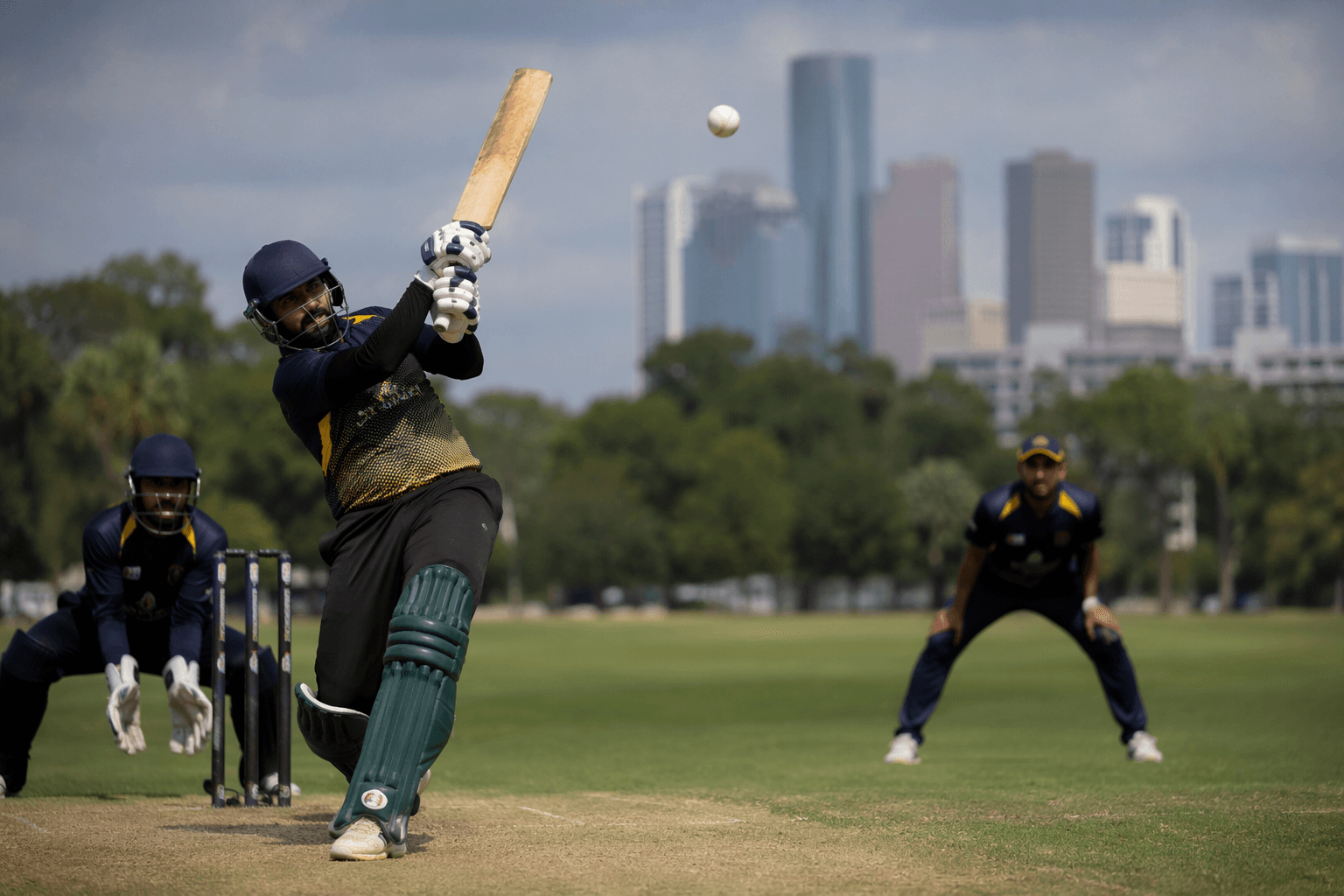
Houston’s cricket scene is moving from pickup games to a full sporting ecosystem, with immigrant communities and their children turning taped-ball matches into leagues, academies and international fixtures. Surya Saladi’s Triggers Cricket Consortium has grown from 30 kids to more than 1,000 players ages 7 to 17, a scale that shows how cricket could follow soccer’s U.S. path from the grassroots up. The question now is whether the city can convert that momentum into school pipelines, broader media exposure and sponsorship beyond its core fan base.
A city-sized laboratory for cricket
Houston is unusually well positioned for cricket because its growth is being driven by communities that already know the sport. Families with roots in India, England, the West Indies, Australia and South Africa are giving the game a steady base, while the next generation is carrying it farther into the city’s wider sports culture. That mix matters because cricket’s future in the United States will depend less on one-off curiosity than on repeated participation, local leagues and recognizable places to play.
The broader ambition is easy to state and hard to execute: cricket has to do in Houston what soccer did nationally. That means building from youth participation, gaining school support, creating regular access to venues and convincing sponsors and broadcasters that the audience extends beyond a single ethnic or regional community. Houston is the test case because the ingredients are already visible, but they are still scattered across clubs, academies and one major facility.
From adult club to youth pipeline
Saladi founded the organization that became Triggers Cricket Consortium in 2004, and its evolution shows what a durable cricket base looks like in practice. What started as an adult club expanded into youth teams, adult sides in the Houston Cricket League and high-performance courses for young players. The organization’s youth program now stretches from a small core to more than 1,000 players between the ages of 7 and 17, a jump that signals depth rather than novelty.
That growth is important because cricket does not become a mass sport through spectators alone. It needs children learning fundamentals, families traveling to matches, coaches building repetition and clubs creating a ladder from beginner to competition level. Triggers Cricket Club describes itself as a 501(c)(3) nonprofit in Houston running tournaments, youth programs, men’s hardball leagues and community cricket events, which gives the city something closer to a sports infrastructure than a casual recreational scene.
Why taped-ball cricket lowers the barrier
One reason cricket has room to spread in Houston is taped-ball cricket, a modified version of the game that uses a tennis ball wrapped in tape. That change makes it easier to play on a wider range of surfaces and lowers the cost of entry, which matters in a city where not every field is a dedicated cricket ground. In practical terms, taped-ball cricket lets the sport expand beyond specialized venues and into more ordinary neighborhood spaces.
Saladi said the consortium has access to 35 cricket grounds in the Houston area, including both grass wickets and astroturf. That number matters because it suggests a meaningful playing network already exists, even before the sport reaches broader school adoption. The next stage is making that access more stable, so young players do not have to depend on ad hoc scheduling or isolated club enthusiasm.
Prairie View gives Houston a national anchor
Houston’s cricket push is not confined to club fields. USA Cricket said in 2021 that Prairie View Cricket Complex, near Houston, would become the first Major League Cricket National Cricket Center, with plans for eight new turf practice nets and wickets, upgrades to three grounds and a new pavilion for men and women. That kind of investment gives the region a national role, not just a local one.
The facility already has scale. ESPNcricinfo lists Prairie View Cricket Complex as a six-ground venue in Prairie View, Texas, with capacity for 10,000 and end names Forest End and Highway End. It also hosted the United States and Canada in a men’s T20 international on April 7, 2024, and the United States against Bangladesh on May 25, 2024. Those matches matter because repeat international fixtures help a venue move from novelty status to a reliable part of the cricket calendar.
Houston also has a professional layer. The Houston Hurricanes, formed in 2020, were one of the original Minor League Cricket teams, and Prairie View Cricket Complex is listed as their home ground. That gives the city a pathway from youth development to amateur leagues to professional competition, which is exactly the kind of ladder a sport needs if it is going to spread beyond a niche following.
The wider ecosystem is already forming
Houston’s cricket community is deeper than one club or one venue. NextGen Cricket Academy says it was formed in 2011 after youth cricket conducted by India House in 2009, showing how community institutions can seed long-term sports development. The Houston Youth Cricket Academy says it operates within city limits and provides world-class coaching, adding another layer of local training and access.
That ecosystem helps explain why outside coaches and visiting teams are paying attention. Dutch coach Job van Bunge, whose Atlanta-based academy brings teams to Houston for tournaments, says the scale of cricket being played in the United States is “unreal”. His point is less about hype than about network effects: when academies, clubs, grounds and tournaments start linking cities such as Houston and Atlanta, cricket begins to look less like a transplant and more like a sport with regional corridors.
What determines whether cricket stays niche
Houston already has the building blocks of growth: immigrant support, youth enrollment, taped-ball formats, a six-ground venue with national significance and a professional franchise. What remains is the harder work of normalization. Schools have to treat cricket as a real extracurricular option, sponsors have to see value in a multicultural audience and media rights have to follow the same pattern that helped soccer expand from community leagues to mainstream television and streaming.
The city’s advantage is that the pieces are visible in one place. If Houston can keep turning club participation into school-based development, and if Prairie View keeps delivering international fixtures and pro-level infrastructure, cricket has a plausible route to becoming part of the city’s regular sporting fabric instead of remaining culturally siloed.
This article was produced by Prism’s automated news system from verified source data, official records, and press releases, then run through automated quality and moderation checks before publishing. The system is built and supervised by the people who set the standards it runs under. Read our full AI policy.
Know something we missed? Have a correction or additional information?
Submit a Tip